

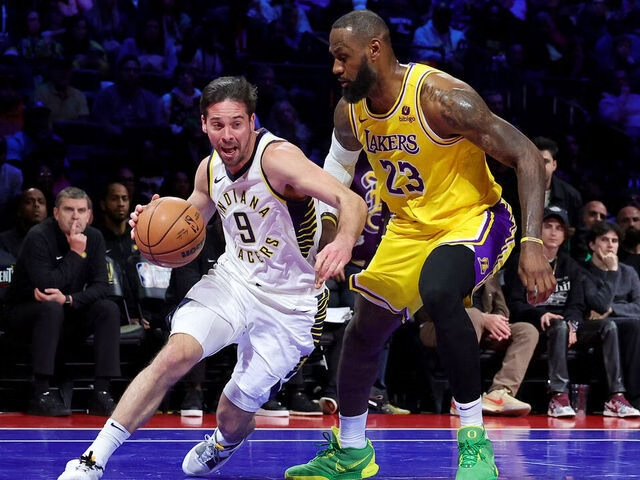
The LeBron James 23rd NBA season is already off to a rocky start — and it hasn’t even officially begun.
According to team reports, LeBron James will miss the start of the 2025–26 NBA season after being diagnosed with sciatica on his right side, keeping him out for 3–4 weeks.
At 40 years old, LeBron James has defied time for two decades — but even the King isn’t invincible. Sciatica, a condition that affects nerves along the lower back and legs, could limit his explosiveness and movement when he returns. The Lakers will be cautious with his recovery, prioritizing long-term health over an early-season push.
For a team built around the LeBron–Luka Doncic duo, this setback couldn’t come at a worse time. The Lakers are set to open their season against the Golden State Warriors on October 21 — a matchup that just lost its marquee superstar battle between LeBron James and Steph Curry.
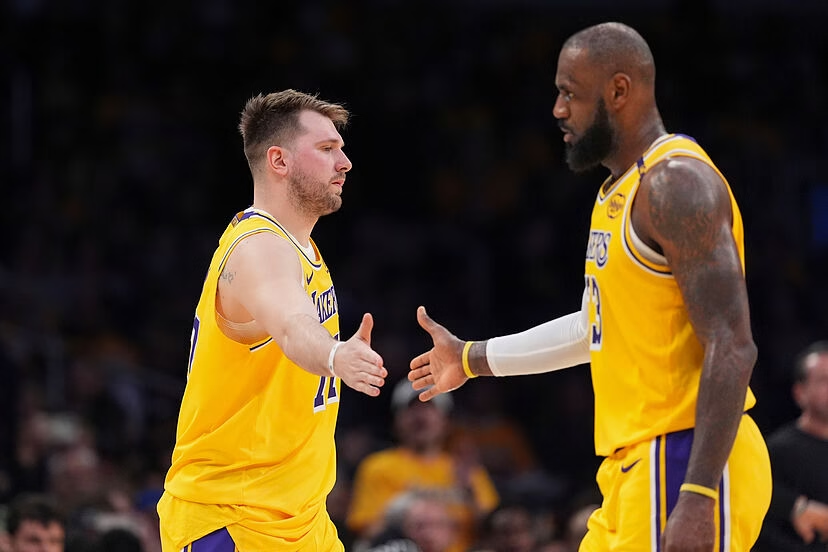
In LeBron’s absence, expect the Lakers to lean heavily on Luka Doncic, Austin Reaves and newly acquired Deandre Ayton, whose frontcourt partnership with AD will be crucial in maintaining balance on both ends.
Still, even a few weeks without LeBron could test LA’s depth, chemistry, and early-season confidence in a brutally competitive Western Conference.
T.J. McConnell Out at Least a Month with Hamstring Injury
Meanwhile, in Indiana, veteran guard T.J. McConnell will miss at least a month due to a left hamstring injury, according to head coach Rick Carlisle.
McConnell has been one of the league’s most underrated glue guys — a high-energy backup who sets the tone with hustle, defense, and leadership. The Pacers’ bench unit will now have to rely more on Andrew Nembhard and Ben Sheppard to handle playmaking duties after Tyrese Haliburton’s Injury.
It’s an early test for a young Pacers roster that thrived last season thanks to depth and pace. McConnell’s absence might not make headlines, but it’ll be felt in the details — the dives, the deflections, and the tempo-setting that define Indiana’s identity.
As the new season tips off, two Eastern and Western contenders already face adversity. But as history has shown — early-season setbacks often shape late-season resilience.