

What Nikola Jokic Has Done Recently…
How are we supposed to process 56 points, 16 rebounds, and 15 assists in a single game?
Not react to it, process it. Understand it. Contextualize it. Attach meaning to it beyond the initial disbelief. Because at some point, the shock wears off, and what remains is the historical question: what did we just witness?
This wasn’t a random eruption. It didn’t come against a rebuilding roster or in a low-leverage February game buried on League Pass. It happened on Christmas Day, the NBA’s most visible regular-season stage. It happened against Rudy Gobert, a four-time Defensive Player of the Year and the anchor of the league’s most schematically disciplined defense. It happened against a Minnesota Timberwolves team that had reached the Western Conference Finals in consecutive seasons. And it happened while Denver was missing three crucial starters, forcing Nikola Jokić to shoulder responsibility that few players in league history have ever been capable of carrying.
Only then do the numbers start to feel real, and even then, barely.
The Only Player Who Makes This Predictable
The uncomfortable truth is that the game itself wasn’t shocking. The scale was. The opponent was. The date was. But the identity of the player was not.
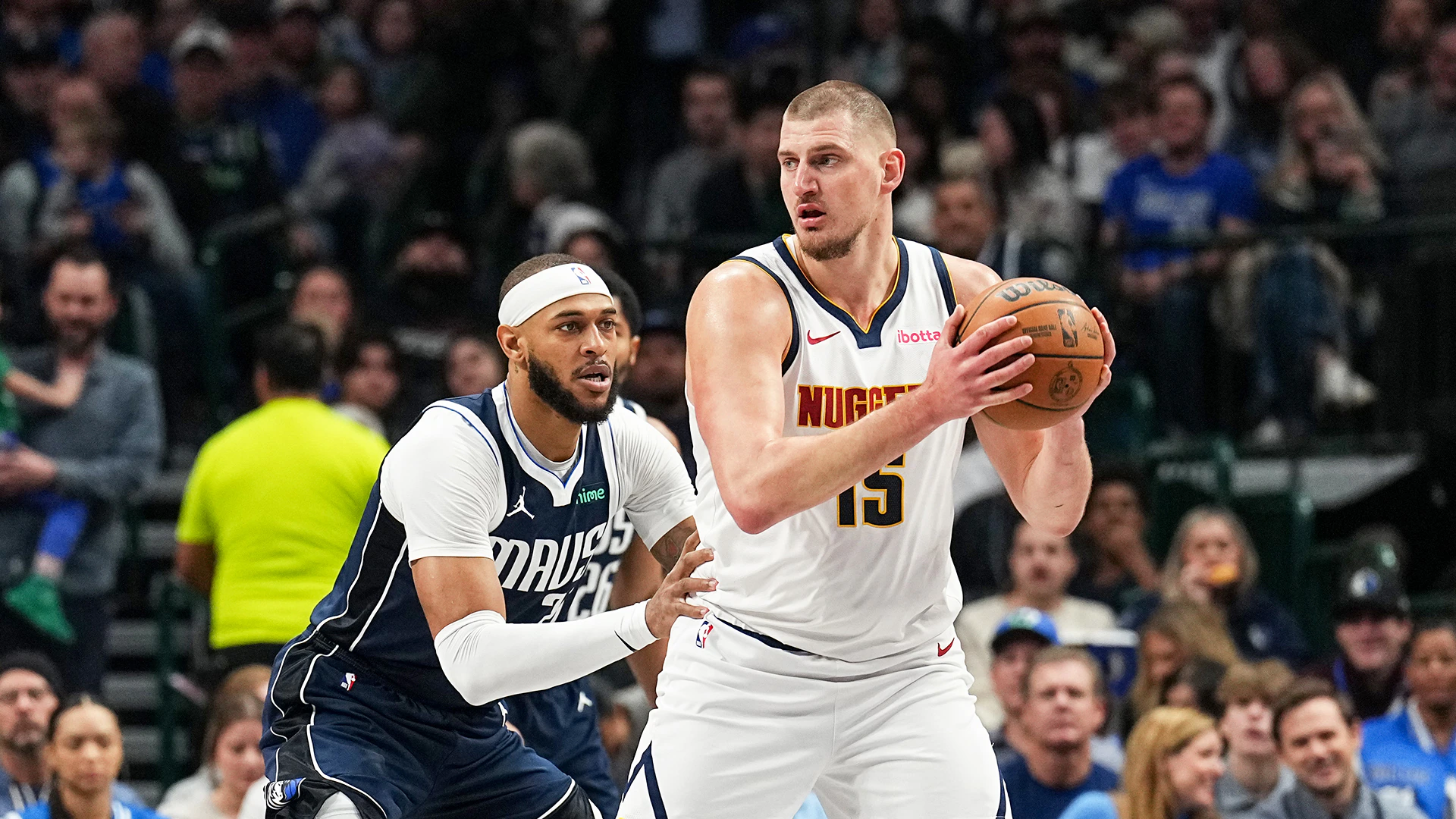
There is exactly one player in the NBA capable of producing something like this without it feeling like an anomaly. Jokić has normalized statistical lines that used to live exclusively in Wilt Chamberlain trivia books. He’s not chasing production; production arrives as a side effect of his control over the game. He doesn’t hunt points — he accumulates them because defenses eventually run out of answers.
Against Minnesota, that control manifested in every possible way. He finished 15-for-21 from the field, 22-for-23 from the free-throw line, played 43 minutes in an overtime win, added two blocks, and became the only player in NBA history to record multiple games of 55+ points and 15+ assists. A year earlier, he dropped 61 points on Gobert in another triple-double performance, a reminder that elite defense does not exempt anyone from Jokić’s reach.
Peyton Watson summed it up best afterward: “I’m tired of not being surprised. This surprised me… We can’t continue to dismiss what this guy does on a night-to-night basis.”
That’s the paradox of Jokić. His greatness shocks us, and then immediately becomes routine.
Routine Greatness Is the Ultimate Compliment
Greatness often becomes invisible once it’s consistent enough. When dominance is expected, the reaction softens. For anyone else, this would have sparked a league-wide celebration, endless soundbites, and weeks of debate. For Jokić, it was absorbed into the rhythm of his season.

He doesn’t even approach games with a scorer’s mentality. Passing and rebounding remain his preferred methods of control. But when the Nuggets are shorthanded, no Aaron Gordon, no Cam Johnson, no Christian Braun, he adjusts without changing who he is. The same reads. The same patience. Just more shots, because the game demands it.
That adaptability is why he’s quietly crashing top-10 all-time conversations and why he’s widely viewed as the greatest active player in the league. Not because of one night, but because nights like this are extensions of a larger pattern.
The MVP Gap Is Real, Even If the Race Isn’t Over
There are four months left before MVP ballots are cast, and the NBA has never been kind to certainty. Seasons twist. Injuries intervene. Narratives shift.

Still, at this moment, the hierarchy feels clear.
There is Jokić, and then there is a gap, and then everyone else.
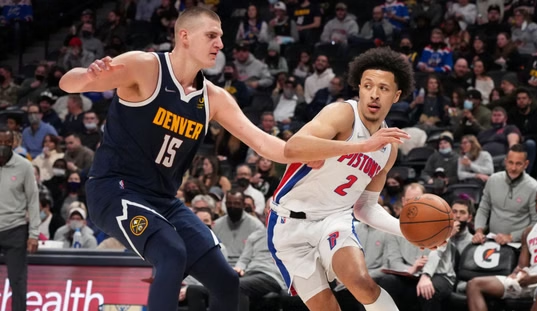
Shai Gilgeous-Alexander continues to produce at an elite level, averaging over 32 points per game, but Oklahoma City’s grip on the West has loosened, especially against a Spurs team that has beaten them three times. Luka Dončić remains the league’s scoring leader and nearly averages a triple-double, but availability and team inconsistency linger. Jalen Brunson has been relentlessly reliable, delivering clutch performances and mistake-free basketball for New York. Cade Cunningham has Detroit atop the East, orchestrating wins with poise beyond his years, even as turnovers creep into the equation.
All of them have cases. None of them control games the way Jokić does, not possession to possession, not night to night, not season to season.
What This Means for the West, and the League
The Western Conference was already on alert. Christmas simply made it unavoidable.

For all the early-season buzz surrounding Oklahoma City’s rise, Los Angeles reshaping itself around Luka Dončić, or San Antonio’s accelerated timeline, none of those teams bring Nikola Jokić to the table. And eventually, every contender must confront that reality in a seven-game series.
Minnesota couldn’t solve him. Most teams can’t. And until someone proves otherwise, the MVP conversation, like the balance of power in the West, still runs through Denver.
Because when the box score stops making sense, when the context gets heavier, and when the moment gets brighter, the same name keeps appearing at the center of it all.
It’s Jokić.
And history keeps unfolding around him, whether we’re ready to process it or not.