

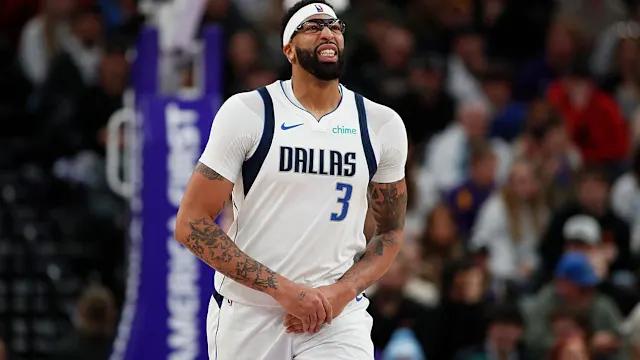
How a once-generational talent became the NBA’s most complicated problem
Anthony Davis is not washed.
That is the uncomfortable truth at the centre of the 2025–26 season, and also the reason this conversation is so difficult.
He is still productive. Still impactful. Still capable of dominating stretches of games on both ends of the floor. But basketball history does not end stars all at once. It erodes them slowly, quietly, and often unfairly.
Davis’s first season with the Dallas Mavericks is not a collapse. It is something far more unsettling:
a controlled decline hidden behind respectable numbers.
The Context Nobody Wants to Admit
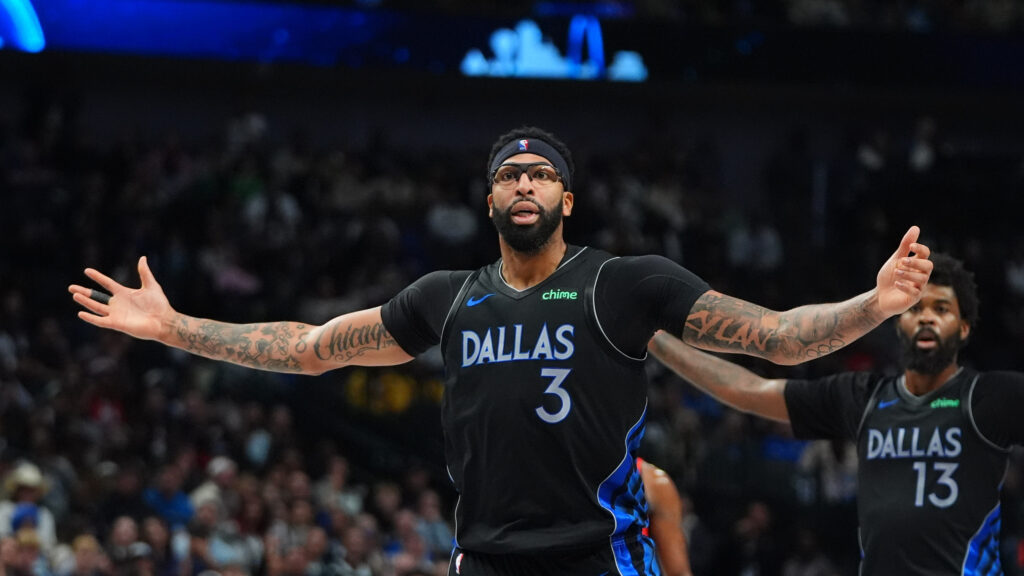
Anthony Davis arrived in Dallas as a bridge, not a destination.
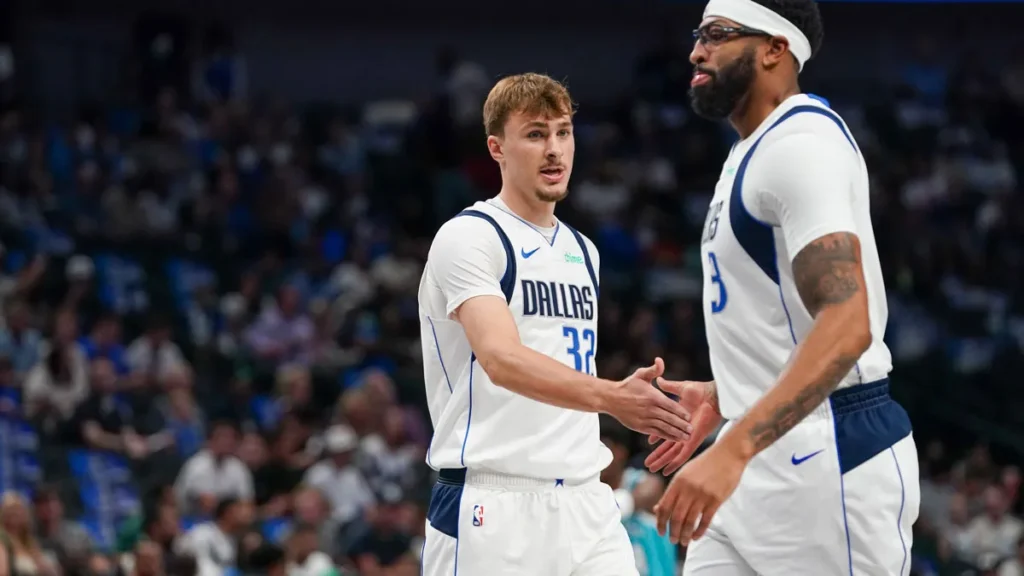
The Mavericks did not trade for him to build a decade-long contender. They acquired him to stabilize a franchise entering a transition phase, buy credibility, and protect the development of Cooper Flagg without throwing a rookie into chaos.
That framing matters.
Because Davis was never supposed to look like peak-Lakers AD in Dallas. He was supposed to be useful, not dominant.
And by that definition, he has done his job.

The Numbers: Still Strong, Quietly Smaller
Through 20 games, Davis has averaged:
- 20.4 points
- 11.1 rebounds
- 2.8 assists
- 1.7 blocks
- 1.1 steals
- 31.3 minutes per game
On the surface, that is a strong stat line. Many teams would gladly accept that production from a starting big.
But context is everything.
Davis is averaging nearly four fewer points than his career norm, posting a 27.0% three-point percentage, and shooting just 72.8% from the free-throw line — both notable dips for a player once considered a matchup nightmare from every level.
His efficiency inside remains solid (50.6% from the field), but the shot diet has narrowed. Fewer face-ups. Fewer confident pull-ups. More finishes that rely on positioning rather than explosion.
That is not failure.
That is aging.
The Monthly Trend That Tells the Story
November offered optimism in miniature.
December felt like a revival.
January exposed the truth.
In December, Davis averaged 21.2 points and 11.8 rebounds, shooting nearly 52% from the field and 36.8% from three. For a brief stretch, he looked settled. Comfortable. Dangerous again.
Then January arrived.
Minutes climbed to 36.8 per game, while efficiency fell sharply. Field goal percentage dropped to 45.1%, and his three-point shot disappeared entirely. The workload increased, but the returns diminished.
This is the pattern that has followed Davis for years.
When usage rises, durability cracks. When responsibility increases, sustainability vanishes.
The Defensive Truth: Still Elite, Still Valuable
Here is where the Davis conversation often becomes dishonest.
Anthony Davis is still a defensive anchor.
His 26.0% defensive rebounding rate ranks among the league’s best. His timing as a shot blocker remains elite. His ability to read passing lanes and recover from mistakes still changes possessions.
Dallas ranks inside the top 10 in defensive rating, and Davis is the reason.
Defense ages better than offense.
But defense alone does not justify a $58.5 million player option in a rebuilding environment.
Why Dallas Never Fully Committed
The Mavericks’ offense tells you everything.
Despite Davis’s presence, Dallas ranks 28th in offensive rating and near the bottom of the league in scoring efficiency. The ball does not flow through Davis the way it once did in Los Angeles.
His 27.6% usage rate is high, but not dominant.
That is not accidental.
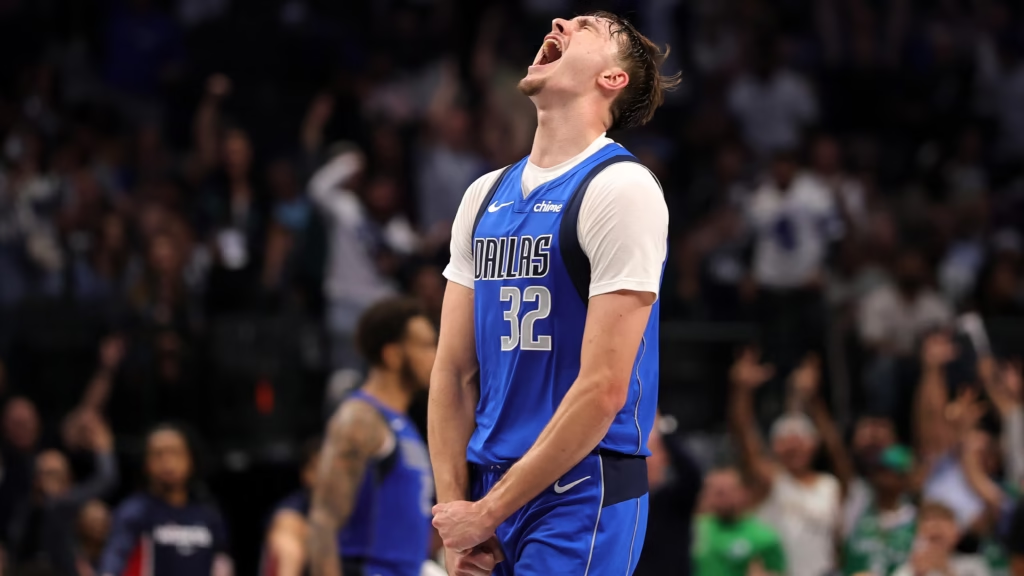
Dallas is not trying to build habits around a 32-year-old big with a fragile medical history. They are prioritizing Cooper Flagg, tempo experimentation, and future flexibility.
Davis exists slightly outside the plan.
Not unwanted, but not essential.
The Injury That Accelerates the Conversation
The ligament damage in Davis’s left hand is not catastrophic.
But it is symbolic.
Another injury. Another timeline interruption. Another reminder that reliability matters more than reputation when franchises are choosing directions.
Whether the recovery takes weeks or months is almost beside the point.
The injury reinforces what executives already know:
Anthony Davis is no longer a foundation piece.
The Trade Market Reality
Davis’s name remains powerful.
Contenders still see him as a ceiling-raiser. The idea of adding a two-way big with playoff experience remains intoxicating — especially in a wide-open Eastern Conference.
But the value has shifted.
Teams are no longer asking:
“Can Anthony Davis be our best player?”
They are asking:
“Can he be our last piece?”
That distinction matters.
His salary complicates deals. His health complicates timelines. And his age complicates extensions.
Dallas understands this.
Which is why patience — not urgency — defines their approach.
The Positive Case: Why He Isn’t Finished
Anthony Davis can still help a contender.
In reduced minutes, with managed usage, surrounded by creators who can shoulder offensive pressure, he remains devastating.
He rebounds. He protects the rim. He punishes mismatches. He raises defensive ceilings.
Basketball has room for that player.
Just not as a franchise pillar.
The Negative Case: Why the Window Has Closed
The version of Davis who could anchor an offense, stay healthy across seasons, and justify an organizational commitment no longer exists.
Not because he failed.
But because time does not negotiate.
Every season now feels conditional. Every stretch of health feels borrowed. Every injury restarts the same internal debate.
That is not how dynasties are built.
What This Season Really Represents
Anthony Davis’s 2025–26 season is not about decline.
It is about redefinition.
He is transitioning from centerpiece to complement, from inevitability to option.
For some stars, that shift is sudden.
For Davis, it has been slow, quiet, and painful to watch.
Not because he is bad.
But because he is still good — just not enough to stop the future from arriving.
Final Thought
Anthony Davis is not done playing meaningful basketball.
But the era of teams building around him is.
And sometimes, the hardest endings are the ones that don’t look like endings at all.