

The NBA’s annual All-Star selections are meant to celebrate excellence, but they also expose the league’s deepest fault lines. The 2026 All-Star Game, set for February 15 at the Inuit Dome in Inglewood, is no different. With reserves now announced, the full picture reveals a league balancing superstardom, efficiency, team success, injuries, and reputation. Some selections feel inevitable. Others feel fragile. And a few omissions are already fuelling arguments that will last well beyond All-Star weekend.
Below is a complete breakdown of the rosters, the reasoning behind them, and the uncomfortable questions they raise.
A Star-Heavy East Defined by Guards and Resurgence
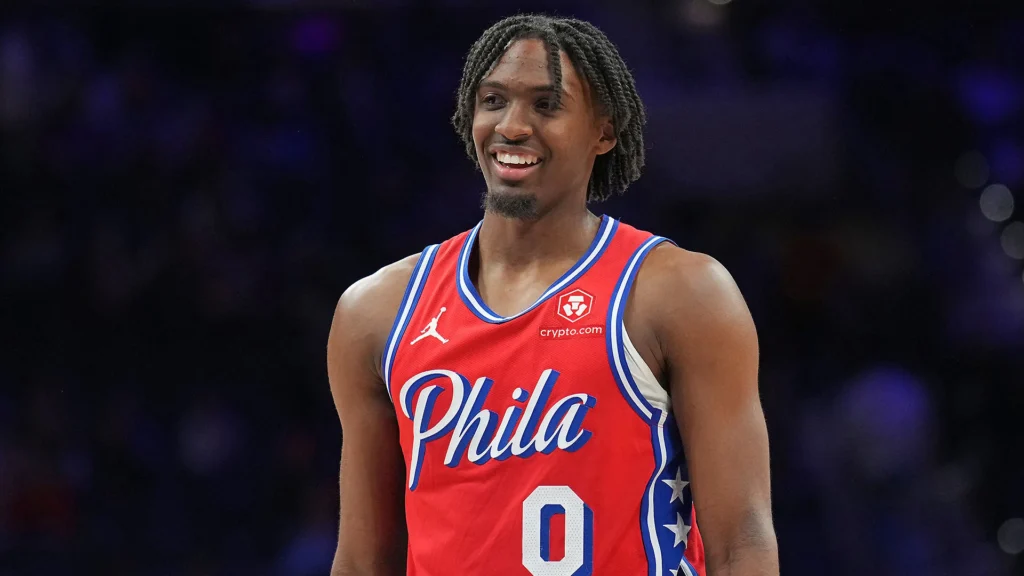
The Eastern Conference starters tell a very specific story: this is a guard-driven conference entering a new era. Cade Cunningham and Jalen Brunson symbolize franchise revivals, while Tyrese Maxey’s offensive explosion has made him one of the league’s most dangerous scorers.
Giannis Antetokounmpo remains the East’s gravitational force, but his re-aggravated calf injury casts a shadow over his availability. If he misses the game, the East will lose its most dominant physical presence, and the reserves suddenly matter even more.
Jaylen Brown’s inclusion stands out not just because of reputation, but because of production. Averaging 29.4 points per game, Brown is playing the most aggressive basketball of his career, carrying Boston offensively on many nights while maintaining elite efficiency. This is not a legacy selection. It is a reward for sustained dominance.
Eastern Conference Reserves: Youth Breaking Through, Veterans Holding Ground
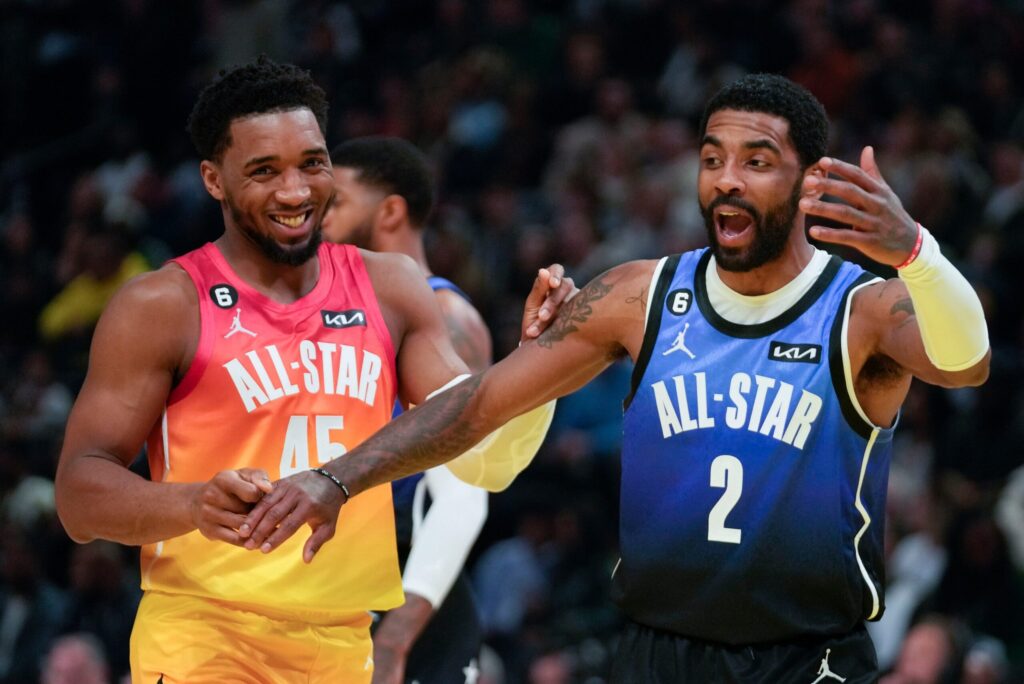
The East reserves reflect a league in transition. Donovan Mitchell’s scoring volume and leadership made him unavoidable, and he is the clear choice to replace Giannis in the starting lineup if needed. Jalen Johnson’s selection feels symbolic: a first-time All-Star whose versatility represents the modern forward archetype.
Karl-Anthony Towns and Pascal Siakam are reminders that elite efficiency still matters, even when team context is imperfect. Towns leading the league in rebounds while shooting over 40 percent from three is not normal, and Scottie Barnes continues to prove that box-score versatility is still highly valued by coaches.
Perhaps the most telling inclusion is Jalen Duren. His counting stats are modest compared to other stars, but his efficiency and defensive impact signal trust from coaches. This is a projection selection as much as a reward.
The West: Star Power Without Apology
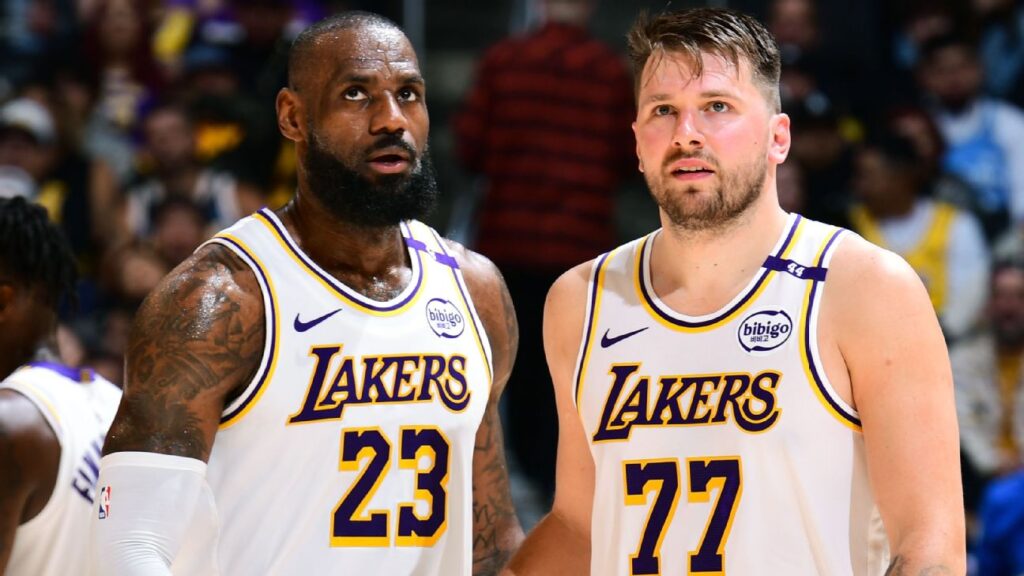
If the East feels competitive, the West feels overwhelming. Luka Doncic leading the league in scoring while wearing a Lakers jersey still feels surreal, but his production makes it unquestionable. Shai Gilgeous-Alexander’s efficiency and MVP-level impact anchor the conference, while Stephen Curry’s continued excellence at 37 defies reasonable expectations.
Nikola Jokić’s injury complicates everything. His absence would leave a noticeable vacuum, not just statistically, but stylistically. Few players bend the game the way he does.
Victor Wembanyama’s inclusion feels like the beginning of a tradition rather than a milestone. Leading the league in blocks while expanding his offensive range has made him impossible to ignore.

Western Conference Reserves: Balance, Longevity, and Breakouts
The West reserves are where the league’s range truly shows. Anthony Edwards’ scoring leap cements him as a franchise alpha. Jamal Murray’s first All-Star selection is overdue, especially considering his recent surge without Jokic.
Kevin Durant and LeBron James occupy a strange shared space: no longer automatic starters, but still clearly among the league’s best players. LeBron being a reserve for the first time in over two decades feels historic, but not disrespectful. His production still demands inclusion.
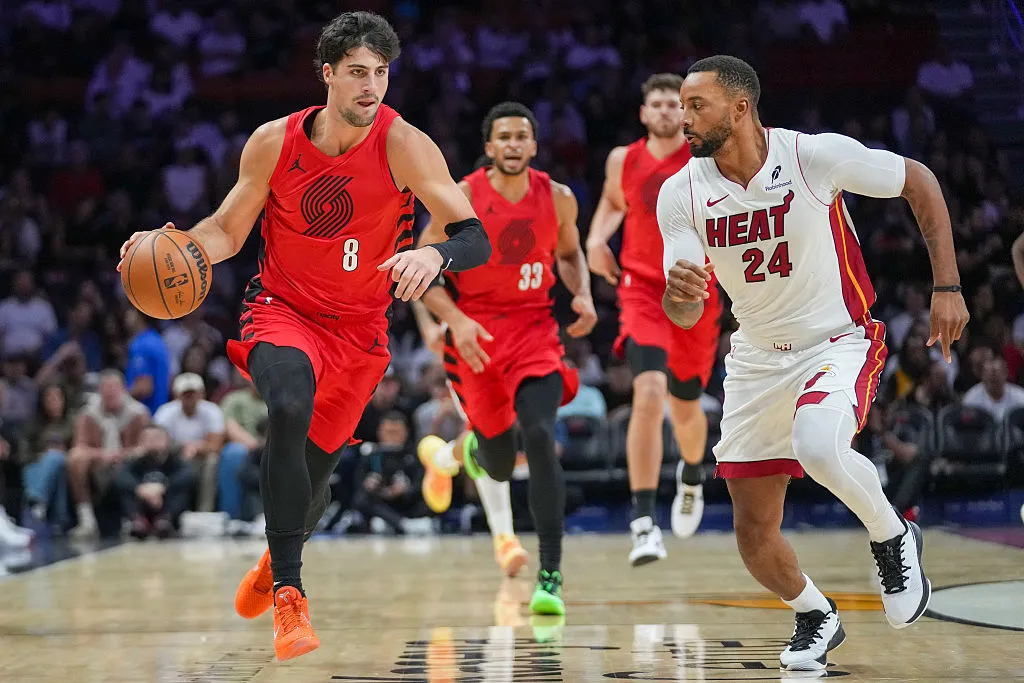
Deni Avdija’s breakout season in Portland is the kind of story All-Star games should reward. He is not just scoring; he is playmaking, rebounding, and elevating a young roster.
Injuries and the Fragility of These Rosters
This year’s All-Star teams feel unusually vulnerable. Giannis and Jokić missing the game would fundamentally change the event, forcing replacements and altering the USA vs. World balance. It is a reminder that availability still shapes legacy, even in exhibition settings.
The Snubs That Will Not Go Quietly
Every All-Star roster creates frustration, but this year’s snubs cut particularly deep.
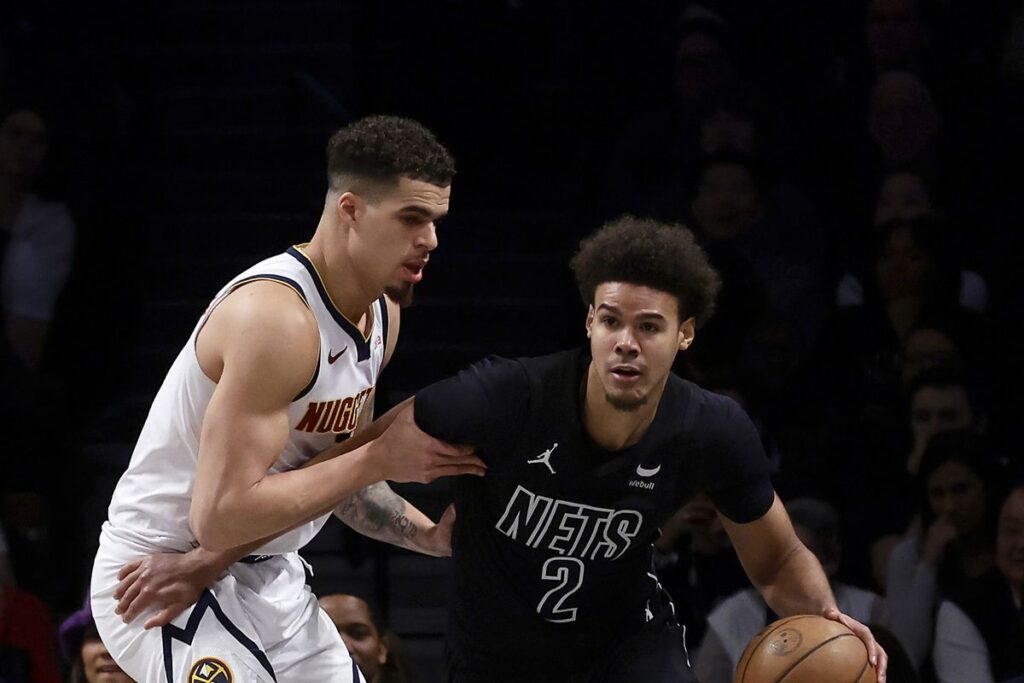
Bam Adebayo’s absence is difficult to justify purely on basketball grounds. His defensive impact remains elite, and his offensive numbers are still All-Star caliber. Michael Porter Jr. and Evan Mobley fall victim to team context and positional congestion rather than lack of performance.
Josh Giddey’s omission highlights how brutal guard competition has become, while Brandon Ingram’s midseason transition likely cost him momentum.
None of these players are far off. That may be the most frustrating part.
A Personal Perspective
What stands out most about the 2026 All-Star selections is how little margin exists between celebration and exclusion. These rosters reward efficiency, versatility, and trust, but they also expose how reputation and timing still matter. I find myself agreeing with most of the selections, yet uneasy about how easily elite two-way players can be overlooked when their impact is less flashy.
This feels like an All-Star year defined less by outrage and more by discomfort. The league is deeper than ever, and for the first time, that depth is forcing genuinely great players to watch from home.