

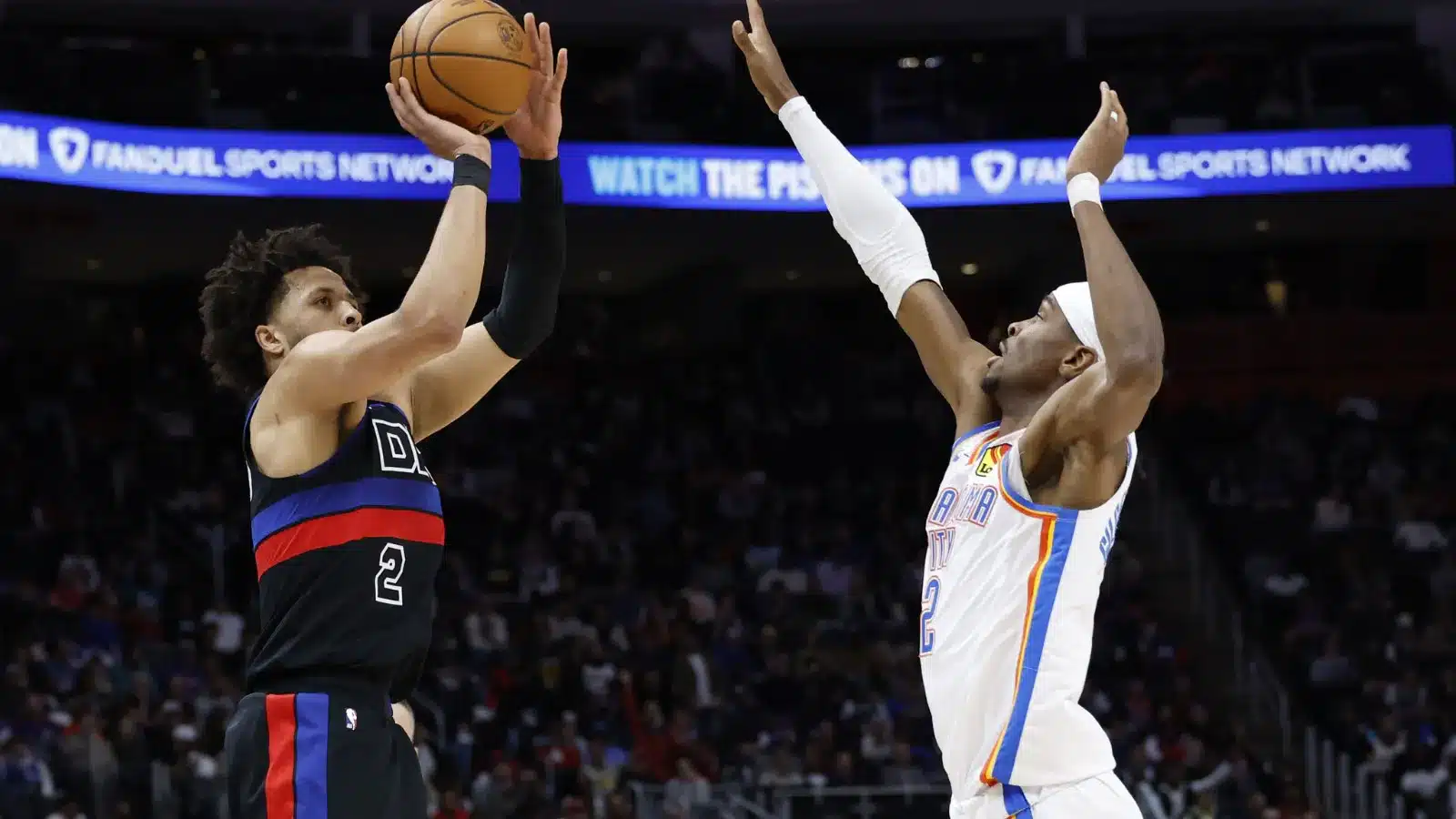
A Collision Course at the Top for Best Team.
As the NBA calendar turns the page beyond All-Star Weekend, the league’s most fascinating power struggle is not confined to one conference, it is league-wide. The defending champion Oklahoma City Thunder and the resurgent Detroit Pistons are separated by fractions, not margins. Oklahoma City sits at 42-14, a mark that reflects dominance, pedigree, and championship continuity. Yet Detroit, at 40-13, quietly owns the superior winning percentage, having played one fewer game. It is a statistical technicality that feels symbolic, the old guard vs the uprising challenger. They are the NBA’s Best, but which best team is truly the ONE Best?
Star Power vs. Star Emergence
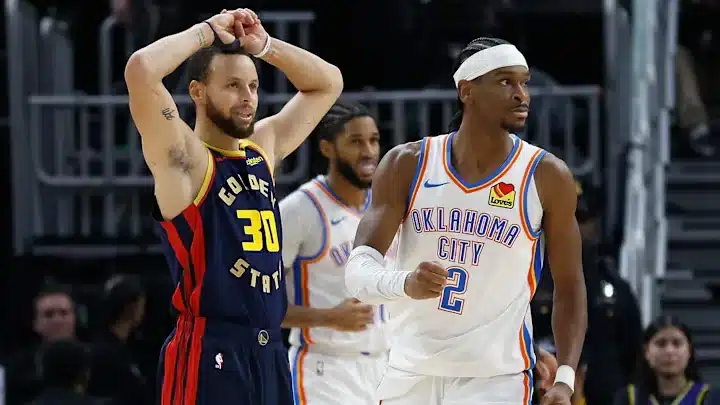
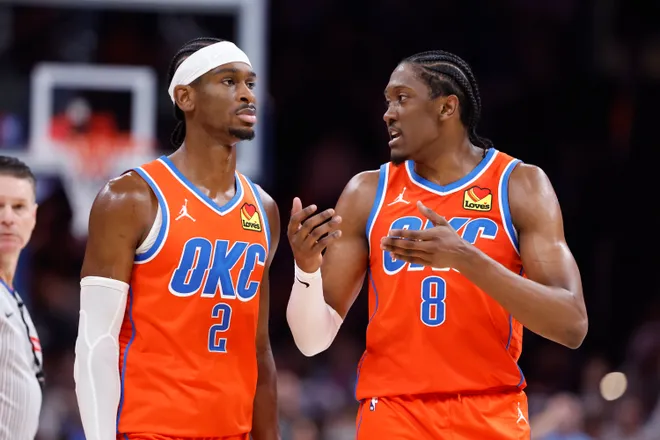
For Oklahoma City, the engine remains undeniable: Shai Gilgeous-Alexander. He has not only sustained his superstardom, he has weaponized efficiency into nightly inevitability. Averaging roughly 31.8 points per game on elite shooting splits, he controls tempo, collapses defences, and closes games with surgical calm. The positive case is overwhelming: an MVP frontrunner leading the league’s most balanced contender. Yet the subtle negative lingers, the offensive burden is immense. When injuries thin the rotation, SGA’s usage spikes into physically taxing territory, raising questions about durability entering the playoff crucible.
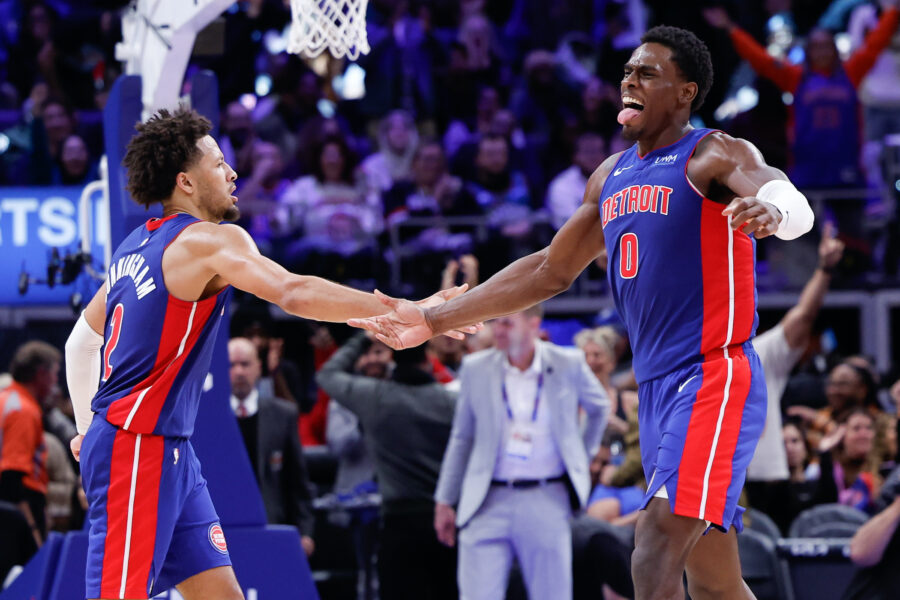
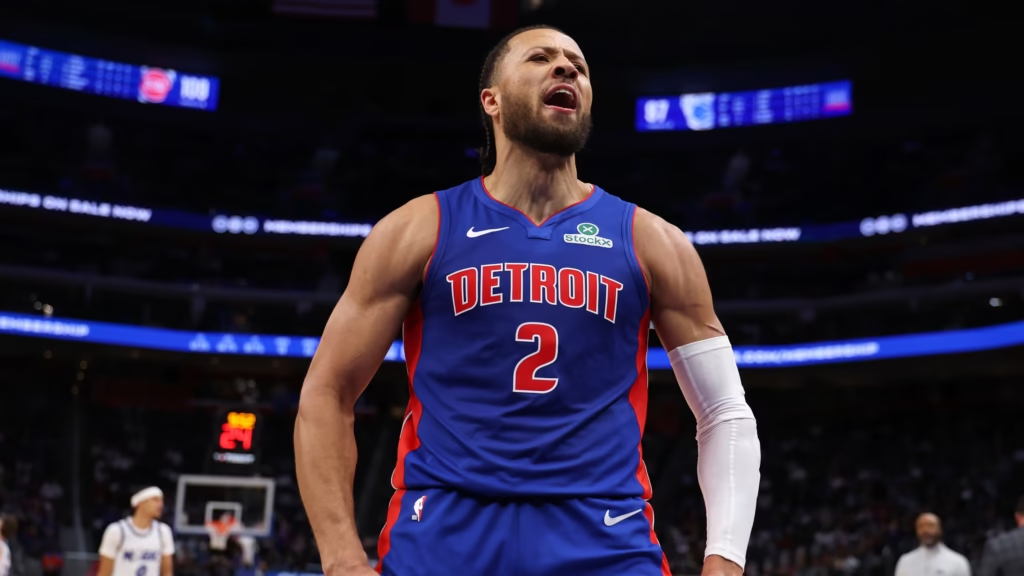
Detroit counters with ascension rather than establishment through Cade Cunningham. His leap has transformed the Pistons from developmental curiosity into one of the NBA’s Best. Averaging over 25 points and nearly double-digit assists, Cunningham dictates games as both scorer and orchestrator. The positive: Detroit finally possesses a true offensive conductor capable of bending elite defences. The negative: unlike SGA, Cunningham has not yet carried this level of responsibility into deep postseason warfare. His brilliance is undeniable, but still unproven under Finals-level stress.
Defensive Identity and Team Structure
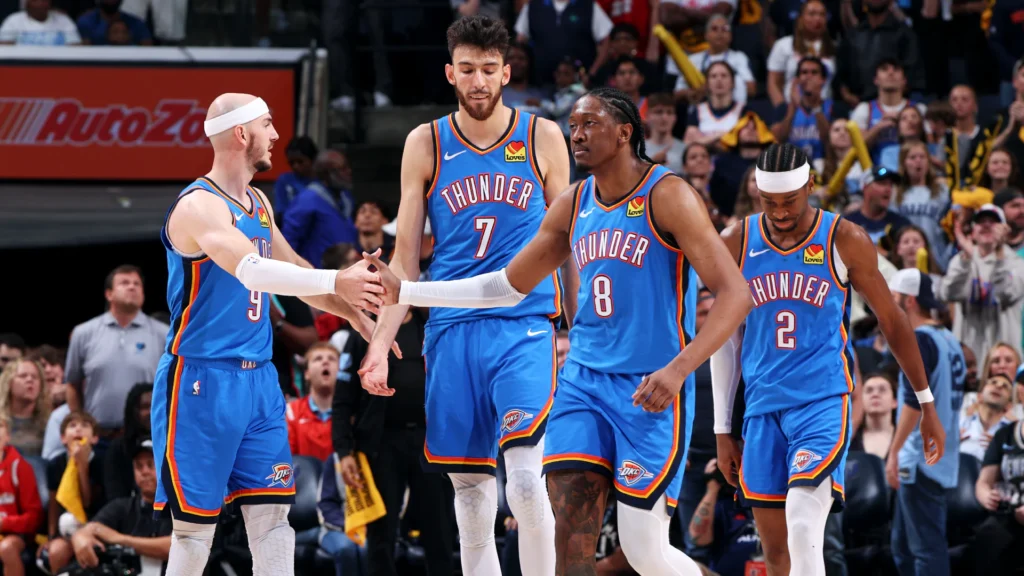
The Thunder’s defensive infrastructure remains the league’s gold standard. Anchored by Chet Holmgren and reinforced by elite perimeter stoppers, OKC posts a defensive rating hovering near historic territory. Their +11.5 net rating reflects systemic suffocation, they do not merely win; they control environments. The positive sentiment is clear: championship defences travel, scale, and stabilize playoff volatility. The concern, however, lies in physical wear. Holmgren’s rim protection load and the team’s reliance on rotational health create vulnerability if injuries persist, they may not be the best anymore.
Detroit’s defence is built differently, more bruising than surgical. Jalen Duren anchors the paint with rebounding violence, while Ausar Thompson wreaks havoc across passing lanes. The Pistons rank among the league’s best in opponent scoring suppression and turnover creation. Positively, their athleticism and physicality overwhelm less disciplined teams. Negatively, their system can be stretched by elite spacing offenses, a schematic stress point Oklahoma City, Boston, or Denver could exploit in a seven-game series, who are also some of the NBA’s best.
Consistency vs. Volatility
Oklahoma City’s season began at a near-mythical pace, a 24-1 eruption that announced their title defence with authority. That opening stretch built their record cushion and reinforced their contender legitimacy. The positive takeaway: their peak level is the highest in basketball. Yet the second-half pre-break slide (18-13) introduced mortality. Injuries, fatigue, and scouting adjustments cooled their dominance, suggesting their margin for error may be thinner than early metrics implied.
Detroit’s case is the inverse, less explosive, more relentless. They have not suffered a losing streak longer than two games all season. Their 11-2 bounce-back record after losses signals emotional resilience and tactical adaptability. The positive: championship habits often begin with consistency. The negative: they lack the prolonged, overwhelming win bursts that historically define juggernauts. Their excellence is steady, but not always terrifying.
Depth, Health, and Sustainability
Thunder depth remains one of the league’s most versatile ecosystems. Contributors like Jalen Williams, defensive specialists, and shooting reserves allow lineup flexibility across matchups. Positively, this modular roster construction is built for playoff chess. However, recent injury clustering across rotation pieces has exposed how quickly depth can erode when multiple absences stack simultaneously.
Detroit, conversely, has thrived through health continuity. Their core rotation has remained largely intact, allowing chemistry to compound nightly. That availability advantage has been central to their record. The positive: cohesion breeds late-season momentum. The negative: their depth has not been stress-tested by extended star absences. It is an advantage, but also an unanswered question.
Coaching, Culture, and Experience
Under Mark Daigneault, Oklahoma City operates with schematic precision. Player development, defensive rotations, and late-game execution reflect elite coaching infrastructure. Championship experience amplifies that edge, they have navigated playoff storms before. The only critique: sustaining emotional urgency after a title run is historically difficult, and midseason complacency can quietly surface.
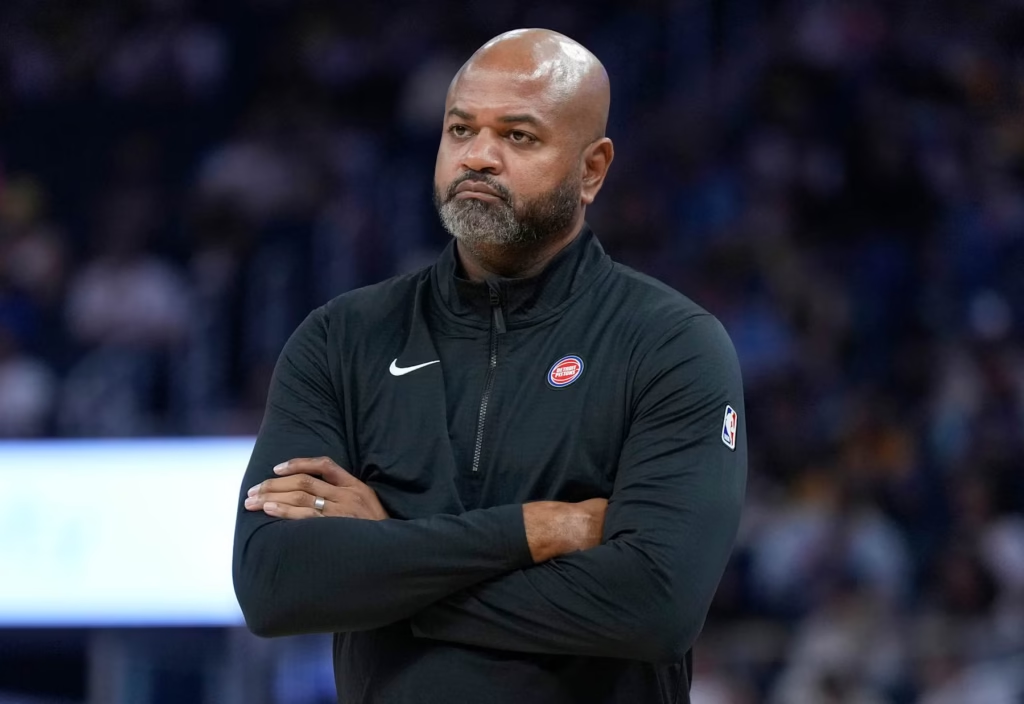
Detroit’s cultural transformation under J. B. Bickerstaff has been profound. He has instilled defensive pride, rebounding dominance, and collective accountability. The positive: Detroit plays with hunger Oklahoma City can no longer replicate. The negative: Bickerstaff’s system, while rugged, has limited postseason tactical resume compared to championship staffs.
Prediction and Final Outlook
This race is not statistical coincidence, it is structural collision. Oklahoma City possesses the league’s most refined contender blueprint: elite superstar, historic defence, championship memory. Detroit counters with youth acceleration, health continuity, and psychological fearlessness.
My prediction leans slightly toward Oklahoma City finishing with the NBA’s best overall record, their net rating supremacy, defensive scalability, and playoff-calibre shot creation provide a higher late-season ceiling once health stabilizes. However, the margin is razor-thin. If Detroit wins the February 25 head-to-head and maintains its health advantage, the standings could flip permanently.
Either way, this pursuit of the NBA’s best team is doing more than shaping playoff seeding, it is previewing a potential Finals matchup. And if that collision arrives in June, the regular-season race will feel less like a footnote… and more like a prophecy.
Check Out Our YouTube Channel and Subscribe to Our Daily Newsletter!