


Cooper Flagg entered the league as the consensus No. 1 pick in the 2025 draft and immediately became the structural centerpiece of a broken roster. His rookie year with the Dallas Mavericks has been a paradox: elite two-way production from a 19-year-old on a team buried in the Western Conference standings. Now, a lingering left midfoot sprain has temporarily paused what was trending toward one of the most impressive teenage seasons in recent memory, and Cooper Flagg is joining some impressive company.
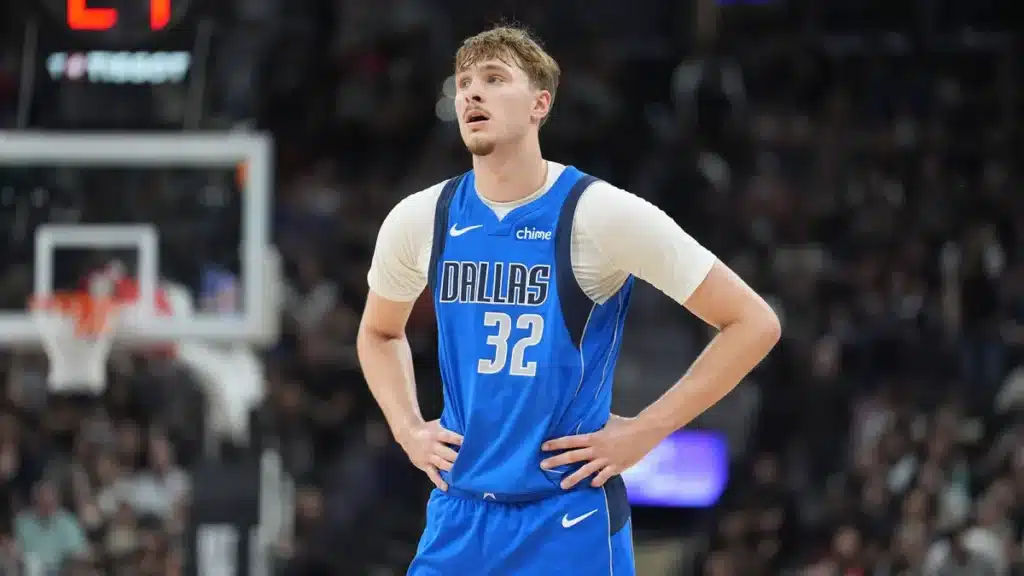
Cooper Flagg’s Left Midfoot Sprain: Risk Over Urgency
Cooper Flagg suffered the injury on February 10, 2026, in a road loss to Phoenix, finishing that game with 27 points in 36 minutes despite visible discomfort. An MRI confirmed a left midfoot sprain without fracture or full Lisfranc disruption. That distinction matters. No surgery. No structural collapse. But not minor either.
The midfoot, specifically the Lisfranc joint, absorbs high rotational force during push-offs, lateral cuts, and landings. For a 6’9” wing whose game relies on explosive closeouts, downhill drives, and transition, ligament instability in that region is vital. Grade 2 sprains (partial tears) typically require 3–8 weeks, especially when swelling and instability persist. Cooper Flagg’s recovery has tracked toward the moderate end of that spectrum.
The timeline reinforces caution. He missed the final pre–All-Star game, was ruled out of Rising Stars weekend, and initial optimism about a quick post-break return faded. He was spotted in a walking boot mid-February. By late February, the boot was removed and light on-court work resumed. However, he remained ruled out for multiple games into early March, missing seven to eight straight contests. A recent upgrade from “out” to “doubtful” signals progress, but contact clearance remains the final hurdle.
Why the extended caution? Context. Dallas is 21–39, lottery-bound, and dealing with major injuries elsewhere. There is zero incentive to rush a franchise cornerstone through a high-recurrence injury. Midfoot sprains can flare if reloaded too quickly, particularly in high-pace systems (Dallas ranks top-five in pace). The organization is protecting 2028–2032 upside, not chasing a 2026 play-in.
There are no indications of season-ending risk. If rehab continues without setbacks, a March return is the expectation. The only tangible loss is Rookie of the Year momentum.
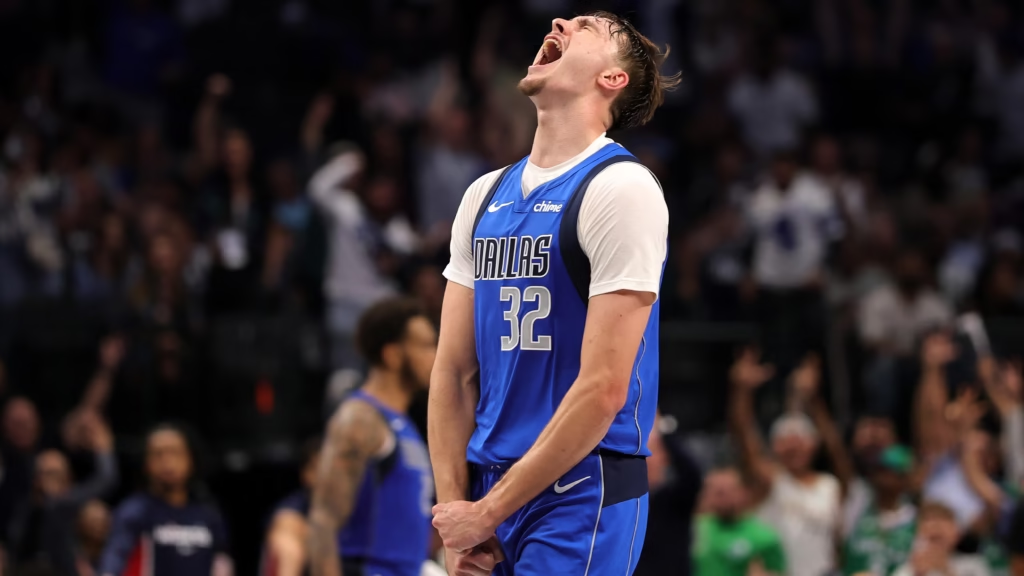
The Rookie Profile: Production in Adversity
Through 49 games (all starts), Cooper Flagg averaged 20.4 points, 6.6 rebounds, and 4.1 assists in 34.1 minutes per game. Nearly 1,000 total points before turning 20. His efficiency: 48.2% from the field, 53.2% on twos, 30.2% from three (1.1 makes per game), and 80.4% from the line. True shooting sits at 56.0%, strong for a rookie primary option on a poor offensive team.
The flashes were historic. A 42-point outing, the youngest 40-point scorer in league history. Three straight 30-point games as a teenager. A February surge above 27 points per game on improved perimeter shooting before the injury interruption.
Advanced metrics support the eye test. PER at 17.4. Positive box plus-minus (+1.3). 3.2 win shares. VORP at 1.4. Usage hovering around 25%. Assist-to-turnover ratio near 1.9. Defensive contributions (1.2 steals, 0.8 blocks per game) underscore legitimate two-way value. His DBPM being positive as a 19-year-old wing is not trivial.
Now layer in team context. Dallas ranks 26th in offensive rating (111.0) and 22nd in defensive rating. Kyrie Irving is out for the season. Dereck Lively II sidelined. Depth instability everywhere. Flagg is the leading scorer on a bottom-tier offense with limited spacing. His on-court net rating (-4.5) reflects team drag more than individual inefficiency.
The weaknesses are real. The 30.2% three-point mark must stabilize closer to league average to unlock true superstar geometry. Creation in isolation is still developing; he can generate advantages but not yet consistently self-create elite separation late-clock. Turnovers spike when defensive attention ramps up. And now, durability becomes a monitored variable.
But the ceiling remains intact. At 6’9”, 205 pounds with guard fluidity, defensive range, and advanced passing instincts, Cooper Flagg’s archetype fits the modern playoff ecosystem. Think scalable wing initiator with switchable defense. If the jumper normalizes to 35–37% on volume, the efficiency leap could be immediate.
Contractually, Dallas controls him on a four-year rookie-scale deal worth roughly $62.7 million, with two team options. If trajectory holds, extension discussions by Year 3 could escalate toward max territory. The timeline aligns with a broader rebuild window.
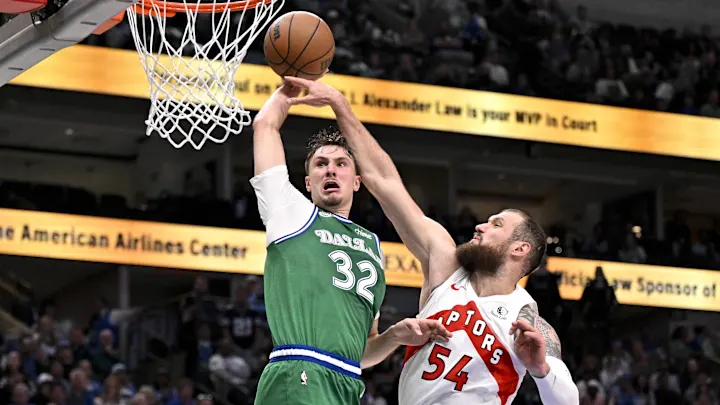
This Is A Pause, Not Derailment
Cooper Flagg’s rookie campaign has not been derailed, only interrupted. The midfoot sprain is a moderate injury requiring patience, not panic. His statistical résumé through 49 games already places him among the most productive teenage rookies of the modern era, especially given two-way responsibility and roster instability.
Dallas is prioritizing preservation over urgency. That is correct process. If Cooper Flagg returns in March and closes the season with health and rhythm, the narrative resets quickly. If not, the long-term projection remains unchanged.
The variable is health. The talent is unquestioned. The infrastructure around him is incomplete.
For a 19-year-old averaging 20-6-4 on heavy usage in chaos, the foundation is elite. The rebuild now hinges on one question: can Dallas build a competitive ecosystem around him before his prime accelerates?
If they do, this injury becomes a footnote.
Subscribe to My YouTube Channel and Sign Up To Our Daily Newsletter!