

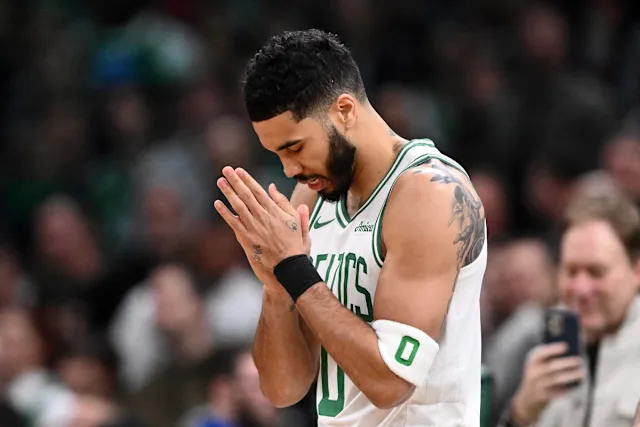
The Boston Celtics are facing a new reality — one without Jayson Tatum for the foreseeable future.
After rupturing his right Achilles tendon in the Celtics’ playoff loss to the New York Knicks, Tatum underwent surgery last month and is now at the very start of what will be a long recovery process. But according to president of basketball operations Brad Stevens, Boston is taking a slow, cautious approach — and that’s completely by design.
“We won’t put a projected timeline on him for a long, long time,” Stevens said following the NBA Draft’s first round. “It’s baby steps right now.”
What That Means for Tatum
The message is clear: Boston isn’t risking anything with their franchise cornerstone. Tatum is expected to miss most if not all of the 2025–26 season, and Stevens emphasized that full health — not an early return — is the priority.
There’s no official return date, no pressure, and no rushing. And that’s probably the smartest move for a player of Tatum’s caliber recovering from one of basketball’s most devastating injuries.
The Ripple Effect on Boston’s Roster
The injury has already reshaped Boston’s offseason strategy. The Celtics have moved on from two critical championship contributors — Kristaps Porzingis and Jrue Holiday — to help lower the team’s luxury tax burden and avoid the NBA’s harsh second-apron penalties. It’s not a rebuild, but it’s a recalibration.
“We knew this was coming,” Stevens added. “This isn’t a huge surprise.”
Jaylen Brown Returns Early
There is good news on the other All-Star front: Jaylen Brown has already returned to the Celtics’ facility following a minor knee procedure. He’s doing ball-handling and finishing work and is expected to be fully ready well before training camp.
In Tatum’s absence, Brown becomes the face of the franchise, and likely the focal point of the offense — a role he’s flirted with before but now must fully embrace.
A Future Still in Focus
Despite a brutal blow to their top player, Boston isn’t abandoning hope. The Celtics are looking to regain flexibility, draft intelligently, and stay competitive in a rapidly shifting Eastern Conference.
They’re not just reacting — they’re preparing.