

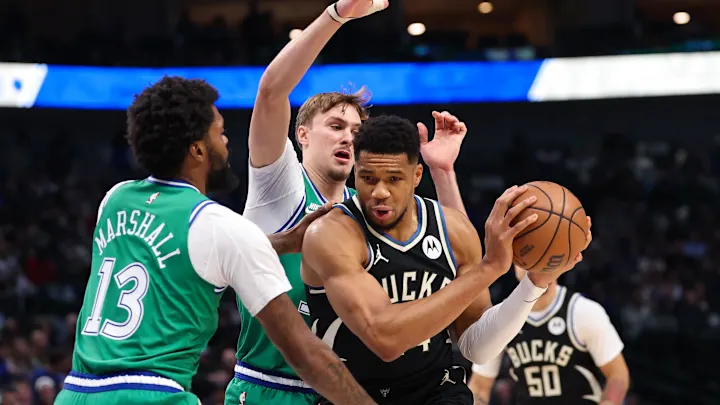
The hours before the NBA trade deadline always feel different, but this year the tension is almost cinematic. As of 7:14 PM ET on February 4, front offices across the league are operating in two timelines at once, the urgency of today and the consequences of tomorrow.
What makes this cluster of trades so fascinating is not just the names involved, but the philosophical divide they expose: contend now, or construct later.
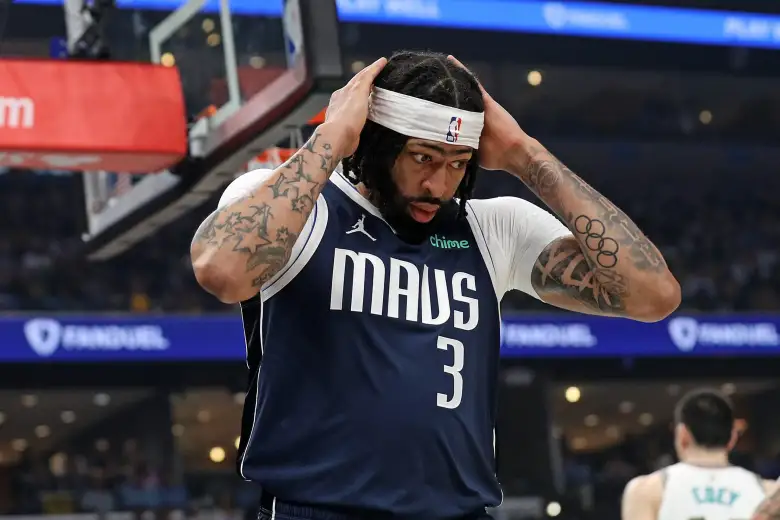
Dallas Waves the White Flag on the Anthony Davis Era
The most emotionally charged move of the night belonged to Dallas. Trading Anthony Davis less than a year after acquiring him signals something deeper than roster adjustment, it signals acceptance.
Davis, when healthy, was still producing at an elite level: 20.4 points, 11.1 rebounds, and 1.6 blocks per game on 50.6% shooting. Those numbers remain superstar calibre, particularly defensively, where he still ranks in the top of the league.
But availability has become the defining statistic of his career. He has missed 15 games already this season and has not completed a fully healthy campaign in years. For a Mavericks team trying to recalibrate around Cooper Flagg’s rookie timeline, the misalignment was obvious.
In return, Dallas secured Khris Middleton, multiple young guards, Marvin Bagley III, and, more importantly, a bundle of first and second-round picks. This was less about players and more about optionality.
Washington, meanwhile, embraced calculated risk. Pairing Davis with their young core is a gamble rooted in upside rather than certainty. If healthy, he becomes both mentor and defensive anchor. If not, the rebuild simply continues uninterrupted.
There is bravery in this type of swing, but also volatility. Washington is betting on the best-case version of a player whose worst-case reality appears more frequently each year.

Oklahoma City Quietly Strengthens a Championship Machine
While blockbuster trades draw attention, championship teams often improve in subtler ways. Oklahoma City acquiring Jared McCain is precisely that type of move.
McCain’s sophomore season, 12.8 points per game on 35% from three, looks modest on paper. But context matters. As a rookie, he flashed near-All-Star scoring potential, averaging 19 points in extended stretches.
For a Thunder roster already overflowing with elite starters, McCain’s value lies in bench shot creation. Playoff rotations shrink, and secondary scoring becomes oxygen. Oklahoma City understands this.
Philadelphia’s decision was financially motivated. Sliding below the luxury tax grants flexibility moving forward, but selling low on a young scorer always carries reputational risk.
This trade may never dominate headlines, yet it has the structural feel of moves that matter deeply in May and June.

Chicago Commits Fully to the Tear-Down
If there is one franchise whose direction is unmistakable now, it is Chicago.
Trading Coby White and Mike Conley in a three-team deal represents their third dismantling move in two days. The return, Collin Sexton, Ousmane Dieng, and second-round draft capital, prioritizes timeline alignment over immediate production.
White was averaging 18.6 points and 4.7 assists, still only 25, and capable of offensive explosions. Moving him is not about performance. It is about sequencing the rebuild correctly.
Charlotte emerges as the immediate beneficiary. Adding both White and Conley gives them scoring and veteran orchestration for a playoff push. Conley’s leadership and White’s pace create backcourt versatility that playoff teams covet.
Oklahoma City’s facilitation role, absorbing Mason Plumlee’s contract before waiving him, once again demonstrates how asset-rich contenders weaponize cap mechanics.
Chicago’s approach is painful in the short term, but structurally coherent. They are no longer pretending to compete.
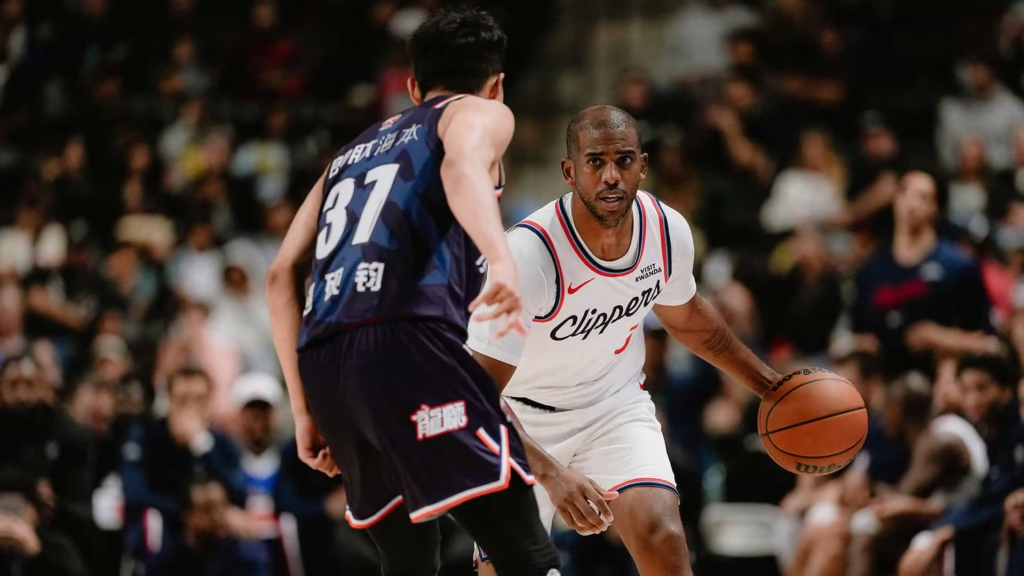
Chris Paul’s Strange Final Chapter
Few storylines feel more surreal than Chris Paul’s current arc.
Now 40 years old and averaging just 4.2 points and 4.1 assists, Paul was moved from the Clippers to Toronto in a salary-motivated three-team framework that ultimately rerouted Ochai Agbaji to Brooklyn.
For the Clippers, this was pure financial engineering, shedding salary tied to a player already exiled from the team in December. For Toronto, it was tax manoeuvring. For Brooklyn, it was opportunistic talent acquisition.
Paul’s on-court impact is now secondary to his symbolic one. He is a mentor, a locker-room stabilizer, and perhaps nearing retirement.
Watching one of the greatest point guards ever become a movable expiring contract is jarring, a reminder of how abruptly NBA timelines close.

Cleveland Clears Space for Something Bigger
The Cavaliers’ involvement in the Lonzo Ball salary dump might look minor, but its implications are anything but.
By moving Ball and shedding roughly $10 million, Cleveland positioned itself just below punitive tax thresholds, a necessary step if they intend to chase a superstar, with Giannis Antetokounmpo rumours intensifying.
Ball’s season, 4.6 points, 3.9 assists, 30.1% shooting, reflects a player still fighting back from devastating knee injuries. Utah waived him immediately, turning the former No. 2 pick into a free-agent reclamation project.
Atlanta quietly benefited, acquiring Jock Landale as reliable frontcourt depth.
This is the type of procedural trade that only makes sense when viewed through the lens of a larger, potentially seismic move still to come.
The Emotional Temperature of the Deadline
What stands out most from February 4 is the emotional contrast across franchises.
Dallas looks exhausted, stepping away from a plan that never stabilized.
Chicago looks resigned, embracing the discomfort of starting over.
Oklahoma City looks surgical, improving margins without disrupting chemistry.
Washington looks hopeful, gambling on upside over certainty.
And then there are teams like Cleveland and Minnesota, hovering in anticipation, clearing space for moves that have not happened yet but feel inevitable.
Personal Reflection
If one theme defines this pre-deadline window, it is realism.
Front offices are no longer clinging to illusions. Dallas admitted their experiment failed. Chicago admitted their core was insufficient. Contenders admitted depth wins championships.
Personally, the Anthony Davis trade lingers most in my mind. Not because of the picks, or the players, or even the rebuild — but because of what it represents.
A superstar still producing elite numbers was moved not for performance reasons, but for durability fears and timeline misalignment. That is the modern NBA distilled: availability, age curves, and financial elasticity matter just as much as talent.
With hours remaining before the buzzer, the league feels suspended between breaths.
And history suggests the loudest trade is usually the one that happens last.
This blog is a developing story and is getting updated constantly, check out our X for the latest news, trades, NBA Trade deadline and general trade rumours and trade news!