

The Supporting cast BEHIND a team are the true superstars…
There is a reason dynasties feel so rare. Championships are won by superstars, but they are held together by the players who sacrifice touches, defend the toughest assignments, take the chaos of an 82-game season and make it feel organized. Every historic team had its face… but it also had its backbone. These five supporting casts didn’t just complement greatness, they elevated it, protected it, and, in some cases, outshined it.
Here is a deep look at the five greatest supporting casts the NBA has ever seen.

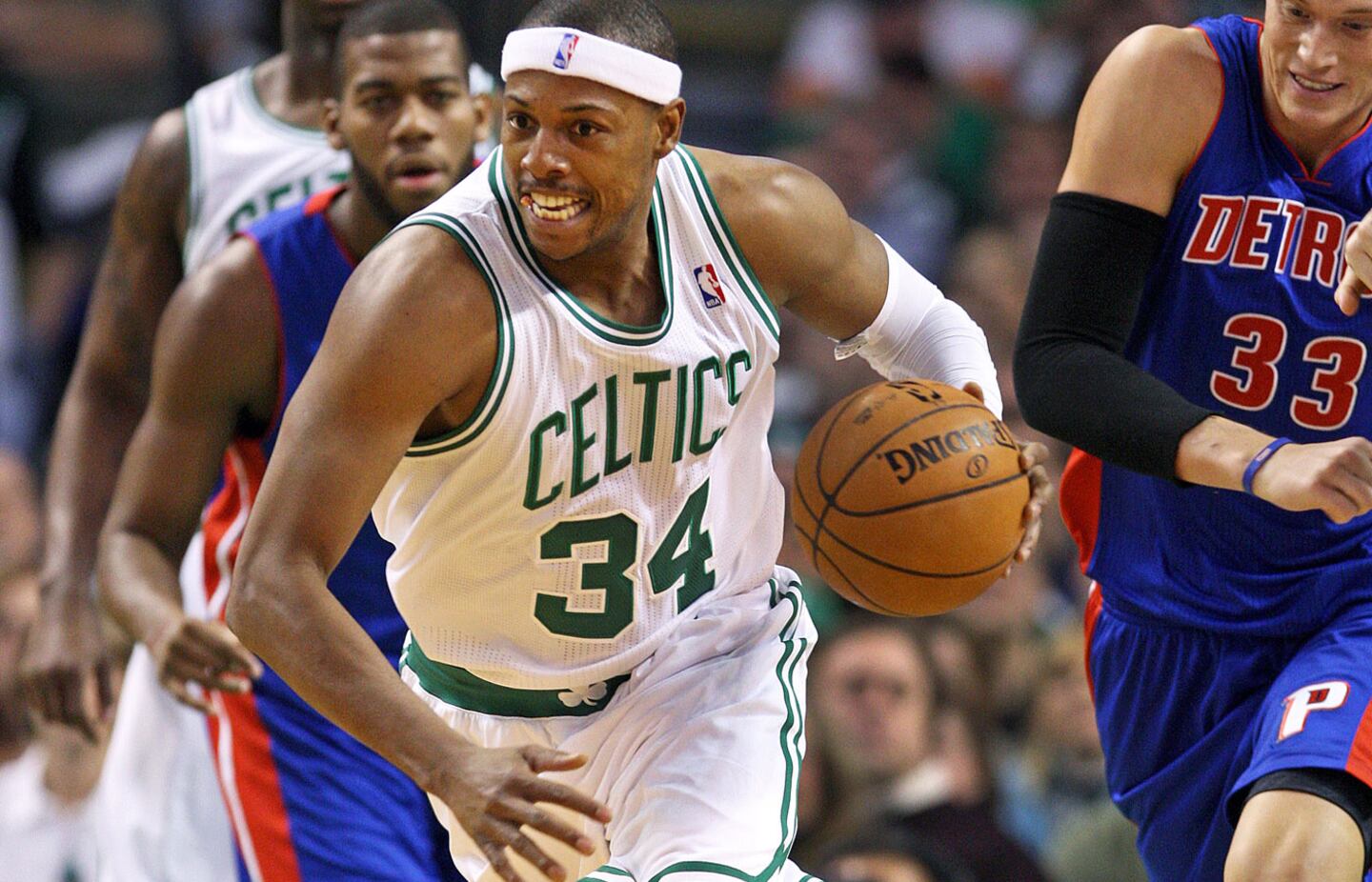
5. The 2008 Boston Celtics
Kevin Garnett and Paul Pierce may have been the spirit of the team, but the Celtics’ support group made this machine unstoppable.
Rajon Rondo was only 21, yet he finished the season averaging 10.6 points, 5.1 assists, and shot an elite 49.2% from the field, rare for such a young guard surrounded by stars. His playmaking took pressure off the Big Three, and his defensive IQ allowed the Celtics to run the league’s No. 1 defense (98.9 Defensive Rating).
Behind him was one of the most reliable benches ever built for a single-year title run. James Posey shot 38% from three and guarded everyone from Kobe to LeBron. Eddie House spaced the floor with 39.2% shooting from deep. P.J. Brown, signed midseason, gave Boston veteran muscle and one of the biggest shots of the entire playoffs.
Boston didn’t win because of sheer talent. They won because every player understood their role so clearly that their identity never shook once, not even in a grueling 26-game postseason run, still tied for the longest championship path in history.
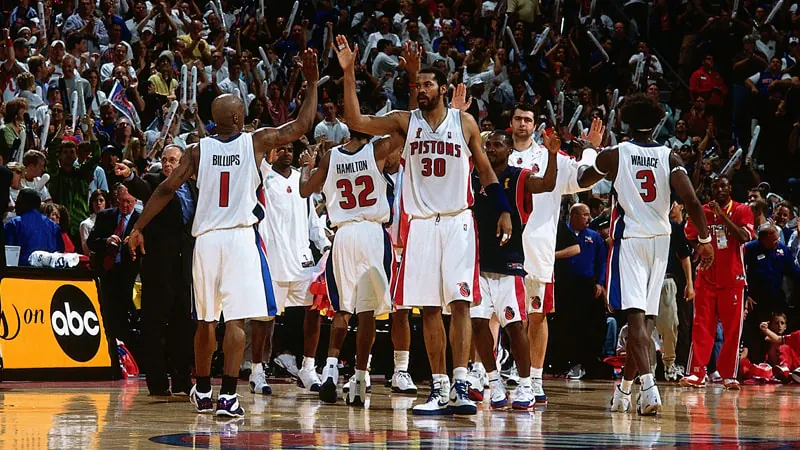
4. The 2004 Detroit Pistons
Detroit is the only modern champion without a “true” superstar, and that’s what makes their supporting cast legendary.
Chauncey Billups (16.2 PPG, 5.7 APG) and Rip Hamilton (17.6 PPG) shared scoring duties, but the identity was built around defense. Tayshaun Prince’s length warped offenses. Rasheed Wallace’s arrival tightened the defense further, and Ben Wallace anchored the group as the most dominant defender of the 2000’s, he averaged 3.0 blocks and 12.4 rebounds per game in the playoffs.
Their bench, Corliss Williamson, Lindsey Hunter, Mehmet Okur, blended scoring bursts with defensive pressure. Together, they held the Shaq-and-Kobe Lakers to 81.8 points per game in the Finals, still one of the most suffocating defensive performances ever.
This wasn’t a support cast; it was a united front, five players locked in rhythm with one mission.

3. The 1996 Chicago Bulls
Everyone remembers Jordan’s 30.4 points, but Chicago’s 72–10 season was fueled by an incredible cast.
Scottie Pippen, the greatest No. 2 in NBA history, averaged 19.4 points, 5.9 rebounds, 5.9 assists, and was First-Team All-Defense. Toni Kukoč, the Sixth Man of the Year, provided 13.1 points and elite secondary playmaking. Ron Harper was a defensive guard with championship poise. Steve Kerr shot an unheard-of 51.5% from three.
The frontcourt depth was equally dangerous:
Luc Longley brought rim protection and post passing, and Dennis Rodman grabbed 14.9 rebounds per game while doubling as the emotional spark plug.
This wasn’t a traditional “bench unit.” It was a layered support system that gave Jordan the freedom to dominate without carrying every possession. They defended, they spaced the floor, they passed with purpose and they built a net so strong that even on Jordan’s worst nights, Chicago rarely cracked.

2. The 2014 San Antonio Spurs
The 2014 Spurs were not a supporting cast around a star. They were a star made from many pieces.
San Antonio had six players averaging at least 10 points, the definition of balance. Tim Duncan, at 37, anchored the defense. Kawhi Leonard, just 22, became a Finals MVP by shooting 61.2% from the field and locking down LeBron. Tony Parker ran the offense with unmatched precision. Manu Ginóbili was a one-man momentum swing.
But what makes this group legendary is their bench.
They led the NBA in bench scoring at 45.1 points per game. Patty Mills, Boris Diaw, Marco Belinelli, and Tiago Splitter created a style of basketball, 0.5-second decisions, endless extra passes, perfect spacing that overwhelmed Miami. In the 2014 Finals, the Spurs shot a Finals-record 52.8% from the field.
This wasn’t support. This was symphony.

1. The 2017 Golden State Warriors
When Kevin Durant joined a 73-win team, the narrative became simple: “They’re unbeatable.”
But it wasn’t just KD, Steph, Klay, and Draymond. It was the surrounding cast that made them historically dominant.
Andre Iguodala, the former Finals MVP, came off the bench and posted a +101 plus/minus in the Finals. Shaun Livingston’s mid-range game was automatic. JaVale McGee, David West, and Zaza Pachulia provided toughness, rim protection, and elite screening. Their bench posted a 47.0% field-goal percentage and the league’s best net rating.
Golden State finished the playoffs 16–1, the best record in NBA history. Their support cast gave them lineups where Durant could rest, Steph could rest, or even both could sit—and the Warriors would still win minutes.
This is the standard every superteam is judged against.