

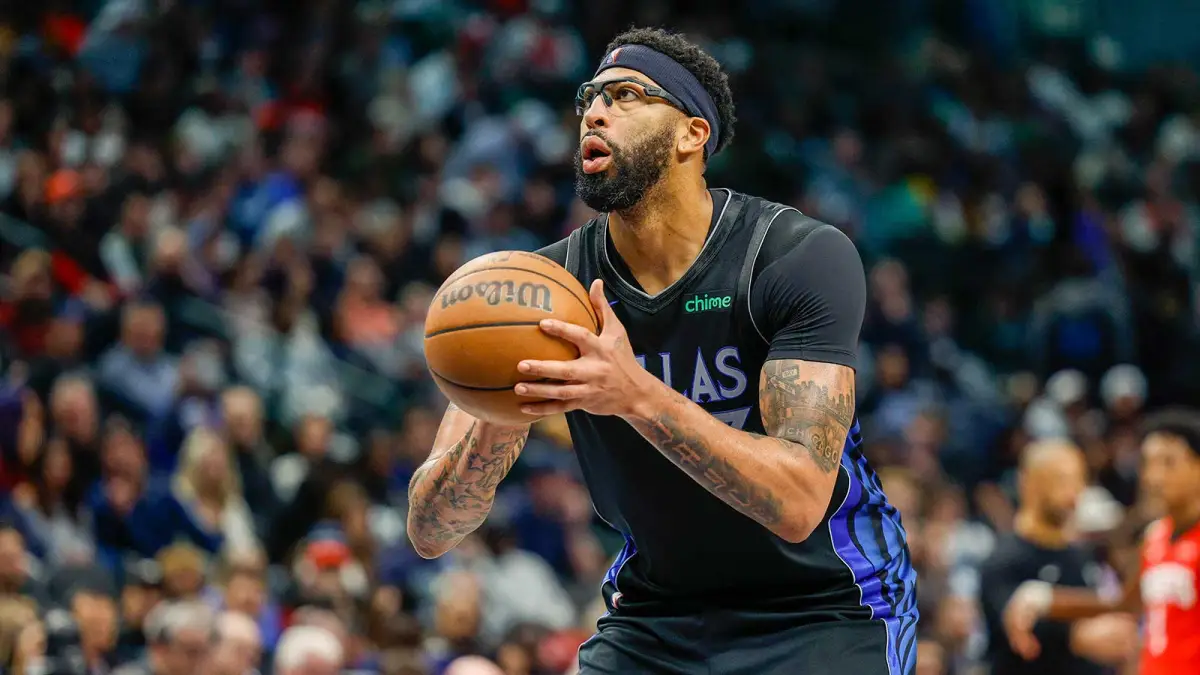
Anthony Davis’ time in Dallas may be approaching a breaking point. According to reporting by Shams Charania, the Pistons, Hawks and Raptors have all positioned themselves as expected suitors for the 31-year-old superstar big man. And the interest is real, external projections even echo it. Polymarket currently lists Anthony Davis with a 32% chance of being traded this season, a remarkably high probability for a player earning over $175 million across the next three years and expected to be the defensive anchor of his franchise.
But the story is more complicated than simple availability. Anthony Davis’ production, injuries, Dallas’ roster issues, and the direction of their season all intersect at the exact same time, forming one of the most fascinating, messy, and potentially franchise-altering situations in the NBA.
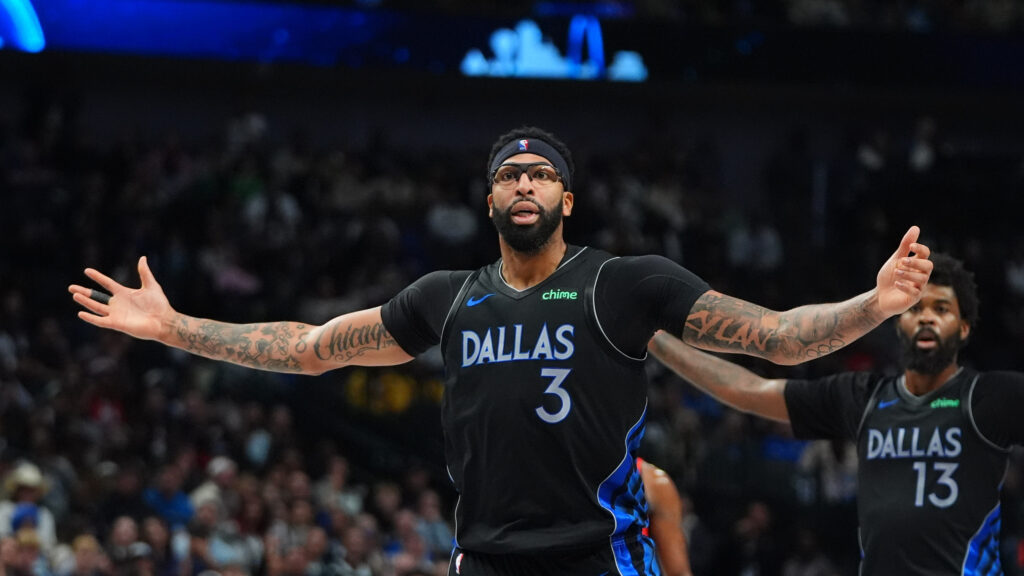
AD’s Production: A Step Forward in Efficiency, A Step Back in Impact
In just 10 games with the Mavericks, Anthony Davis has averaged:
- 19.6 points per game — his lowest scoring output since his rookie season in 2012–13
- 10.2 rebounds — his 11th season averaging double-digit boards
- 3.2 assists — steady, but not impactful for a modern playmaking big
- 1.2 steals & 1.6 blocks — evidence that his defensive instincts remain elite
- 52.3% field goal shooting — solid finishing
- 33.3% from three — his 2nd-highest percentage ever
- 69% free throws — his 2nd-lowest mark of his career
This statistical profile tells two different stories. On one hand, Davis has remained efficient, more willing as a floor stretcher, and a strong defensive presence. On the other, his role and overall impact have been significantly lower than the Mavericks anticipated when they traded Luka Doncic for him on February 3rd, 2025, a move that shocked the league and restructured both franchises’ identities overnight.
Dallas expected a franchise leader, offensive hub, and dominant interior force. Instead, they’ve received a still-great defender whose offensive output has been shkay and whose injuries have piled up at an alarming rate.
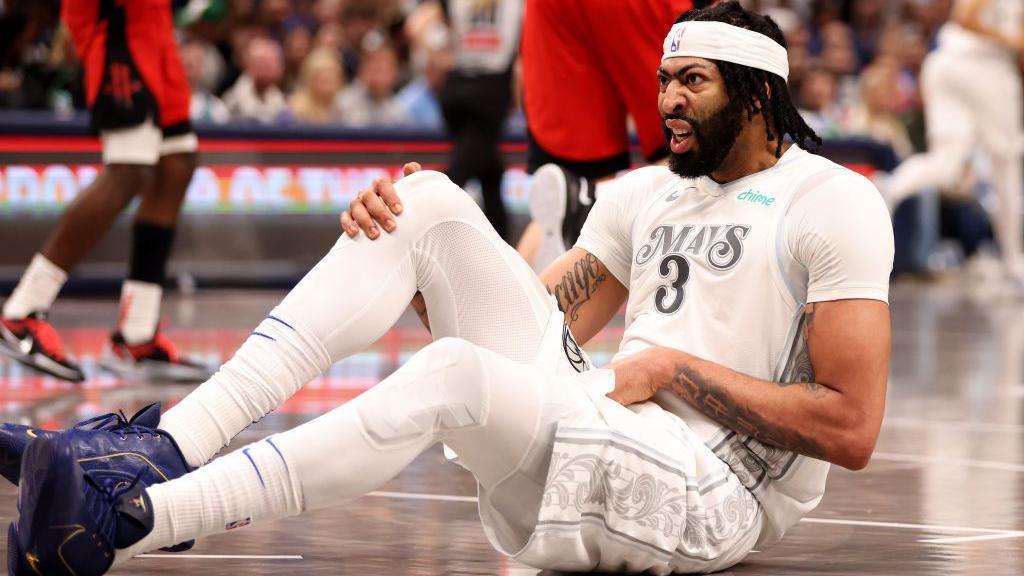
The Injury Timeline: The Core Reason Dallas Is Listening
Since joining Dallas in February, Davis has suffered the following injuries:
- calf strain
- leg contusion
- minor Achilles injury
- groin soreness
- adductor irritation
- thigh bruise
None of these injuries alone are catastrophic, but the frequency, not the severity, is the main issue. Davis has struggled to sustain more than a small handful of consecutive games. Dallas, who is trying to build around Cooper Flagg and Kyrie Irving, cannot afford instability from their most expensive and most important defender.
His contract only adds pressure: 3 years, $175.37 million. Not only does it limit future flexibility, it also requires Davis to be available enough to justify superstar money. So far, that hasn’t been the case.
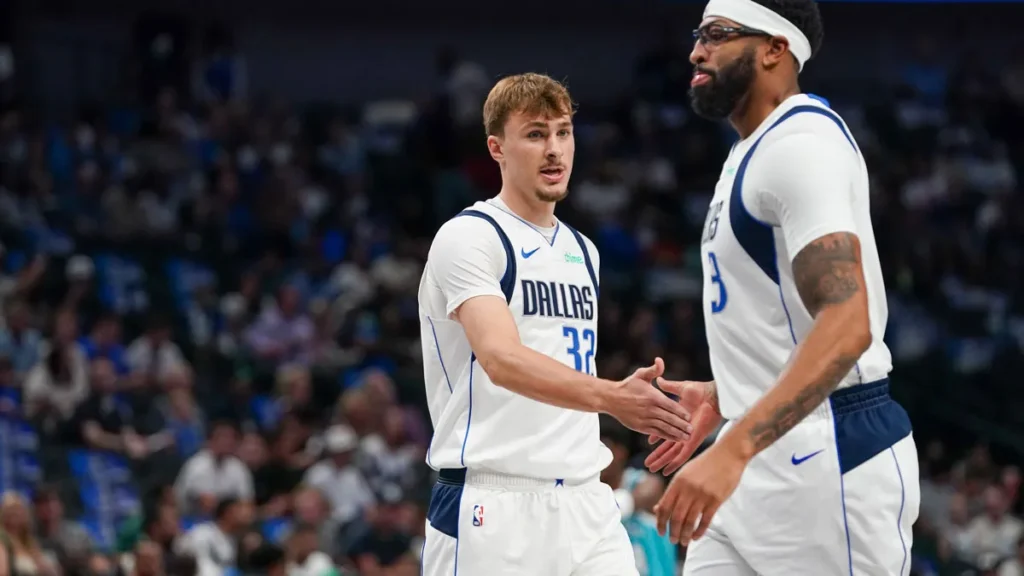
Dallas’ Season Context: A Team Built Around Defense and Youth, Not AD’s Peak Skills
The Mavericks currently sit 11th in the Western Conference at 9–16, deeply underperforming expectations despite incredible flashes from their rookie phenom.
Cooper Flagg, the No. 1 pick in the 2025 draft, has been the unexpected savior of the franchise, averaging:
- 17.3 points
- elite defensive versatility
- strong transition scoring
He leads the Rookie of the Year race by a wide margin.
But the rest of the Mavericks’ statistical profile paints the picture of a flawed roster with weaknesses that Davis simply cannot single-handedly fix.
OFFENSIVE RANKINGS
- 26th in points per game (111.8)
- 25th in made field goals (40.4)
- 21st FG% (45.8%)
- 25th in 3-point makes (11.7)
- 26th in 3-point % (34.1%)
- 26th in FT% (75.6%)
- 26th in true shooting (56.2%)
This is not an offense designed for Davis to thrive. Dallas lacks spacing, lacks creation outside of Kyrie, and struggles with pace and half-court structure.
DEFENSIVE RANKINGS
- 8th in opponent FG% (46.1%)
- 1st in opponent 3-point makes
- 2nd in opponent 3PA
- 1st in opponent 3-point % (32.9%)
- 5th in defensive rebounds (34)
This is a strong defensive base, one Davis helps sustain, but the offensive inefficiencies overshadow it.
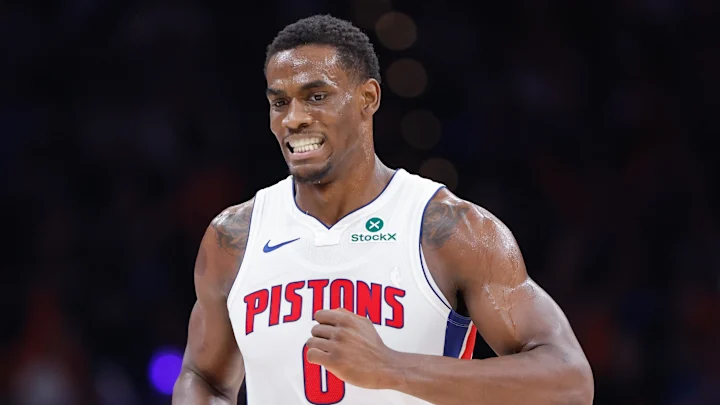
Why Teams Want AD: A Unique Buyer’s Market Meets a Rare Superstar Opportunity
Three franchises, Detroit, Atlanta and Toronto, all find themselves at different stages of their competitive timeline, but share one thing: they believe Anthony Davis may be the perfect missing piece.
Below is a full breakdown of each hypothetical trade, why each team would want Davis, and the consequences for Dallas.
Detroit Pistons: The Best ‘Win-Now Meets Win-Later’ Package
Proposed Trade:
| Pistons Receive | Anthony Davis, 2028 Mavericks 1st-round pick |
| Mavericks Receive | Jaden Ivey, Tobias Harris, 2026 Pistons 1st, 2027 Bucks 2nd |
The Pistons represent the most balanced and realistic suitor, a young team on the rise with a core that, on paper, fits Davis perfectly.
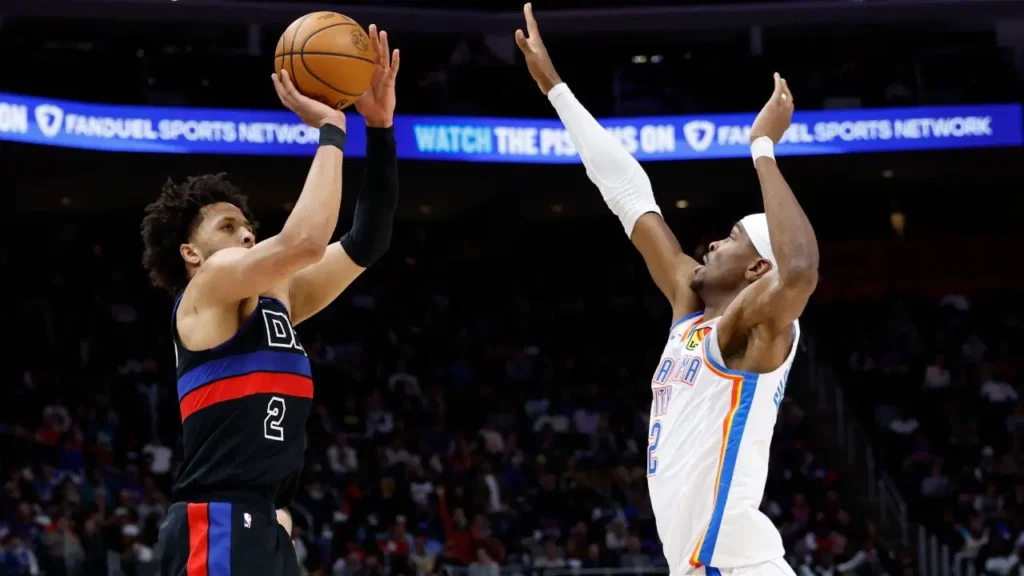
Why Detroit Does It
Davis next to Jalen Duren gives the Pistons a dominant interior defensive duo, and pairing Davis with Cade Cunningham gives Detroit an elite pick-and-roll structure with two natural creators. A healthy version of this roster could realistically win 50–60 games in the East.
Projected starting five:
- PG: Cade Cunningham
- SG: Caris LeVert
- SF: Ausar Thompson
- PF: Anthony Davis
- C: Jalen Duren
- 6th: Duncan Robinson
This is a modern, long, defensively terrifying roster.
Why Dallas Does It
Jaden Ivey gives the Mavericks explosive scoring and transition creation next to Kyrie Irving and Cooper Flagg. He would instantly become a foundational piece of their young core.
Their new starting five:
- PG: Kyrie Irving
- SG: Jaden Ivey
- SF: Cooper Flagg
- PF: PJ Washington
- C: Lively/Gafford
- 6th: Ryan Nembhard
This version of Dallas becomes younger, faster, healthier and more athletic.
Verdict
The most realistic and most “win-win” trade on the board.
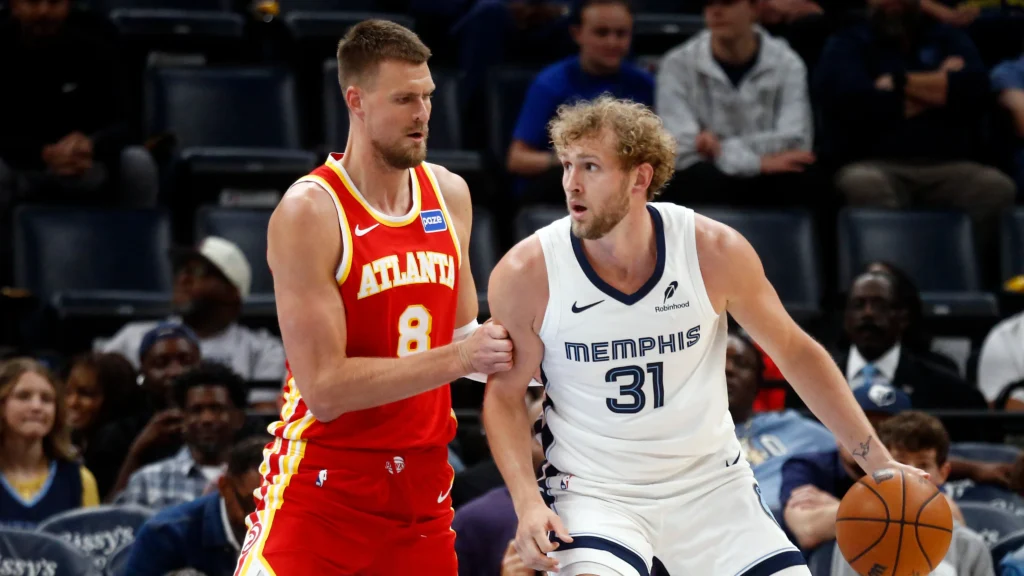
Atlanta Hawks: The Straight-Up Swap That Changes Everything
Proposed Trade:
| Hawks Receive | Anthony Davis |
| Mavericks Receive | Kristaps Porziņģis |
This trade I think is unlikely, but interesting.
Why Atlanta Does It
Trae Young and Anthony Davis give the Hawks a superstar duo they haven’t had in years. Their starting lineup becomes:
- PG: Trae Young
- SG: Dyson Daniels
- SF: Zaccharie Risacher
- PF: Jalen Johnson
- C: Anthony Davis
Defensively, this team becomes a nightmare.
Why Dallas Would Consider It
Porziņģis gives Dallas:
- spacing (career 37% from 3)
- shot-blocking
- a cleaner fit with Kyrie and Flagg
- fewer health risks than AD
Verdict
Not likely, but it creates fascinating roster symmetry for both teams.
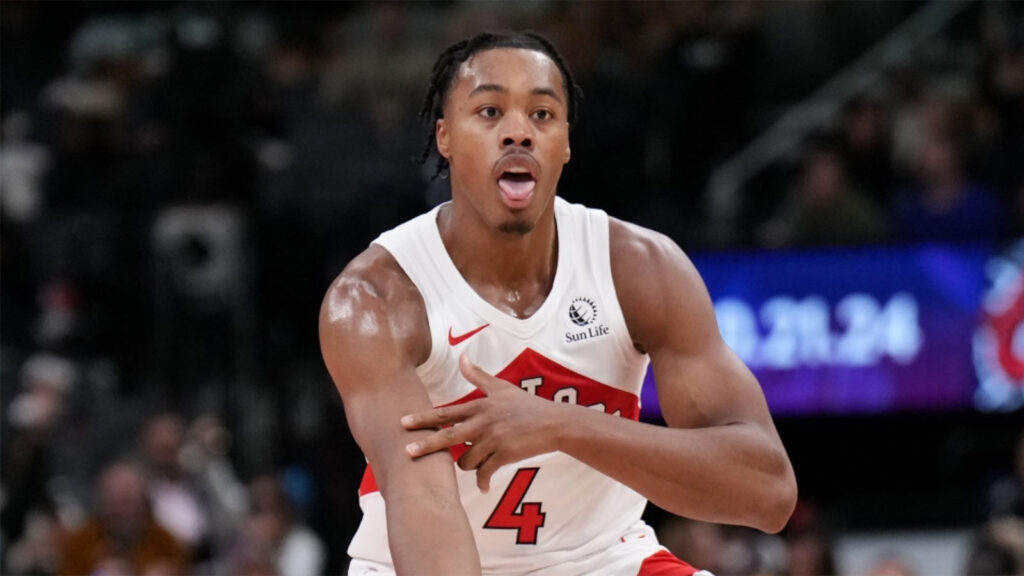
Toronto Raptors: The All-In Push for a Defensive Ceiling
Proposed Trade:
| Raptors Receive | Anthony Davis, 2026 1st Round Pick |
| Mavericks Receive | RJ Barrett, Ja’Kobe Walter, Jamal Shead + 2027 2nd Round Pick, 2029 1st Round Pick |
This is a massive package that signals total belief in Scottie Barnes’ timeline.
Why Toronto Does It
Their projected lineup becomes:
- PG: Quickley
- SG: Gradey Dick
- SF: Brandon Ingram
- PF: Scottie Barnes
- C: Anthony Davis
This could be a top 3 defense in the East with real playoff potential.
Why Dallas Does It
RJ Barrett brings downhill scoring and playmaking, Walter adds shooting and two-way value, and Shead brings elite guard defense.
Plus, they add future picks.
Verdict
High-risk for Toronto. High-reward for Dallas.
A Trade That Helps Everyone? Or a Franchise-Altering Mistake?
Anthony Davis is still an elite defensive player. Still a top-20 talent. Still a massively impactful presence when healthy. But his availability, his declining scoring production, the Mavericks’ timeline, and the direction of their roster have created a rare situation where every possible outcome makes sense, keeping him, trading him, or using him as the bridge toward the Cooper Flagg era.
The Pistons fit best.
The Hawks offer the most symmetry.
The Raptors offer the most assets.
And all three are officially watching Dallas.
The clock on this era may be moving faster than anyone expected.