

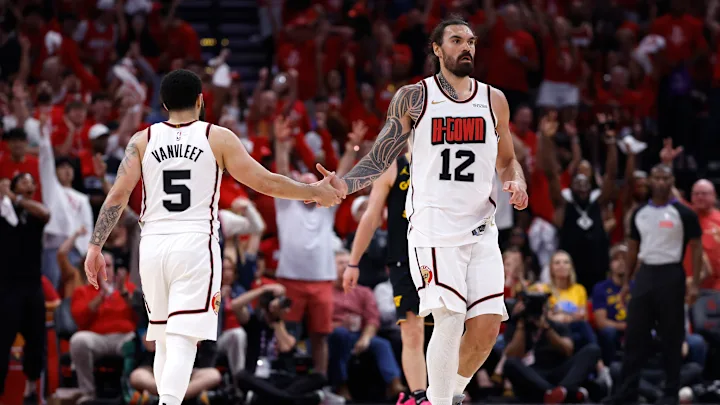
At some point, logic was supposed to catch up with the Houston Rockets.
Logic said a team missing its starting point guard for an entire season should wobble. Logic said losing a rebounding anchor in Steven Adams would expose their interior. Logic said a roster built around physicality and structure would collapse once that structure cracked.
And yet, here they are.
At 28–16, the Houston Rockets sit just two games away from the second seed in the Western Conference, playing some of the most disciplined, punishing, and emotionally resilient basketball in the league. This is not luck. This is not smoke and mirrors. This is a team that has found an identity strong enough to survive injury, imbalance, and doubt, and perhaps even thrive because of it.
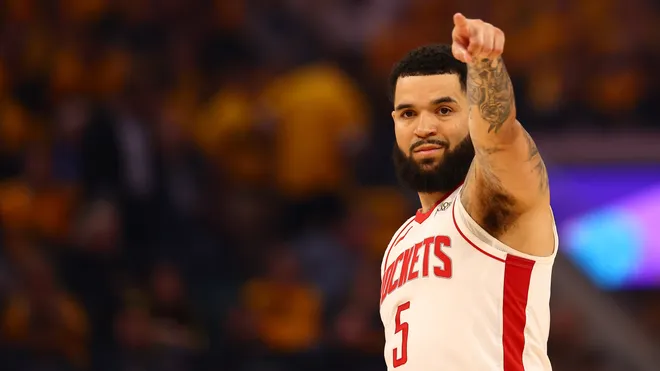
The Injuries That Were Supposed to End the Season
The Rockets did not merely lose rotation players. They lost pillars.
Fred VanVleet never even made it to opening night. A torn ACL suffered before training camp wiped out his entire 2025–26 season. This was the team’s organizer, its stabilizer, its adult voice in late-game chaos. In 2024–25, VanVleet averaged 17.4 points, 8.1 assists, and shot over 40 percent from three. His presence boosted Houston’s offensive rating by roughly five points per 100 possessions. When he went down, the Rockets lost not just a point guard, but their offensive compass.
The numbers confirm the void. Houston now ranks near the bottom of the league in turnover percentage. Possessions are messier. There is no traditional conductor anymore.
Then came Steven Adams. After 32 games, Adams’ season ended with ankle surgery. His raw box-score numbers, 5.8 points, 8.6 rebounds, hardly tell the story. Adams was the foundation of something historic. With him on the floor, Houston posted an offensive rebounding rate above 41 percent, a mark not seen in decades.
He bent defences without touching the ball. He created second chances that demoralized opponents, losing Adams did not just remove size. It removed inevitability.
On paper, this should have been the turning point where Houston slipped back into the crowded middle of the West, instead, they hardened.
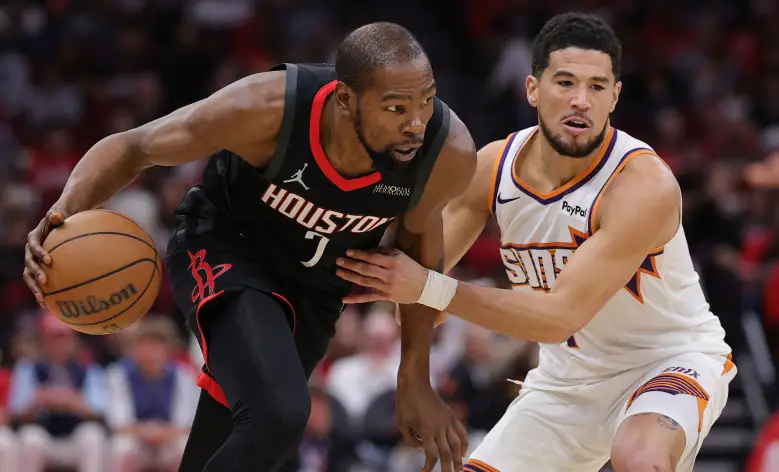
Kevin Durant and the Gravity of Greatness
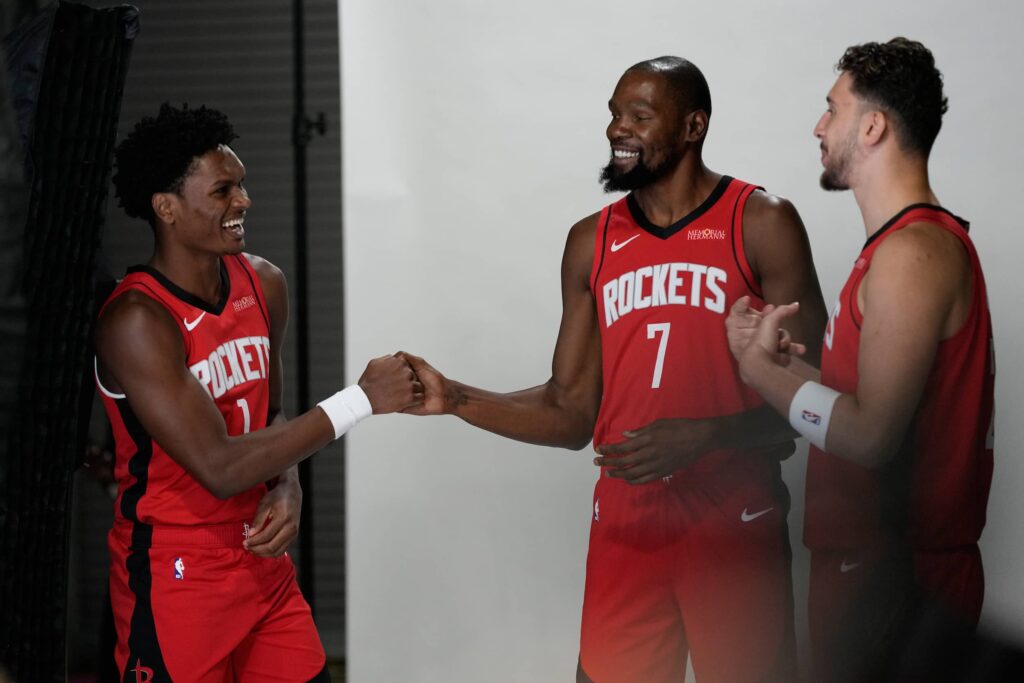
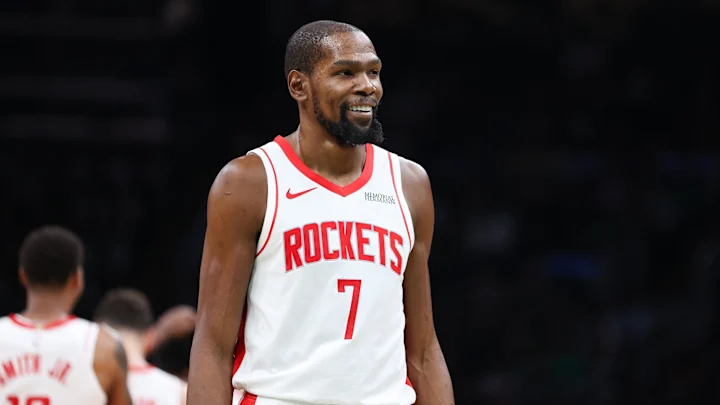
Kevin Durant’s arrival came with expectations bordering on impossibility. Superstars are supposed to dominate. What Durant has done is more subtle, and perhaps more devastating.
He is averaging 26.4 points per game on over 63 percent true shooting, while maintaining elite efficiency from every level of the floor. But the real impact lies in what happens when he does not shoot. Defenses bend toward him instinctively. Help defenders hesitate. Passing lanes widen by inches, which in the NBA might as well be miles.
Houston does not generate offense through ball movement, they rank near the bottom in assists. They generate offense through gravity. Durant’s presence turns difficult possessions into tolerable ones, and tolerable ones into efficient scoring.
Still, there is a quiet concern. At 37, Durant cannot carry this load indefinitely. The Rockets are winning with him, but they cannot afford to rely on him alone.
Thankfully, they are not.
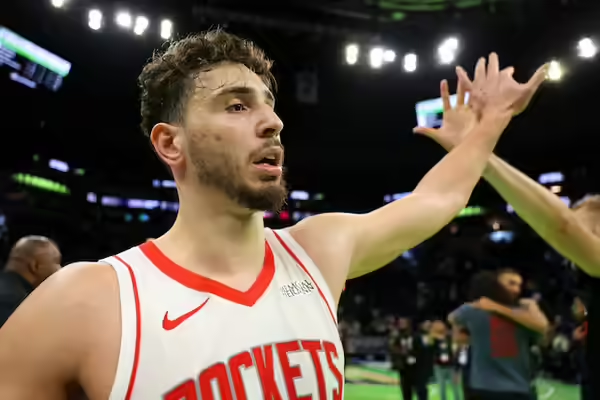
Alperen Sengun and the Reinvention of Control
If VanVleet was the lost brain, Alperen Sengun has become the substitute nervous system.
Sengun is averaging 21.5 points, nine rebounds, and 6.4 assists, operating as a centre who thinks like a guard. Without a traditional point guard, Houston has inverted its offense. The ball flows through the post. Decisions are made from the elbows. Reads happen before defences can fully react.
There are flaws. Sengun is not an elite rim protector, and elite playoff offenses will test him relentlessly. But his ability to control tempo, slow games down, and punish mismatches has become essential to Houston’s success.

Amen Thompson: The Experiment That Refuses to Fail
Amen Thompson was never supposed to be this good this quickly.
Thrown into the starting point guard role, Thompson has averaged 18.2 points, 7.7 rebounds, and 5.4 assists while defending across positions and igniting transition play. He is not a shooter. He is not a traditional playmaker. What he is, is disruptive.
Houston rebounds because Thompson rebounds. Houston defends because Thompson defends. He turns chaos into momentum, and momentum into belief.
Calling him a “scientific experiment” undersells the reality. Thompson is proof that basketball IQ and athletic force can compensate for technical imperfection, at least in the regular season.
The question is sustainability. Playoff defenses will dare him to shoot. The answers to that question have not yet been written.
Winning Without Beauty: Houston’s Statistical Identity
The Rockets are not winning the way modern contenders are supposed to.
They play slow, 28th in pace. They shoot threes reluctantly, 29th in attempt rate. They turn the ball over too much. And yet, they rank fifth in offensive rating and seventh in defensive rating, with a top-four net rating league-wide.
Why?
Because they dominate the margins.
Houston is first in offensive rebounding percentage. First. Even after losing Adams, the philosophy remains. Missed shots are not failures; they are opportunities. Defensively, they rebound, switch, and force opponents into physical possessions that drain patience.
This is not an offense built for highlights. It is an offense built to exhaust you.
The Hard Truth and the Honest Belief
There are reasons to doubt this team.
The lack of a true point guard will matter in late playoff games. The reliance on rebounding is volatile against elite spacing teams. Kevin Durant’s health is never a certainty. And eventually, opponents will scheme specifically to remove Şengün’s decision-making comfort.
But there is also something undeniably real happening in Houston.
This team knows who it is. It plays with emotional discipline. It absorbs loss without panic. It replaces structure with effort and precision with belief. That is rare, especially for a roster this young.
In my opinion, the Rockets are not just surviving the season, they are learning how to win under pressure. Even if the playoffs expose their flaws, the foundation they are building feels authentic. This does not look like a fluke. It looks like a team discovering itself faster than expected.
Want more Houston Rockets news? Follow our X and YouTube for Daily news!