

The Los Angeles Lakers have spent the first quarter of the season surviving on adaptability.
They’ve won without continuity.
They’ve won without health.
They’ve won without comfort.
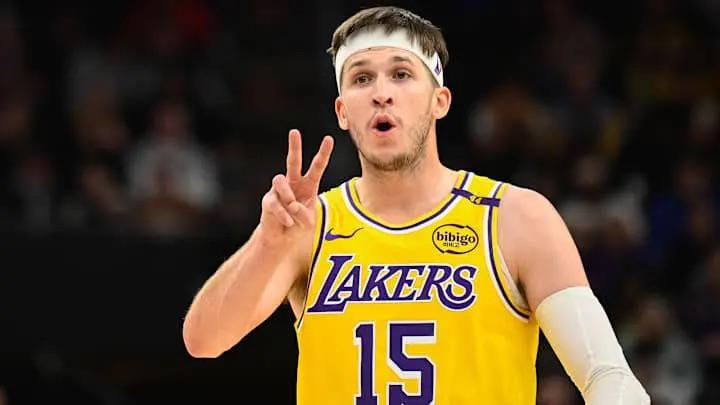
Now, they’ll have to win without Austin Reaves.
The Lakers announced Friday that Reaves will miss at least one week with a mild left calf strain, sidelining him for a minimum of the next two games. On the surface, it reads like good news, no long-term damage, no panic timeline, no structural concerns.
But context changes everything.
Because this isn’t just a starter missing time.
This is the Lakers temporarily losing the player who has quietly become the bridge between stars, systems, and stability.
The Injury Itself: Why “Mild” Still Matters
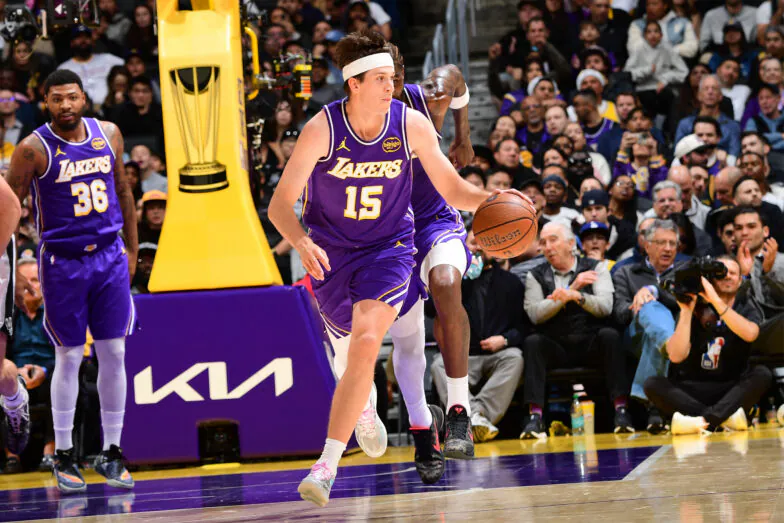
A calf strain may sound minor, but in basketball terms, it’s one of the trickiest injuries to manage, especially for guards.
Reaves’ game is built on:
- Sudden deceleration
- Sharp lateral cuts
- Relentless off-ball movement
- Change-of-pace drives
A Grade 1 calf strain involves micro-tearing of muscle fibers. While it typically carries a 7–14 day recovery window, the danger lies in what happens if a player returns even slightly compromised. The calf is directly tied to Achilles load, and rushed returns often lead to compensatory injuries.
That’s why the Lakers’ phrasing matters.
They didn’t say “day-to-day.”
They didn’t hint at testing pain tolerance.
They set a floor — not a ceiling.
This is a franchise that has already watched its best players go down this season. They know caution now saves seasons later.
Austin Reaves’ Leap: From Supporting Cast to Structural Piece
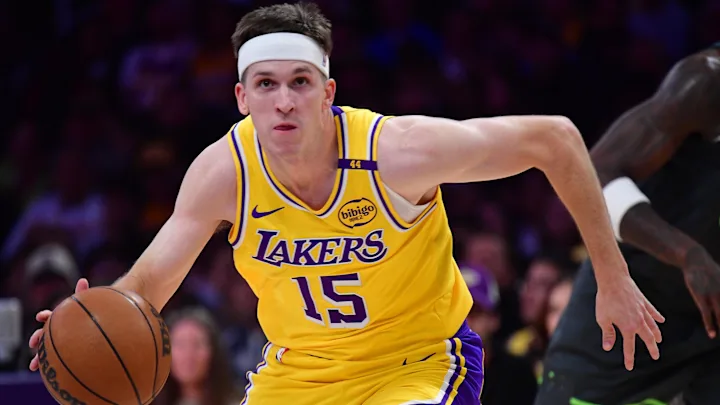
This injury would feel different regardless, but it lands harder because of who Reaves has become.
Through the opening stretch of the season, Reaves is:
- Averaging 27.8 points per game (ninth in the NBA)
- Adding 6.7 assists
- Grabbing 5.6 rebounds
- Playing alongside Luka Dončić, who leads the league at 35.0 points per game
This isn’t empty production.
This isn’t hot shooting hiding flaws.
This is sustainable, role-defining growth.
Reaves has evolved into:
- A primary scorer when needed
- A secondary creator when Luka dominates
- A pressure-release valve when defenses overload
- A late-clock problem-solver
The Lakers didn’t just “find” Reaves. They built him, patiently, deliberately, into a player defenses now have to game-plan for.
Why This Absence Feels Bigger Than the Timeline
The Lakers are 17–7, and that record hides how chaotic this season has been.
- LeBron James missed the first 14 games of his 23rd season with sciatica
- Luka Dončić missed six games due to injury management and personal leave
- Reaves himself already missed three games earlier this year
And yet, the Lakers kept winning.
But here’s the difference:
When LeBron missed time, Luka carried.
When Luka missed time, Reaves stepped up.
Now, the safety net shrinks.
Reaves is the player who absorbs defensive attention so others don’t have to. Without him, the offense becomes top-heavy, predictable, and easier to disrupt.

The Basketball Consequences: What the Lakers Lose Without Reaves
1. Offensive Balance
Reaves prevents defenses from loading up on Luka. Without him:
- Traps come earlier
- Help defenders stunt harder
- Passing windows shrink
Every possession becomes more difficult.
2. Secondary Playmaking
Reaves’ 6.7 assists per game matter because many come in moments where Luka rests or draws double teams. Without him, the Lakers’ non-Luka minutes become fragile.
3. Rebounding and Physicality
At nearly six rebounds per game, Austin Reaves finishes defensive possessions. Losing that from the guard spot forces bigger lineups or more scrambling.
4. Foul Pressure
Austin Reaves lives at the free-throw line through craft, not speed. That slows games, stabilizes runs, and keeps opponents uncomfortable — something the Lakers will miss.
Who Steps In? And Why There’s No True Replacement
There is no player on the roster who can replicate Austin Reaves’ blend of:
- Scoring
- Playmaking
- Efficiency
- Feel
Instead, the Lakers will compensate through structure, not substitution.
Expect:
- Higher Luka usage, even by his standards
- LeBron as a situational initiator, carefully managed
- Simplified reads for role players
- Slower pace, fewer risks
The Lakers won’t chase Austin Reaves’ production. They’ll try to survive the minutes he usually stabilizes.
Short-Term Schedule, Long-Term Stakes
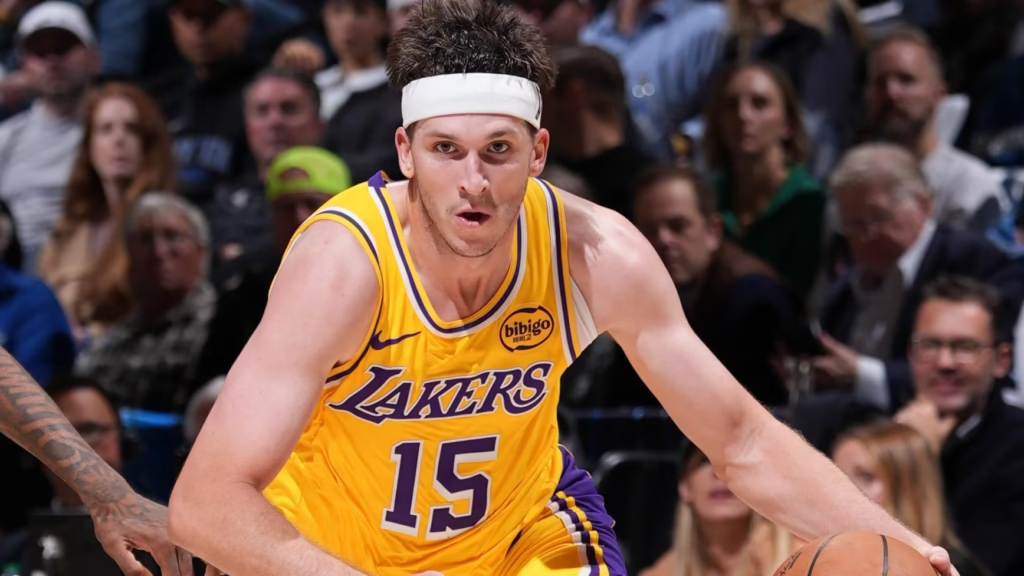
Austin Reaves is expected to miss:
- Sunday at Phoenix
- Thursday at Utah
The silver lining?
There’s spacing between games, allowing for recovery without pressure.
The goal isn’t dominance.
It’s preservation.
If the Lakers split these games, internally, they’ll consider it a win.
What This Absence Reveals About the Lakers
This moment exposes two truths:
- The Lakers are resilient
They’ve already proven they can win without ideal conditions. - Austin Reaves is no longer optional
He’s not a luxury. He’s not a bonus. He’s infrastructure.
His absence doesn’t collapse the team, but it removes flexibility. And flexibility is what has kept the Lakers afloat.
The All-Star Angle: Absence as Evidence
Ironically, this injury strengthens Austin Reaves’ case.
When he returns:
- On/off splits will tell the story
- Defensive attention will be obvious
- The offense will breathe again
The league already respects his numbers. This stretch will remind everyone why they matter.
Final Thought
The Lakers aren’t panicking.
But they are exposed.
Austin Reaves missing a week won’t derail the season, yet it will underline something important:
The Lakers’ ceiling is no longer about stars alone.
It’s about the players who connect them.
And right now, that connector is sidelined.