

A Dangerous Fifth Seed
The Los Angeles Lakers are not dominating the standings. They are not leading the Western Conference. They are not overwhelming opponents statistically.
And yet, at 34–21 (.618) entering late February 2026, they might be the most dangerous fifth seed in basketball.
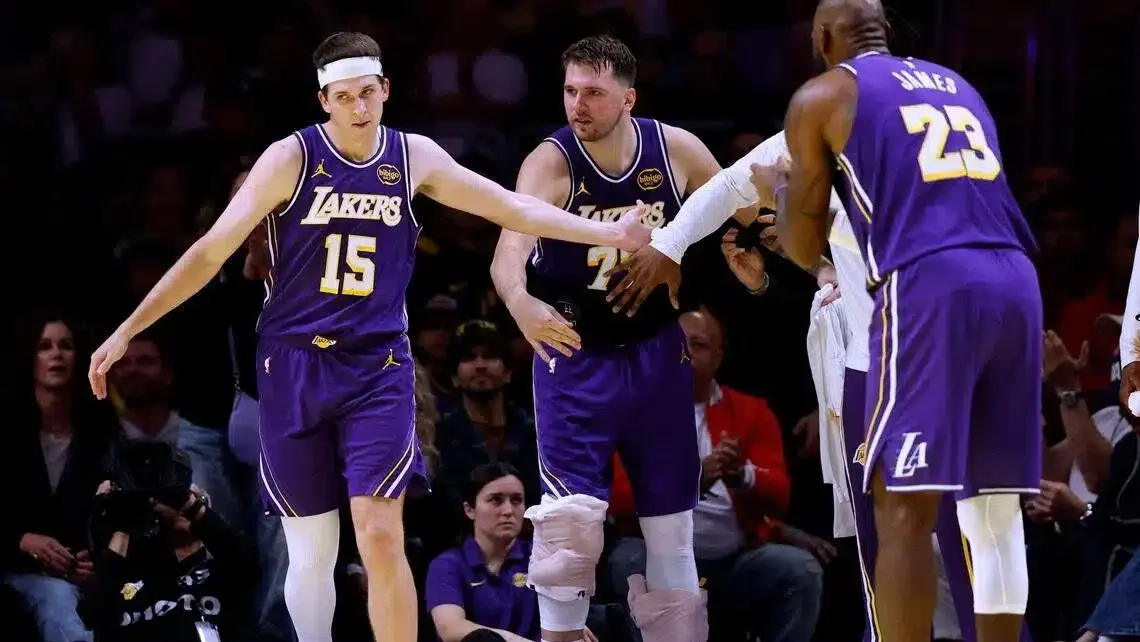
The Western Conference remains tightly packed, with Oklahoma City, Denver, and Minnesota sitting ahead in the win column. But Los Angeles has quietly stabilized. The February 20 win over the Clippers, powered by a new starting lineup of Luka Doncic, Austin Reaves, Marcus Smart, LeBron James, and Deandre Ayton, felt different then the other 33 Wins. Forty-one first-quarter points. Elite spacing. Switchable defense.
The numbers say they are average overall. The roster says they should be more. The question is simple: how do they turn their ceiling into a Western Conference Finals run?
1. Maximize the Offensive Ceiling
Everything begins with Luka Doncic for the Lakers.
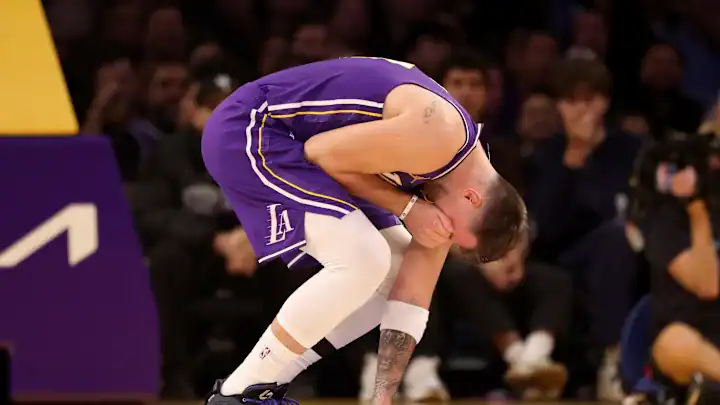
Doncic is averaging roughly 33.0 points, 7.8 rebounds, and 8.6 assists with a usage rate near 38% and a true shooting percentage above .610. That is MVP-level offensive gravity. His pick-and-roll efficiency forces defenses into impossible decisions. Add LeBron, still an elite processor and half-court manipulator at 41, and the Lakers possess two of the smartest offensive engines in the sport.
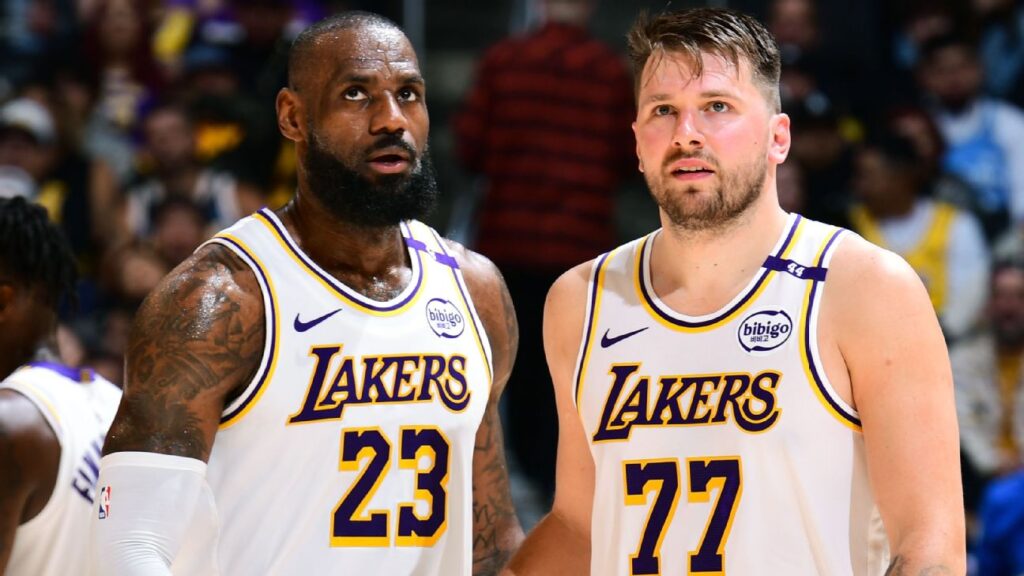
The formula is clear: weaponize the Doncic–LeBron partnership relentlessly. Heavy pick-and-roll usage. Force switches. Punish mismatches. Collapse defenses and generate kick-out threes for Reaves and Smart. Stagger Luka and LeBron so one creator is always on the floor. In their best recent stretch, the Lakers have cracked 120+ points with clean execution and pace control (98.8 pace suits playoff basketball). When this group plays, their offensive rating spikes into elite territory.
But there is a risk. The offense can become heliocentric. Over-reliance on Luka isolations or late-clock bailouts could stagnate ball movement. Additionally, LeBron must be managed carefully, 30–32 minutes per game to preserve postseason burst. If fatigue hits either star, the half-court attack shrinks quickly.
2. Turn the Defense from Weakness to Stability
Offensively, the ceiling exists. Defensively, the urgency remains.
The Lakers rank near the bottom third of the league in defensive rating (117.6). They allow over 116 points per game and struggle on the glass (28th in rebounding). Those numbers do not say contender. They scream vulnerability.
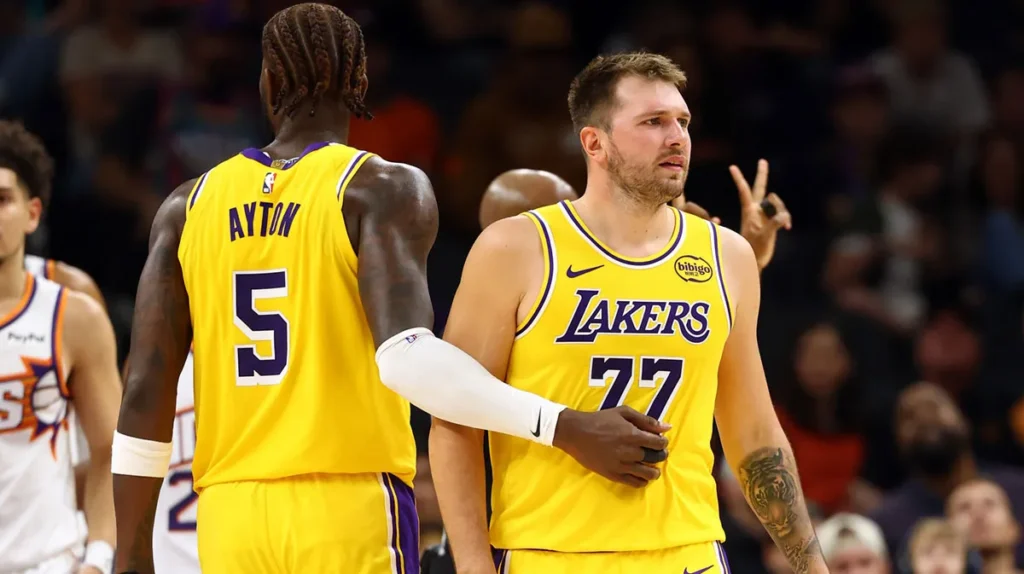
This is where Marcus Smart and Deandre Ayton become critical. Smart provides point-of-attack resistance, guarding elite guards and wings. Ayton anchors drop coverage and secures interior presence. In limited minutes, the Doncic–Reaves–Smart trio has posted a +25.9 net rating, including an elite defensive sample (sub-100 defensive rating in 172 minutes). That is not coincidence; that is structure.
The Lakers must elevate to at least a top-12 to top-15 playoff defense. That means smarter switching, sharper closeouts, more zone looks to protect slower lineups, and greater rebounding commitment from LeBron and Luka. Against Denver’s size or Minnesota’s physicality, second-chance points could decide series. Against Oklahoma City’s pace, transition containment is essential.
If they defend at a league-average level in the postseason, their offense can carry them. If they remain bottom-10 defensively, their run ends early.
3. Rotation Discipline, Depth, and Health
Championship runs are not built solely on stars, they are stabilized by rotation precision.
Head coach JJ Redick must tighten to an 8–10 man playoff core. Rui Hachimura for scoring versatility. Jarred Vanderbilt for defensive energy. Shooting specialists for matchup flexibility. Ayton’s minutes must be staggered carefully to avoid small-ball exploitation. Luka and LeBron must alternate primary creation to eliminate offensive droughts.
Health is the true variable. Earlier in the season, absences from LeBron, Luka, and Reaves contributed to uneven performance and diluted defensive metrics. Entering late February, the injury report is clean, an enormous advantage in a Western Conference where other contenders have battled rotation instability.
The Lakers are 16–10 at home and competitive on the road. They are trending upward post-All-Star break. If they maintain health and optimize matchups series-by-series, Smart on elite scorers, Vanderbilt closing defensive possessions, Ayton matching traditional bigs, their adaptability becomes a weapon.
My Final Opinion
The Lakers are not statistical favorites. Their net rating does not reflect dominance. Their defense remains suspect.
But playoff basketball compresses the game. It slows pace. It amplifies star power. And few teams can match a closing lineup of Luka Doncic and LeBron James operating in controlled half-court environments.
If they elevate defensively to merely competent levels and preserve health, a Western Conference Finals appearance is absolutely realistic. The path is not easy, Oklahoma City and Denver remain structural threats, but the Lakers possess something many contenders do not: two elite playoff decision-makers who have already proven they can bend a series.
Sign Up for Our Daily Newsletter for Daily News Updates in Your Inbox, also Check Out Our YouTube Channel!