

Some franchises are defined by championships.
Some are defined by eras.
The Minnesota Timberwolves are defined by one man.
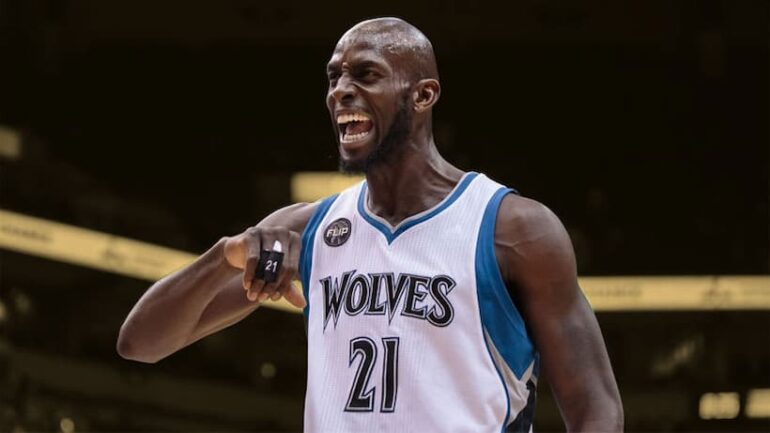
Kevin Garnett did not just play for the Timberwolves, he created them.
Before Kevin Garnett arrived in 1995, Minnesota was an expansion team drifting without identity, relevance, or credibility. After he arrived, the Wolves became a perennial playoff team, a defensive nightmare, and a franchise that finally mattered in the NBA conversation. Nearly three decades later, no player, not Karl-Anthony Towns, not Kevin Love, not Anthony Edwards, has come close to matching Garnett’s total impact.
This isn’t nostalgia.
This is math, history, and context.
Kevin Garnett is the greatest Minnesota Timberwolf of all time.

From High School Risk to Franchise Backbone
When the Timberwolves selected Kevin Garnett with the 5th pick in the 1995 NBA Draft, they weren’t just drafting a player, they were making a gamble the league hadn’t seen in 20 years.
Garnett came straight out of high school. No college resume. No safety net. Just raw talent, relentless intensity, and a motor that never shut off.
By his second season, he was already an All-Star. By his third, he was the best all-around forward in the league. And by his fifth, Minnesota no longer felt like a basketball afterthought.
Across 14 seasons with the Timberwolves (1995–2007, 2015–16), Garnett played 970 games, starting 927, averaging 35.5 minutes per night, elite workload for a player who carried both ends of the floor.
His career averages with Minnesota:
- 19.8 points
- 11.0 rebounds
- 4.3 assists
- 1.4 steals
- 1.6 blocks
- 49.1% FG
- 77.9% FT
Those numbers alone are impressive. They become historic when you add context: Garnett did this while being the primary scorer, primary defender, emotional leader, and system itself for most of his prime.
Statistical Dominance That Still Towers Over the Franchise
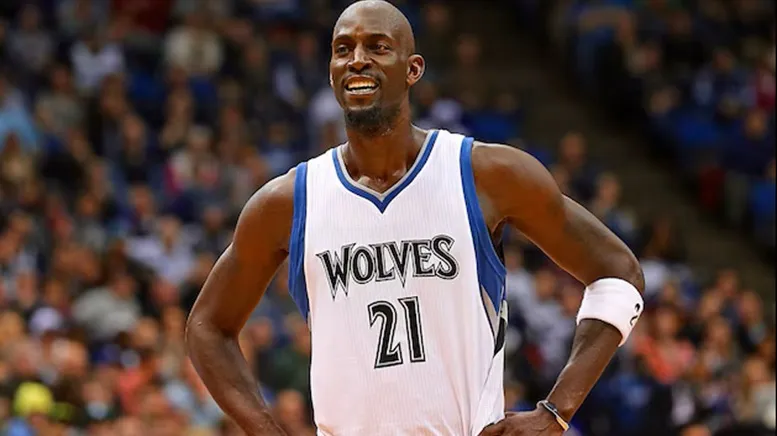
Kevin Garnett doesn’t just lead the Timberwolves record book, he owns it.
He is the franchise’s all-time leader in:
- Points (19,201)
- Rebounds (10,718)
- Assists (4,216)
- Steals (1,315)
- Blocks (1,590)
- Games played (970)
- Minutes (34,240)
No other Timberwolf is within striking distance across all of those categories.
In 2003–04, the greatest season in franchise history, Garnett averaged:
- 24.2 PPG
- 13.9 RPG
- 5.0 APG
- 1.5 SPG
- 2.2 BPG
He led the NBA in Player Efficiency Rating (29.4), Win Shares (18.3), and Value Over Replacement Player (10.0), a statistical trifecta that screams league dominance.
Advanced metrics tell the same story:
- Career PER with MIN: 23.7
- Win Shares: 139.8
- VORP: 74.8
- On/Off Impact: routinely +10 to +20 points per 100 possessions in his prime
When Garnett was on the floor, Minnesota played like a contender. When he sat, they collapsed.

Playoff Relevance: Something Only KG Delivered
The Timberwolves have reached the playoffs 10 times with Kevin Garnett.
They reached the Western Conference Finals once, in 2004, and that remains the deepest playoff run in franchise history.
In 47 playoff games with Minnesota, Garnett averaged:
- 21.0 points
- 13.3 rebounds
- 4.9 assists
- 1.7 blocks
During the 2004 postseason alone:
- 24.3 PPG
- 14.6 RPG
- 5.1 APG
That run included a series win over the defending champion Lakers and remains the emotional high point of Timberwolves basketball.
No other player has lifted Minnesota anywhere near that level.
Awards, Recognition, and Historical Weight
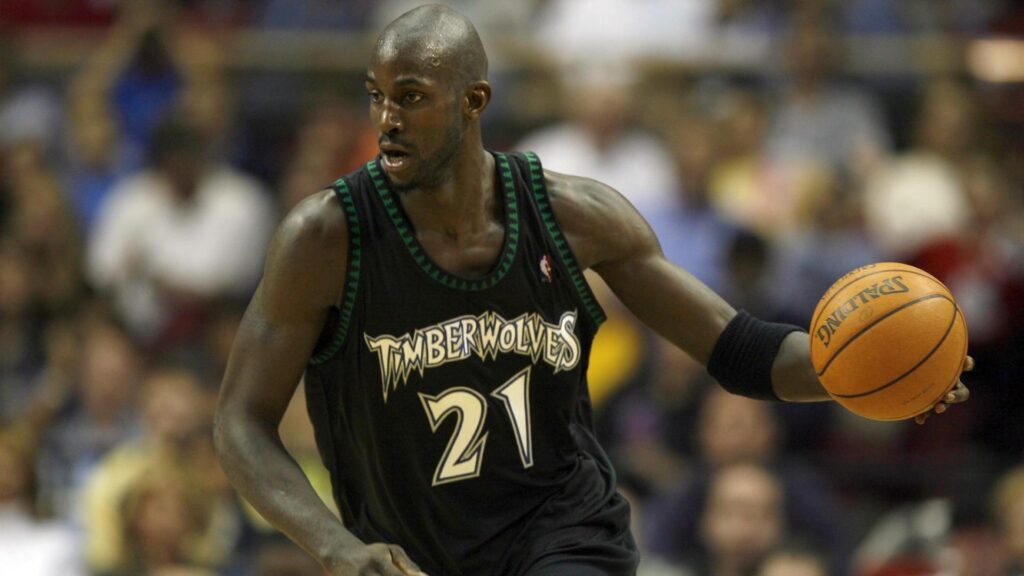
Kevin Garnett remains the only MVP in Timberwolves history.
His Minnesota resume includes:
- NBA MVP (2004)
- 10 All-Star selections with the Wolves
- 9 All-NBA teams
- 8 All-Defensive teams
- 4 consecutive rebounding titles
- NBA 75th Anniversary Team
While he won Defensive Player of the Year and a championship in Boston, the foundation of his legacy was built in Minnesota, where he was a top-five player in the league for nearly a decade.
The Cost of Carrying a Franchise
Garnett’s greatness came at a price.
His landmark 6-year, $126M contract in 1997 reshaped NBA economics and handcuffed Minnesota’s cap flexibility. Combined with front-office mismanagement and lost draft picks, the Wolves failed to surround him with consistent championship-level talent.
Despite that, Garnett dragged average rosters to 50+ wins and sustained relevance for nearly a decade.
That matters.
Because greatness isn’t just about winning rings, it’s about raising a franchise above its limitations.
Comparison to Other Timberwolves Stars
Karl-Anthony Towns is elite.
Anthony Edwards is electrifying.
Kevin Love had historic rebounding seasons.
None of them compare to Garnett’s longevity, two-way dominance, or total franchise impact.
KG vs others:
- Points: 19,201 vs Towns 13,121
- Rebounds: 10,718 vs Towns ~7,000
- Win Shares: 139.8 vs Towns ~70
Garnett didn’t just peak higher, he stayed elite longer.
The Reunion That Finally Feels Right
For years, Kevin Garnett and the Timberwolves were estranged , separated by ownership conflict, broken promises, and unresolved bitterness.
That era is over.
With new ownership under Marc Lore and Alex Rodriguez, the path cleared for reconciliation. Garnett is returning as a team ambassador, his No. 21 jersey will be retired, and his presence will once again be woven into the franchise’s identity.
This isn’t symbolic.
It’s overdue.
Because Kevin Garnett is not just the Timberwolves’ greatest player, he is the reason the franchise has a history worth honouring at all.