


The NBA’s relationship with Christmas Day is nearly as old as the league itself. Since the 1946–47 season, Christmas has been reserved for the NBA’s brightest stars, biggest markets, and most meaningful matchups. Through 78 Christmases and 275 total games played (excluding the lockout-shortened 1998 season), the league has produced countless iconic moments on December 25. Some performances have faded into trivia. Others have grown into legend.
But a select few records stand apart, not because they were impressive in the moment, but because time, rule changes, pace shifts, and modern basketball realities have made them nearly impossible to replicate. These are not just Christmas Day records. They are statistical anomalies, frozen in eras the NBA can never fully return to.
Among all the numbers ever posted on Christmas, three single-game records stand above the rest as truly unbreakable.
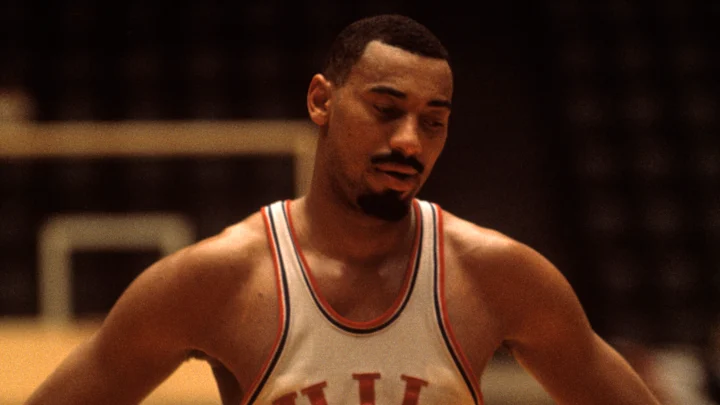
The First Record of Christmas
On December 25, 1961, at Madison Square Garden, Chamberlain delivered one of the most overwhelming individual performances the NBA has ever seen. Playing for the Philadelphia Warriors in a double-overtime loss to the New York Knicks, Wilt grabbed 36 rebounds, the most ever recorded in a Christmas Day game. Even by his own absurd standards, the number stands out.
Chamberlain didn’t just dominate the glass, he owned it. In 58 minutes of action, he scored 59 points on high-volume efficiency, grabbed 36 rebounds, and accounted for roughly 42 percent of his team’s total rebounds in the game. The Warriors collected 85 rebounds as a team. Wilt had nearly half of them himself. The Knicks’ starting center managed just eight.
This was an era of missed shots and packed paint, when teams averaged close to 120 possessions per game and rebounding opportunities were abundant. But even in that context, 36 rebounds was extreme. Bill Russell, the greatest rebounder of Wilt’s era, topped out at 34 on Christmas. No one else ever reached 35. Since Russell’s final Christmas appearance in 1964, no player has even reached 30 rebounds on December 25.
Modern basketball makes this record borderline untouchable. Today’s teams average closer to 42–45 rebounds per game total. Centers rarely play more than 35 minutes, offensive rebounding is deprioritized in favor of transition defense, and spacing pulls bigs away from the rim. The highest Christmas Day rebounding total in the last decade is 19, barely more than half of Chamberlain’s mark.
To break Wilt’s record in today’s NBA, a player would need to capture well over 60 percent of all available rebounds in a game, a mathematical impossibility under modern schemes. The record has stood for more than six decades, surviving the three-point line, pace-and-space offenses, and position less basketball. It doesn’t just belong to another era. It belongs to another sport.
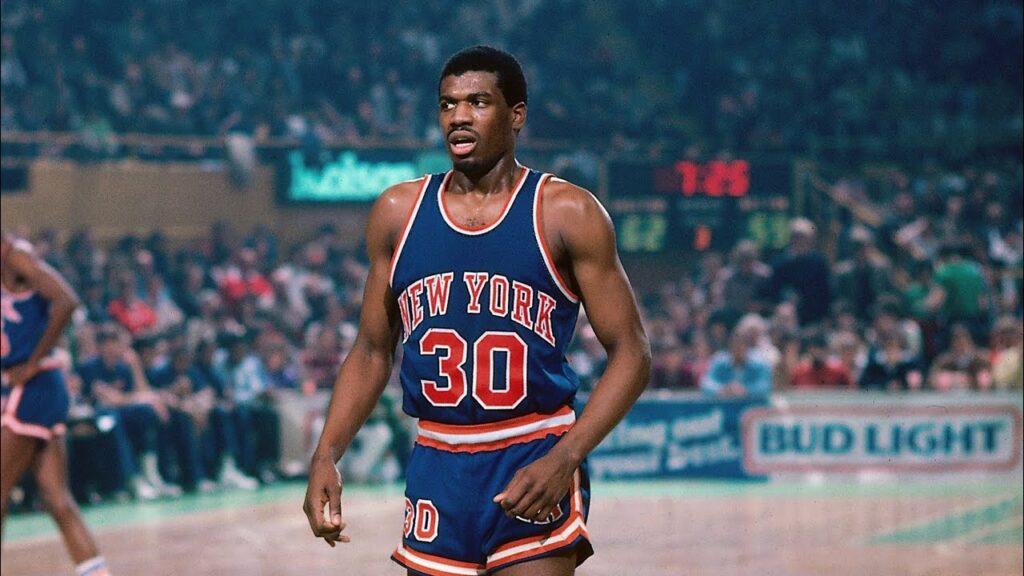
The Second Record Of Christmas
If Chamberlain’s rebounding record feels untouchable, Bernard King’s scoring explosion feels almost mythical.
On Christmas Day in 1984, King, a 6-foot-7 forward for the New York Knicks poured in 60 points against the New Jersey Nets at Madison Square Garden. The Knicks lost the game, but the performance became immortal. To this day, no player has ever scored more points in a Christmas Day game.
King did it without a three-point shot. He went 19-for-30 from the field, lived in the midrange, attacked relentlessly off the dribble, and earned 26 free-throw attempts. By halftime, he had already scored 40 points. The Nets tried multiple defenders, multiple coverages, and none of it mattered. King was operating in rhythm, not chaos.
What makes the record so powerful is how close the league has come, and how consistently it’s fallen short. Wilt Chamberlain scored 59 in his legendary 1961 game. Rick Barry reached 50 in 1966. Tracy McGrady hit 46 in overtime in 2002. Since then, despite offensive booms and scoring explosions, no one has crossed even 50 on Christmas.
Modern superstars have had chances. Kevin Durant, Stephen Curry, Luka Dončić, James Harden, and Giannis Antetokounmpo have all had elite scoring seasons. None have reached 60 on December 25. Christmas games tend to be more physical, more deliberate, and more defensively focused. Rotations tighten. Minutes are managed. Teams are prepared.
Statistically, the odds are brutal. A player would need extreme usage, elite efficiency, favorable officiating, and extended minutes, all on a day when stars often play fewer minutes than usual. Even in an era where 70-point games exist, King’s 60 has remained untouched for over 40 years.
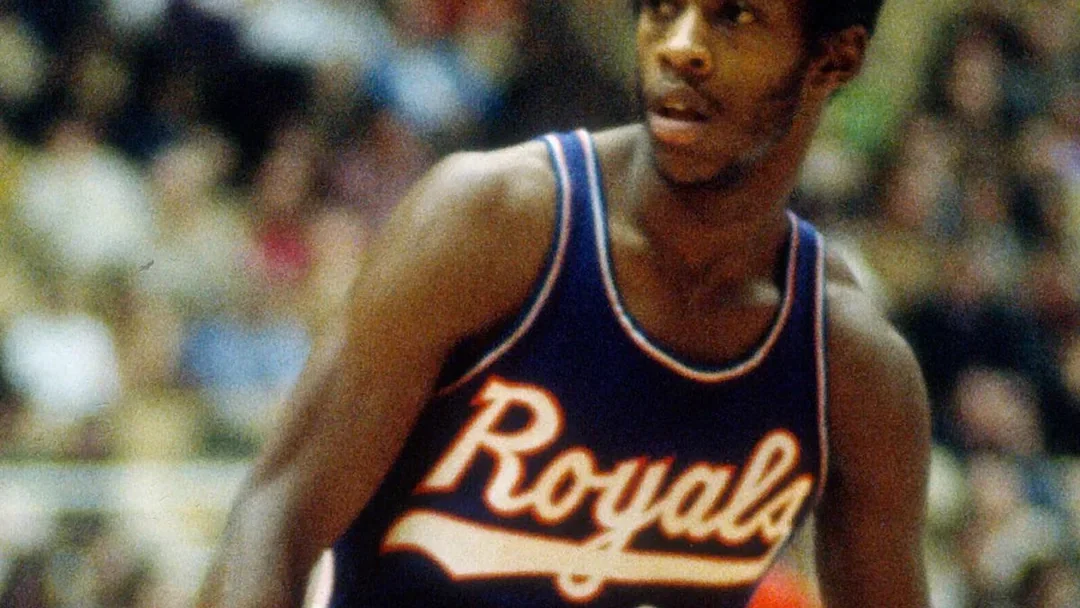
The Third Record Of Christmas
Then there’s the passing record, subtle, overlooked, and just as unbreakable.
The Christmas Day assist record is shared by two players from two different eras: Guy Rodgers, who recorded 18 assists in 1966, and Nate “Tiny” Archibald, who matched it in 1972. No one has surpassed them. No one has tied them since.
Rodgers set the mark with the Chicago Bulls in a high-paced loss to the Knicks, while Archibald equaled it in an overtime win for the Kansas City–Omaha Kings. Both performances came in eras defined by heavy ball movement, limited defensive switching, and stars logging 45-plus minutes without restriction.
In the modern NBA, that environment doesn’t exist. Christmas games are slower, more tactical, and heavily scouted. Teams average fewer assists on December 25 than in regular-season play, and stars rarely approach 45 minutes. Even elite playmakers like Chris Paul, Nikola Jokić, and Luka Dončić have peaked around 14–16 assists on Christmas — close, but never enough.
To reach 19 assists today would require not just brilliance, but a perfect storm: overtime, hot-shooting teammates, minimal turnovers, and coaching willingness to ignore load management. Advanced models place the probability of such a game at near statistical noise.
That’s what makes these records special. They don’t just represent greatness. They represent moments when circumstance, talent, and era aligned perfectly, and then vanished.
Christmas Day continues to evolve. The stars change. The pace shifts. But these records remain, towering over every December 25 that follows. Not because players aren’t good enough — but because the game itself no longer allows performances like these to exist.
Some numbers don’t just survive history.
They outgrow it. 🎄🏀