

Table of Contents
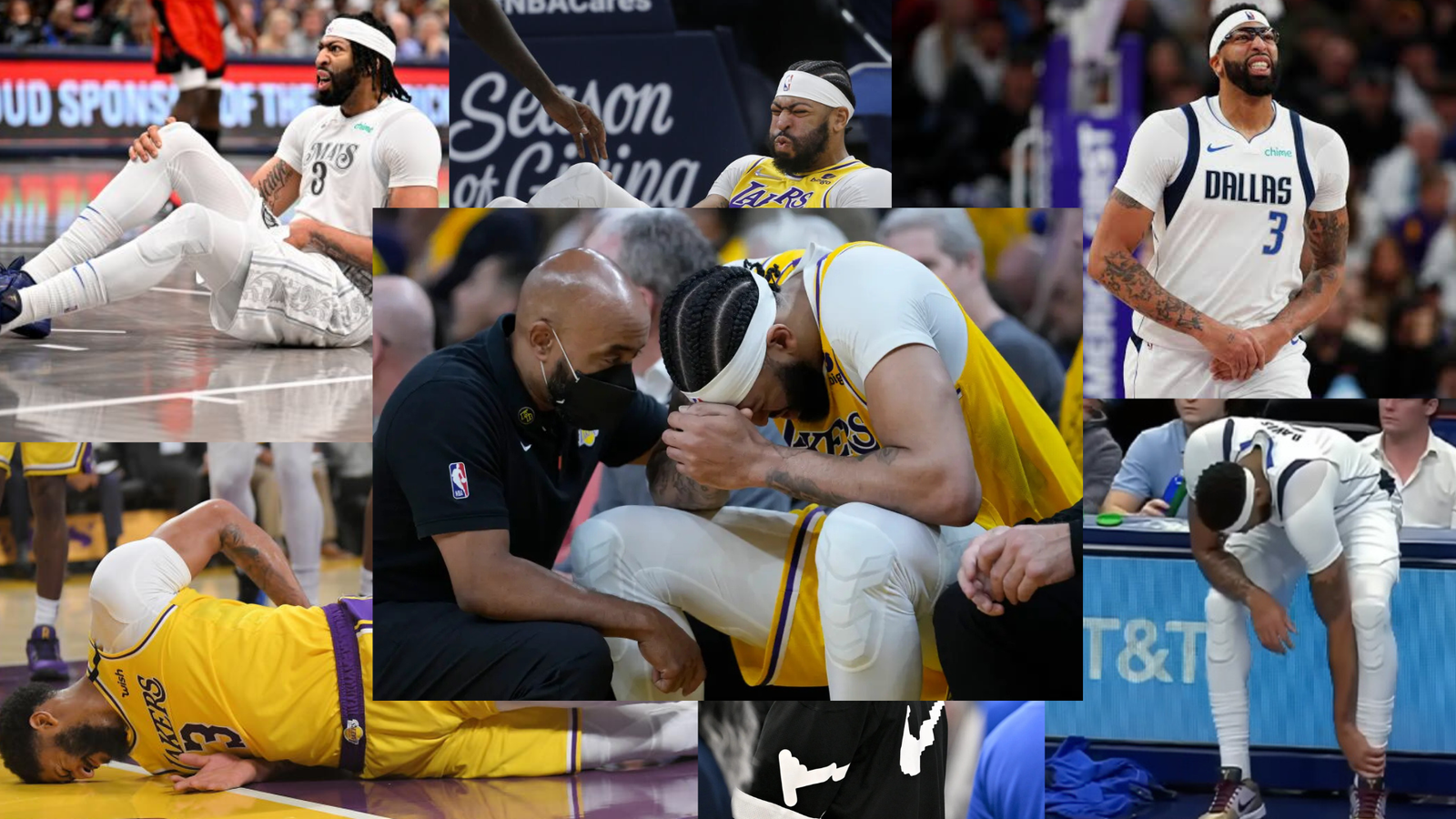
Every single season, we seem to see the same players always hurt and injured. Anthony Davis is constantly nursing a new injury, Joel Embiid rarely plays basketball, LaMelo Ball’s ankles are perhaps the most fragile thing in existence, and let’s not even get into Zion Williamson, who has only played in 48% of the games he could have since 2019.
This phenomenon isn’t a new occurrence; throughout the early 2000’s and 2010’s, players were constantly getting injured. Stephen Curry was a perennial benchwarmer early in his career due to ankle issues; Kevin Durant and Kobe Bryant tore their Achilles; fingers are almost always broken, and knee problems are just a result of the game, but is there a science behind this?
The entire premise of this article is to research whether there is truly a way for players to not get as injured, or if it is an uncontrollable variable in the athletic equation, and we should mind our own business and not worry about the health of some of the greatest athletes in the world. Nevertheless, I am taking the honour of conducting this research and laying out the facts for the readers of this publication to see.
What Is An Injury And How Does It Happen?
An injury in sports, as defined by the internationally acclaimed Cleveland Sports Clinic, is damage done to the body’s tissues, bones, or ligaments as a result of physical activity, especially in the competitive sense. There was a study conducted that showed many acute injuries sustained by a person could contribute significantly to the risk of long-term chronic conditions such as extreme ligament damage or bone impairment.
As professional athletes in the NBA, the pressure to play through a little bit of pain, to finish the game even though my ankle is in agony, to quietly nurse the injury myself when seeing a doctor is the logical option, or even worse, trying to hide or conceal the major issues is great, as many of these players admire and follow in the footsteps of some of the greats such as Kobe Bryant and Michael Jordan. This idolism towards players who famously pushed through pain is a core reason why many players will decide to push through minor soreness.
You should never push through this type of pain, especially near major ligaments and joints. What I am trying to articulate is that pushing through even the slightest amount of pain without the correct treatment is not wise for athletic success. If you suffered from a minor contusion or your ankle hurts a bit, at the very least, ice, rest, and make sure that you feel fine before the game or in the moment that the injury happened.
The other side of this argument is refusing to report an injury out of pride. Everyone gets injured; it is a common part of life, but attempting to conceal the fact that it happened is, once again, not wise. NBA teams spend millions of dollars providing players with the best medical care in the world, and not using it is an ignorant choice.
What Types Of Injuries Are Most Common To Recur?
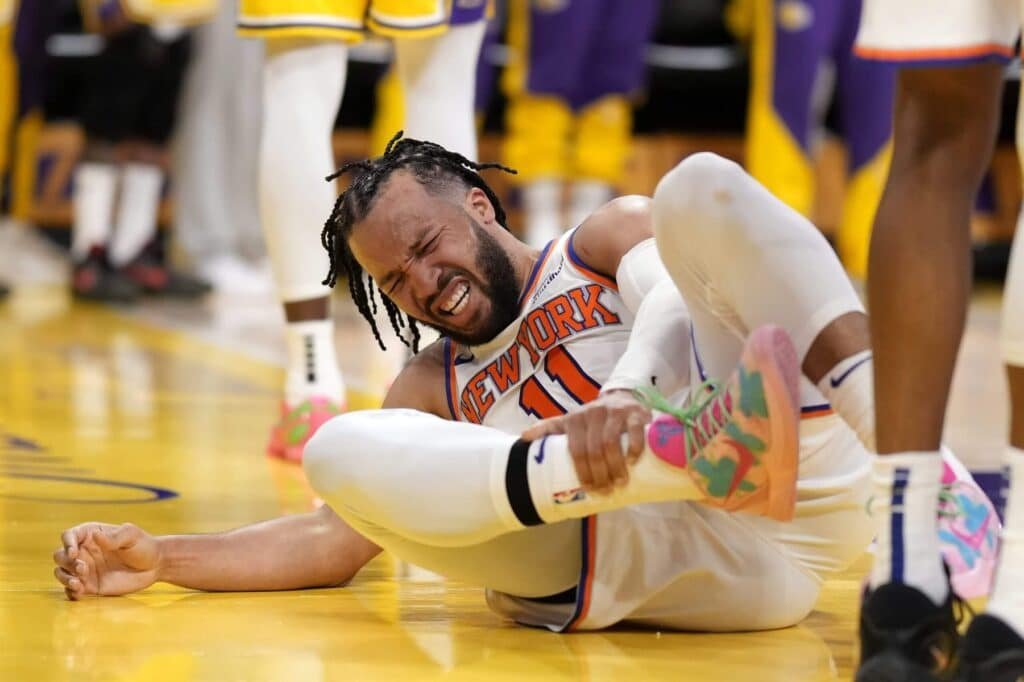
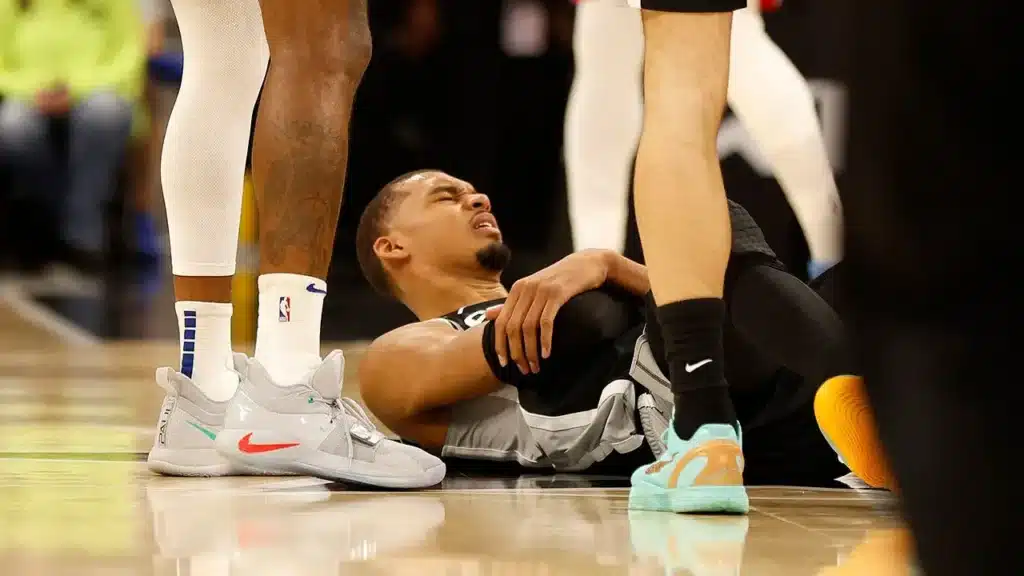
Common NBA injuries can include ankle sprains (which account for approximately 12% of all injuries), calf strains, knee issues, hamstring strains, lumbar strains, hand and wrist soft tissue injuries, shoulder sprains, elbow pain, and other more niche, yet devastating injuries such as Achilles ruptures, ACL tears, and major tears of the muscle.
According to numerous sources, the shooting guard position is known to be the most injured position, followed by the center. This is largely due to the role that they play, which commonly involves rapid lateral movements and extensive explosive movements such as sprinting and jumping, making them highly prone to ACL tears, groin/hamstring related injuries, and ankle issues, while centres suffer more from lower-extremity pain and back problems.
Overall in the NBA, 33% of players suffered from at least one ankle-related injury throughout a whole season. Lateral ankle sprains are known as the number one recurring injury in basketball. Chronic ankle instability can increase the chances of recurring injuries not only to the injured ankle, but also to the other ankle!
Secondly, hamstring injuries. Hamstring strains, whether it’s the adductor, lower, or upper hamstring, this specific injury has been flagged by the NBA’s medical team as having a high recurrence rate. Players such as Jalen Williams, Aaron Gordon, and Luka Doncic have all suffered from numerous hamstring-related issues throughout their careers, forcing them to miss substantial time in the most crucial moments.
Patellofemoral inflammation, better known as jumper’s knee, is one of the leading causes behind games lost in the NBA. Jumper’s knee, and its counterpart, runner’s knee, are overuse conditions that are caused by, you guessed it, repetitive jumping. This specific injury tends to flare up, subside for a few days, and once again flare up if the injury isn’t managed carefully and rest is prioritised.
Following this, lumbar injuries, which are commonly lower back strains or pulls, are one of the top 4 most common injuries in the NBA, more commonly associated with larger players such as centres. The lower back disc is most prone to strains and injuries due to it constantly being hyperextended under load. Without proper rest and treatment, this injury could cause an end to many careers if they do not address the issue correctly.
Finally, knee-related injuries. Even though the ankle is the most common injury in the NBA, the knee may be, outside of the Achilles, the most devastating one of all. Any injury to the knee is a brutal one, as the chronic recovery rate is slim. Over 45% of basketball players report having knee pain for years, especially those who have previously torn their ACL or meniscus.
Through knee injuries, players have noticed poorer quality of life, chronic pain, and reduced mobility years after retirement. This is a terrible issue, but imagine going through surgery for knee issues and having to play an 82-game season straight after. It isn’t sustainable for the muscle, ligament, or the player, which is what leads to many early retirements in injury-prone players.
What Has The NBA Done To Reduce (Or Prevent) Injuries?
Now obviously, I am not a professional athlete, semi-pro at the most. I have, however, been studying and practicing health, fitness, and nutrition for years and can comfortably give advice and write my concerns for some of the world’s best in athletics and fitness. Do they or should they listen to my humble opinion? Not necessarily. Am I going to continue writing regardless? Yes.
Now obviously, we can not predict the future. A player might fall incorrectly on their ankle and sprain it; an unexpected ball to the finger could break it; a single slip can tear an ACL, but the focus of this section is strengthening the muscles, ligaments, and bones so they are stronger in case of these dire situations.
The SHRed Injuries Basketball program was introduced amongst a youth basketball club across 16 weeks. This program involved numerous neuromuscular training warm-ups to get the players to warm up properly before games and maintain mobility after them. During this period, players reported a 36% decline in ankle and knee injuries, a remarkable feat.
The NBA has already introduced the rule that a player must warm up for 1 hour before games, but how many of them are truly practicing and working on their mobility after games? I can name a few dozen, but that doesn’t make up for the rest of the 500 members of the league.
Embedding a stretching routine into teams is vital in the reduction of injury rates, and if teams want their star players to remain on the court and not in the medical center, then implementing even a 30-minute session every day can significantly reduce the chances of a major injury occurring.
This is an issue that does not just apply to the regular season, as teams have constantly introduced programs during the season and training camp to tackle this issue. The Cavaliers, Lakers, and Rockets have introduced flexibility and mobility training into their routines, while some teams have even developed personalised equipment and apps for players to maintain range of motion even on road trips, but what about the off-season?
The NBA has done an incredible job by implementing mandatory 1-hour pre- and post-game mobility sessions, but a more under-the-radar move the NBA has introduced is the league-wide biomechanics program. This new screening program is the first of it’s kind in professional basketball, and has absolutely revolutionised how players, agents, coaches, and medical staff approach injuries and overall recovery.
This new technology, which utilises advanced motion capture, force plate analysis, and wearable sensor technology, evaluates how players move, jump, land, absorb impact, and how they are affected by various training techniques. Teams throughout the NBA have implemented this as a regular part of player testing, especially through key points such as the preseason, midseason, before the postseason, and during the offseason.
This data is then compiled into a centralised league database, which is later shared with medical staff and performance coaches to evaluate a player’s overall “health” throughout the season. The goal of this new equipment is to identify biomechanical inefficiencies, muscular imbalances, and movement patterns that predispose athletes to injuries. In basic terms, the technology can prevent injuries by spotting parts of the athlete that look different or damaged, essentially stopping the injury altogether.
So Do Players Who Are Always Injured Just “Unlucky”?
Excluding the playoffs, NBA players have to go through a grueling 82-game season, with frequent back-to-back games and cross-country travel. This creates far more cumulative load on the athlete, especially considering that many of these players are required to play in every game they are able to, unless they are injured.
The short answer: no. A player’s injury history may have a large influence on his future health concerns, but it is mainly due to the way the player is approaching the game. For guards, who rely more on running and jumping, they are more prone to injuries, whereas shooters and forwards are statistically less likely to get injured (this is by a marginal difference, but nevertheless a fact).
Obviously, a previous injury is the number one risk factor, especially considering if the later injury is in the same region as the first one. Once a tendon or ligament is damaged, it rarely repairs to its full capacity, creating a vicious cycle where the player semi-recovers and re-injures himself, restarting the process.
Biologically, a player’s genetics has a lot to do with how he is affected by injuries. There are numerous structural proteins that all people require to live, but genetics works in a way that even a slight edit in the genetic code of a human can affect a chain of important bodily things; the NBA is no exception.
For starters, COL1A1 is a form of collagen that encodes the most abundant structural proteins in tendons, ligaments, bones, and skin. It basically creates the thick, load-bearing collagen fibrils that give the connective tissue and bones their flexible strength. Specifically in the rs1800012 variant, this affects how much COL1A1 is transcribed. The T allele, found in the GT or TT genotypes, is directly linked to an increased risk of soft tissue injuries.
Next is COL5A1. This specific gene is not as important in the biological sense, but still serves a great purpose. COL5A1 is the controller of COL1A1, making sure everything is the right thickness and flexibility according to your genes. In this case, the rs12722 variant, specifically the TT genotype, is the main culprit in increased odds of musculoskeletal soft tissue injuries, such as Achilles tendon pathology, ACL tears, and tennis elbow. This variant, however, is more commonly found within the Caucasian population, researchers found.
Finally is ACTN3, and this gene is the most fascinating gene. ACTN3 is the alpha-actinin encoder, which is the protein that develops in fast-twitch muscle fibers. This protein is vital for the structural support of the muscle fibers and allows the fast-twitch fibers to generate and transmit explosive force.
There are 3 types of variants of the R577X polymorphism: RR, which is the full dosage of ACTN3 protein, optimal for fast-twitch function; the RX variant, which is only one functional copy and is the intermediate level; and XX, which means ACTN3 does not develop at all. About 18% of the general population fit into the final variant.
People with the XX genotype can suffer from greater eccentric muscle damage, which is basically damage from activities that require lengthening of the muscles, such as sprinting, cutting, jumping, and landing. As an added benefit of being more prone to damage from eccentric activities, people with the XX genotype also suffer from a longer return-to-play, by up to 50% longer than people with the RR or RX genotype.
When you understand the overall biology of the matter, people with a worse collagen variant and the XX genotype of ACTN3, this can have their risk of injury increased by up to 3 times, a statistic so gloomy and scary that all medical centers in the NBA must test their players’ DNA to identify these significant differences in their genetic code.
While the science behind recurring injuries wasn’t as fascinating as you may expect (or definitive), research shows that a player’s genetics mixed in with how they play is the core reason why they suffer so many injuries. The more the player does the same action, he is actively wearing down his muscles, and since there is already a recovering injury there from perhaps a year or two ago, reaggravation becomes much easier for the muscle.
We can see this throughout the NBA: Zion Williamson suffers from numerous hamstring and knee problems. His main playing style is characterised as an athletic, powerful, explosive scorer/slasher who relies on sheer athleticism and brute force to average 20+ points a game every season he has been in the league. If we add 1+1 together, we can clearly see the related causes and effects of both his playing style and injury history.
Another example: Luka Doncic. Doncic is more of a laid-back player, preferring to “do-it-all”, from playmaking to an explosive scorer at the rim, and isolation ball-handling, which can include rapid lateral movements, sudden decelerations, and spatial manipulation to absolutely destroy his opponents. What do you think Doncic’s most common injuries are?
Ankle sprains, calf strains, and hamstring micro-tears. Ankle sprains are caused by high-volume jumping, explosive lateral direction changes, and rapid deceleration, 3 things Doncic dedicates his playstyle to. Calf strains work in a similar fashion, but more exclusively to high-effort moves (eurosteps, hopsteps, and similar moves) and rapid deceleration. Hamstring injuries are from all of the other previously mentioned examples as well as high tension on the muscle and workload, which applies to the above injuries regardless.
Thesis Conclusion: While the NBA has implemented extreme measures to prevent and predict injuries, such as biomechanical scanning and mandatory pre-game warmups, everything has to do with players’ genetics and their playstyle, because certain variants of a certain gene (COL1A1, C0L5A1 and ACTN3) and playstyles can increase players’ chances of injury significantly.
Dimitri is a Sports Journalist and Writer at BallersCulture. Support his work by following him on X and YouTube, where he posts daily reports, scoops, and analysis to his audience. Subscribe to the Ballers Insider email list for 1-2 newsletters a week, wrapping you up in the NBA with a scientific, business, and philosophical aspect added to the game!