
 "Pin It")
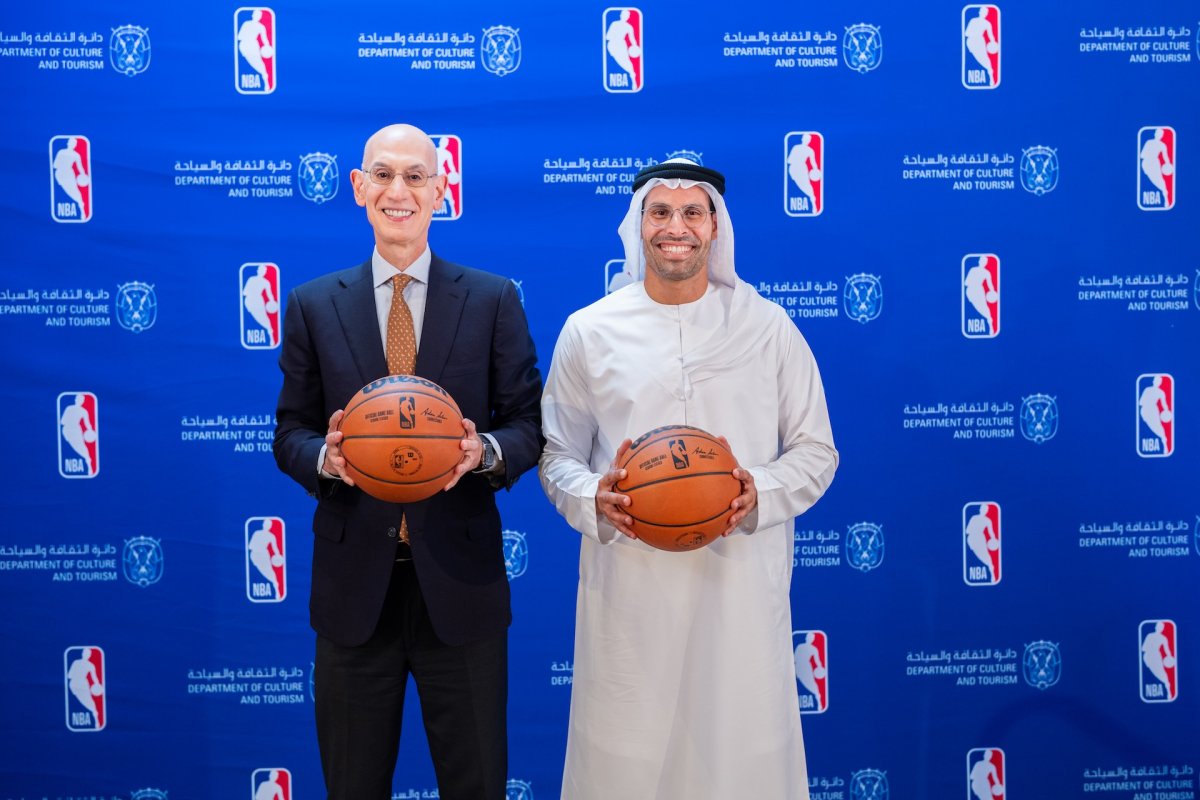
During the 2024-25 NBA season, the league set a new record for total revenue: $12.25 billion. This is approximately 104 times the total revenue the NBA made during David Stern’s first season as the league commissioner in 1982. The pandemic destroyed league revenue in 2021, but the NBA may have had one of the greatest comebacks in all of American sports.
The NBA is a multi-billion-dollar sporting enterprise, raking in billions every single season, but where does all of this money come from, and what do the billions that it makes go to? Before we go into the details, it is important that we understand the league’s history and how it has evolved into the most innovative sports industry in North America.
The History Of Where Revenue Comes From In The NBA
The Rise Of The World’s Largest Basketball Brand
In the 1970’s, the NBA was still a rising league, lagging behind the other top 3 American sports at the time (NHL, NFL, and MLB). Before the 1979 ABA merger, the league was still adjusting to the new television rights, generating only about $32.3 million from ticket sales and other ventures, but during the 1980’s, everything changed.
Larry Bird and Magic Johnson were two of the greatest basketball players ever and are frequently regarded as the saviours of the NBA. The league was on the brink of bankruptcy due to major financial instability. This primarily came from the debt after the ABA merger, with major teams such as the Nets, Pacers, Spurs, and Nuggets barely being able to pay the admission fees, facing a major collapse.
Larry Bird, Magic Johnson, and an early cable TV deal eventually turned the league around, and by the time David Stern was hired as the commissioner of the league, the NBA was on the rise. By the time Michael Jordan became a worldwide icon, the league signed its first national TNT deal, making the most money it had ever seen, worth approximately $500M. This rapid growth phase wasn’t over yet, because the NBA still had to sell itself.
In 1991, after re-signing a deal with NBC, the NBA officially licensed the popular clothing retailers Champion and Nike to become the exclusive uniform provider for the league. This turned out to be a major success for the NBA, which previously allowed teams to create their own jerseys, with no intent of selling them to the public.
During the 2000’s, the league signed a massive $2.4 billion licensing TV deal with ABC and ESPN for all 30 teams, marking it as the largest deal in sports history at the time. Under this new deal, the league began producing major products, such as a new apparel deal with Reebok and eventually Adidas (Adidas purchased Reebok in 2005 for $3.8 billion, but later sold it in 2022 for $2.5 billion to Authentic Brands Group due to lack of interest from the public), which evolved into the NBA stores becoming a global apparel business.
Another huge hobby NBA fans had was trading cards. Following in the footsteps of baseball, the NBA signed deals with Fleer, Topps, Upper Deck, SkyBox, and Hoops. This went smoothly until Fleer went bankrupt in 2005. Since 2009, Panini has been the world’s most trusted NBA card licensor, producing sets such as Prizm, National Treasures, and Flawless.
While video games in the 1980’s were not as popular, during the 2000’s, the NBA was dominating the sports gaming market with two of the biggest games in the world: EA’s NBA Live and NBA2K. EA Live was the dominant force in the basketball gaming market up until 2008, but when NBA2K09 sold 2 million copies on newer-generation consoles such as the PS3 and Xbox 360, it marked a pivotal point where 2K became the new powerhouse in the market.
The Latest Generation Of NBA’s Success
This marks a point in the NBA’s history where they cemented themselves as one of the world’s leading forces in all of sports. During the 2016-17 season, the NBA signed a new $24 billion TV deal with ABC, ESPN, and TNT, marking the largest TV deal in league history and the 2nd largest TV rights agreement behind the NFL’s ridiculous $39.6 billion ESPN, Fox, and NBC deal.
During the same time period, the NBA’s salary cap for team spending jumped around 34% as a result of the new media deal. Per season, the NBA was making nearly $10 billion through all of its investments and deals, which included long-time partnerships with Nike, Pepsi, Tissot, Michelob Ultra, State Farm, AT&T, Verizon, Gatorade, Ticketmaster, Microsoft, HP, Kia, DraftKings, FanDuel, American Express, Taco Bell, and McDonald’s.
Up until this point, the league has been heavily overshadowed by the NFL’s dominance over the US and Canadian markets, but the NBA had its eyes set on the world. The NBA decided to expand its dominance by playing overseas games, regularly playing in Asia, Europe, Mexico, and Australia. The league also expanded into Africa with the Basketball Africa League and has plans to expand the NBA into Europe, with a new league being planned as we speak.
Over 75% of the NBA’s social media followers are from outside of the United States, and with the NBA focusing on underdeveloped markets such as Asia, Africa, and South America, they are not only expanding global popularity, but the international player pool is increasing, with 135 players in the 2025-26 season from 43 countries having a spot on an NBA team. This is an incredible step toward globalisation, as in 1984, international players made up only 5% of the league.
Through other ventures and minor licensing deals, the league has managed to generate billions every season to fund the ever-growing market of NBA fans, which is slowly but effectively growing into the world’s largest and perhaps most valuable market: Asia. For years, the NBA has been slowly introducing training camps, exhibition games, tours, and more, increasing its economic power in Asia. According to reports done by FIBA, there are 3.3 billion fans of basketball aged 16-69 in the world, making it the 2nd largest sport behind Football.
Where Does All This Revenue That The NBA Makes Go?
Despite many people’s assumptions that NBA teams just sprout up out of thin air, or are funded by local and regional councils and politicians who want more interest in their city, there is an entire business side of the league that not many know the details of, but it is time to have your mind blown (with boring business strategies and plans).
During the 1989 season, the Miami Heat were officially added to the NBA. Despite being added in the 1989 expansion, the Miami Heat were originally agreed and invited into the NBA in 187 alongside Orlando and Charlotte. Under NBA Hall of Famer Billy Cunningham, sports agent Lewis Schaffel and multi-billionaire entrepreneur Ted Arison were the primary funders of the team. Arison eventually became the principal owner while Cunningham and Schaffel handled the day-to-day operations.
The team had to pay $32.5 million as an expansion fee and operated under the Miami Heat Limited Partnership. They did business under The Heat Group. This parent corporation handled the team, arena, and all of the ancillary operations, as well as paying the staff and dealing with contracts and sponsorships.
The original Heat arena cost $143 million to construct and was built under the City of Miami, with the funding coming straight from public bonds and resort/convention taxes. Despite costing millions to build, the arena was eventually destroyed, and the Heat moved to Kaseya Center (formerly American Airlines Arena) in 1999.
Interesting unrelated fact: most NBA teams’ arenas are actually owned by city councils and completely funded by taxpayer dollars; only a few teams, usually run by multi-billionaires backed by external funding, own their arenas and the teams that play in them. Here are a few:
- The Golden State Warriors owners, Joe Lacob and Peter Guber, own the Warriors and Chase Center through the Warriors ownership group
- Denver Nuggets: Stan Kroenke owns Ball Arena and the Nuggets outright, but technically the team is held in his wife’s name due to the NFL prohibiting owners from holding teams in other major sports markets.
- Steve Ballmer is perhaps the best in this category. Ballmer not only owns the Clippers, but he also built and owns the Intuit Dome.
- James Dolan is similar to Ballmer, owning the MSG Sports Group, the same company that owns Madison Square Garden and the New York Knicks.
- The Toronto Raptors are unique, as Maple Leaf Sports and Entertainment owns both the Raptors and Scotiabank Arena under the same parent company. Maple Leaf Sports and Entertainment owns the Toronto Maple Leafs, Toronto FC, Toronto Argonauts, and their respective minor league teams as well as the Raptors.
For the other team arenas that are run by the city councils, these attractions are built purely for tourism in the region. The more people that enter the city, the more spending and attraction is around the place, which leads to more money spent and revenue for the council.
Across all the revenue made in the league, it is all split evenly 50/50 under the BRI rules with the players and owners. The players’ revenue goes almost entirely to players’ salaries, but minor spending goes towards players’ benefits (health insurance, dental, vision, life insurance), pension contributions, and player association costs with the NBPA.
This is the simplest side of the transaction, much easier to comprehend than the owners’ shares. About 15-20% of team revenue goes towards the arena operations, which contributes to the staff, security, maintenance, and utilities to upkeep the center and make sure it is appealing to guests.
Coaching and front-office staff members take about 10% of the cut, with General Managers, Coaches, scouts, video staff, and the medical team raking in $20-27 million per team. Next is travel and logistics. Since each team has 41 road games every season, charter flights, hotels, and ground transport cost a lot considering the size of the team, as players prefer to stay in nicer hotels that accommodate them being a foot taller than the average man.
A crucial spend for NBA teams is the marketing and promotion of their team. The franchise with the best online presence and sponsorship deals economically does better than the vice versa of this. This includes local advertising, community outreach, and fan engagement, which also entails social media and ads. This accounts for about 5% of spending.
Furthermore, facilities, including practice centers, team offices, and training in general, don’t pay for themselves, so about 3-5% of spending is used on this vital step in athletic success. Debt service, which entails arena loans and acquisition debt, can vary depending on the team, but about 8-13% of the spending goes towards this.
Next on the list is insurance. If someone gets hurt or property is damaged, especially in an arena that is consistently housing tens of thousands of fans, insurance is a must. From land insurance to property insurance, most NBA franchises try to get it all to protect themselves in case of an emergency.
The corporate overhead is another sector worth touching on, as legal, accounting, compliance, and human resources departments are what keep companies running. Another undermentioned point is taxes. Including state and local taxes, teams are also required to pay a federal 21% corporate tax, as well as other taxes such as taxes on merchandise, salaries, and property.
Food, beverages, concessions operations, and other miscellaneous items such as technology, licensing fees, and league dues are also accounted for in this budget, with about 10% of the total spending going towards the final touches on an NBA franchise that truly makes it spectacular.
Out of the 30 teams in the NBA, 29 were profitable, outside of the LA Clippers, who are drowning in debt after the Intuit Dome acquisition. On average, teams’ operating income sat at around $100-110 million, with the biggest earners being the Warriors, Lakers, and Knicks (in order).
The NBA league itself is also where billions go. From the league administration, referees and officials’ salaries, NBA TV and streaming operations, player benefits, legal teams, international expansions, league-wide marketing and global promotion, charitable contributions, and technology and data.
Along with the main league, the NBA also runs its many subsidiary groups, such as the G League developmental league and the Basketball Africa League, but the biggest one is the WNBA. Since its inception in 1996, the WNBA has never turned over a single profitable season. For 3 decades, the NBA has had to fund the WNBA’s increasing annual losses, but the future looks bright after a new $2.2 billion media rights deal.
Beyond the basketball court, the NBA and its teams are a complicated setup that includes merchandise and media deals and direct consumer subscriptions, ticket revenue, and a vast array of other lucrative investments and conglomerates, making the total value of the NBA valued at approximately $100 billion, and this number only seems to be growing every season.
The NBA suffers a lot of injuries every year, but a few players and a few types of injuries seem to be dominating the game. Is there a reason behind these recurring injuries, and what is the real science explaining it? Read more in my latest article!