

This is an essay based on the popular productivity book, Atomic Habits by James Clear.
Table of Contents
Imagine 2 players. One is a naturally gifted individual. He is athletic and talented at the game of basketball. Instead of honing his skills even further, he only relies on his abilities and occasionally puts in the extra work, assuming that his talent and his gift alone will “eventually” separate him from everyone else.
The other player is a slight opposite of our first hypothetical athlete. He barely receives playing time at all, he isn’t the most athletic player on the roster, and he certainly doesn’t have an innate ability for the game of basketball. But, he arrives early to practice every single day, studies film and is constantly removing weaknesses by repeating the same fundamental moves every single day, which develops a habit.
Now, over a few years, which one of these imaginary players are more likely to have developed into an elite professional athlete? The ignorant “naturally” gifted player, or the one who is constantly motivated by the slim chance at improvement, and every single day he strives to achieve greatness?
Success in the NBA is often associated with height, athleticism, natural talent and spectacular performances, however, these attributes don’t explain anything and are honestly negatable compared to the skills developed outside of the spotlight. These type of “habits” are the entire central idea of James Clear’s Atomic Habits: tiny behavioural improvements (habits) can compound into remarkable long-term results.
The incredible journey from an exhausting benchwarmer to legitimate NBA legend isn’t necessarily about making one extraordinary breakthrough. It is about performing the mundane and fundamental habits every single day over years and years, and only then, will the compounding effect truly take place.

The compound effect: greatness is built one percent at a time
The biggest transformations, whether they occur to a basketball player or a Fortune500 business executive, almost always begin and are maintained of the court, with improvements and habits being so small that almost everyone (outside of the player themselves) notices them at all.
Atomic Habits author James Clear, very early into the book, introduces the 1% habit model. Getting just 1% better over a year can generate unfathomable results. If you stuck to this regime every single day for a simple year, you could be 37.78 times better than you were when you started. That is the effects of compounding habits.
One of the smartest men in all of history, Albert Einstein said the world’s greatest concept is compounding, and Warren Buffet, one of the world’s richest men, has said that his fortune was built through compounding interest, so clearly, compounding has an incredibly powerful accummulation of improvements across only a years period.
Obviously, this is just an abstract illustration of the powers of compounding small habits, not a literal prediction. But if an athlete were to improve by 1% every single day, it is entirely possible that their basketball ability could increase by 37 times, the important point is that small improvements accumulate.
“Habits are the compound interest of self-improvement.” – James Clear, Chapter 1.
Now, applying this directly to basketball, imagine a young NBA player spends just an additional minutes each day working on every single one of his weaknesses. 20 minutes a day equivalates to 140 minutes a week, which ends up acclimating to 121 hours a year. Over a 5 year span, that is 608 hours, or 25 full days, of additional practice.
Every type of athlete, from a rookie, to a certified basketball great, can benefit massively from these sessions targeted at any specific weakness. Improving your weak-hand dribbling, developing a more consistent jump shot, improving your defensive footwork, learning to read pick-and-roll situations, practicing free throws under fatigue and thousands of other simple, yet provocative lessons.
One session might make almost no visible difference. Hundreds of sessions can change a player’s capabilities.
Stephen Curry, despite now being one of the greatest athletes in human history, is a perfect example of what happens when a player continually develops a specialised skill over decades.
Curry entered the NBA in 2009 from Davidson college. He was posed as “extremely small” for a shooting guard, with scouts doubting his ability on defense, to run a team as a point guard, and even described his as “far below the NBA standard in regards to explosiveness and athleticism”, many believed hem also had a tendency to rush shots and make silly mistakes.
Over decades of constantly evolving this skill, he has become the greatest shooter in NBA history. He wasn’t entirely born with this skill, his shooting development involved repetition, technique, conditioning and constant refinement. His value also comes from those “rushed and silly” shots, which he can make at a better rate than the league average from the 6 feet range.
If only a bench player, no matter what level of professional basketball he may be, would apply this same philosophy. Rather than trying to become excellent at everything on a basketball court immediately, they should (or could) become incrementally better at one valuable skill.
Systems beat motivation: becoming the player before becoming the star
Motivation gets a player started, and while motivation is a powerful neurotransmitter, but consistent systems is what keeps players improving in the midst of a lack of motivation. The difference between the average and the elite is often how they organise their daily lives, and this is one of Clear’s most important arguments.
Having a goal may not be enough. A player may have the goal of becoming an NBA All-Star, winning a championship or earning a starting position. But thousands of players have the same ambitions, and millions of kids have the same dreams. What separates them is the systems they build to turn ambitions into courses to follow.
“You do not rise to the level of your goals. You fall to the level of your systems.”
| Goal | System |
|---|---|
| Become a better shooter | Daily, measured shooting practice |
| Earn more playing time | Consistent defensive and offensive preparation |
| Improve basketball IQ | Regular film study |
| Become physically stronger | Structured strength and recovery routine |
| Become a leader | Communicate and support teammates every day |
The important distinction is that goals describe where a player wants to go, while systems describe what they repeatedly do to get there.
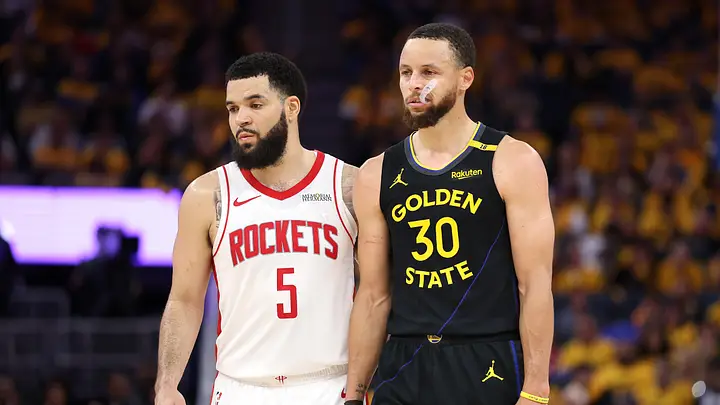
One of the best stories for the second part of the blog is Fred VanVleet. During the 2016 NBA Draft, a young Fred VanVleet went undrafted. He worked out for 18 NBA teams and declined multiple second-round offers that required him to play in the G league for $20,000 annually.
Then, the Toronto Raptors signed him and he initially had to fight for opportunities on the roster. He then developed into a major contributor to the Raptors 2019 championship run and eventually earned NBA All-Star recognition in 2022 and has averaged 18.1 points and 6.8 assists over the last six seasons.
VanVleet’s journey illustrates the importance of preparation, persistence and taking advantage of opportunities. Instead of being handed a starring role, he had to establish his value.
Want more from BallersCulture? Subscribe to our YouTube channel for weekly video breakdowns, stories and analysis!