

Over the last few years, the NBA and the entire sports market have been encountering an epidemic worse than any lockout or shortage: the rise of legalised and widespread sports betting. Season after season, more and more games and players are investigated and implicated in illegal practices relating to sports betting.
Table of Contents
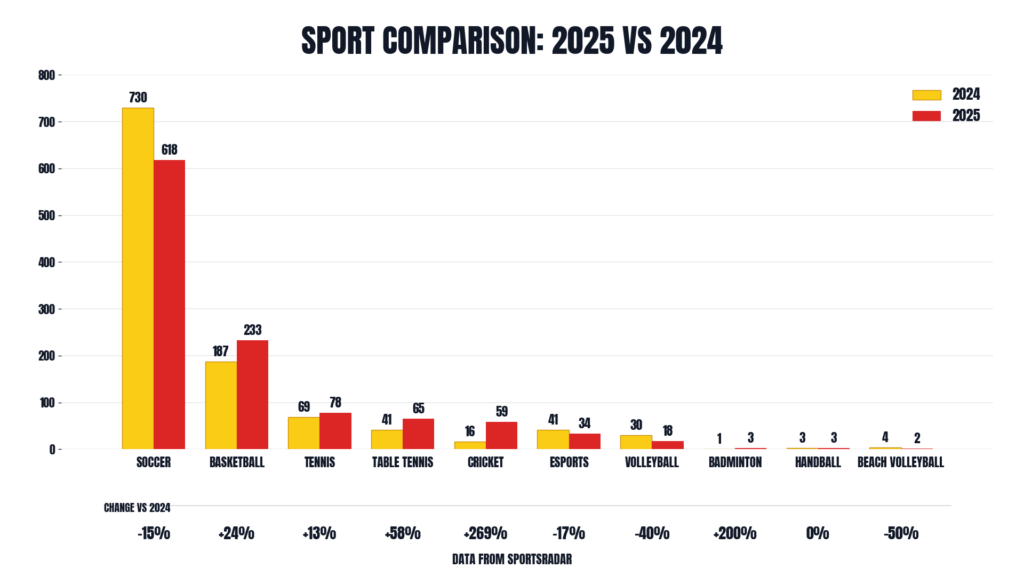
According to Sportradar in February of this year, basketball is the second most targeted sport globally for match-fixing, with about 233 suspicious matches in 2025 alone. This marks a 24% year-on-year increase in suspicious games, trailing only soccer, which sits at an astounding 618 suspicious matchups.
The main concern with basketball specifically is that manipulation doesn’t even require losing the game or scoring. These bad actors target point spreads, totals, and individual player statistics, while having the ability to bet on the over or under on almost any statistic tracked by the NBA.
The thing is, despite the NBA having its own integrity monitoring systems and working with companies such as US Integrity, many players and games still slip under the radar.
Let’s take the infamous Jontay Porter as an example. During Porter’s March 20 game, he faked an eye injury and an illness to leave the game early. This suspicious activity was reported to the NBA, which subsequently investigated Porter and banned him for life.
The situation in basketball has gotten increasingly worse, so poor, in fact, that the FBI launched an entire operation dubbed “Nothing But Bet” and identified a further seven NBA games between 2023 and 2024 that were subject to this illegal betting operation, with more games still under investigation.
To fans of the current generation of NBA basketball, there are two types of players.
The first is Victor Wembanyama.
When asked by a reporter whether he would sign a betting or prediction market endorsement, he replied with the most stoic and professional comment I have ever heard an NBA player say:
“Absolutely not, I will never do that. Honestly, I think it’s very sad to see some players promote it… I want to promote things that have a good impact, have a good influence with who I can share messages and values.”
Just think about that. While some all-time greats are cashing in on gambling contracts, Wembanyama, at only 22 years old, is thinking about the future generation and his public image. Kevin Durant, on the other hand, claims that people are going to do what they want to do, essentially arguing that people should be free to make their own decisions about sports betting.
But he isn’t the only one.
Why Is The NBA So Terrible When It Comes To Gambling?
If you have ever watched a live NBA game and sat through the commercials, you can easily decipher that the NBA is not exactly against sports betting. The NBA is somehow simultaneously the victim of betting scandals and the beneficiary of the betting industry’s revenue.
An oxymoron indeed.
Even though the NBA is heavily against betting scandals and crime, every dollar that it makes from partnerships and licensing deals flows directly into its pockets to further promote this industry. Through the league’s CBA agreement, players, owners, and other stakeholders all have financial incentives tied to basketball-related revenue, so the NBA, of course, will engage with these companies.
The NBA has two co-official betting partners, DraftKings and FanDuel. Both have served this role since November 2021, consistently signing new deals to remain at the top of basketball gambling. BetMGM and Caesars are additional league partners.
Across all DraftKings sponsorships in all sports, the company spent $220.44 million across 31 different agreements, while the NBA’s MGM deal was worth millions as it became the first casino-based sportsbook deal, starting the revolution. Since then, DraftKings has served as an exclusive partner of the NBA, including events such as the All-Star Game, Rising Stars, the NBA Draft, and hundreds of games themselves.
FanDuel president and CEO Amy Howe, regarding FanDuel’s relationship with the NBA, said:
“FanDuel’s partnership with the NBA has been a cornerstone of our success for many years, and together we have revolutionized what is possible in a partnership between a professional sports league and a sports gaming operator.”
In total, 11 teams have further deals with either DraftKings or FanDuel as their official sportsbook. These teams include the Boston Celtics, New York Knicks, Houston Rockets, Indiana Pacers, Detroit Pistons, Brooklyn Nets, Memphis Grizzlies, New Orleans Pelicans, Phoenix Suns, Chicago Bulls, and Toronto Raptors.
Perhaps the most uncomfortable statistic of all is that gambling partnerships alone make up roughly 1% of the NBA’s total revenue. Despite numerous players lobbying against accepting sports betting contracts, under the CBA’s basketball-related revenue share with players, which splits revenue roughly 50% between players and owners, every player is somewhat funded by this money.

What About Prediction Markets?
A prediction market is basically the newest version of a casino disguised as a legalised stock exchange.
Legally, they are not considered sportsbooks. In sportsbooks, the house sets the odds at a certain variable and takes the other side of the action. In a prediction market, however, you are trading against other people, buying shares in an outcome.
The lower the probability, the higher the potential reward. There is no house; the price is simply set by supply, demand, and the facts surrounding the situation, making for a much fairer, but also scarier, reality for sports betting as we know it. The only difference is that these markets make their money through transaction fees, which can sit around 0.5% to 1.5% of total volume.
As of now, Polymarket, the world’s largest prediction market, hosts hundreds of live NBA predictions. Last season’s NBA Champion market alone generated $292 million in trading volume.
This is the difference.
In a sportsbook, the product is priced by an “expert,” with the bookmaker remaining the authority. Prediction markets operate more like stock exchanges. The crowd prices the product, making the market the authority. If you are trading Knicks vs. Spurs, for example, the market will move toward $1 if the Knicks win and toward $0 if the Knicks lose.
Legally, this makes prediction markets so politically dangerous. Since they are not regulated in exactly the same way as traditional sportsbooks, they do not necessarily have to apply the same state gambling laws and tax structures. This means that the state cannot simply regulate or shut the site down in the same way it could with a traditional sportsbook.
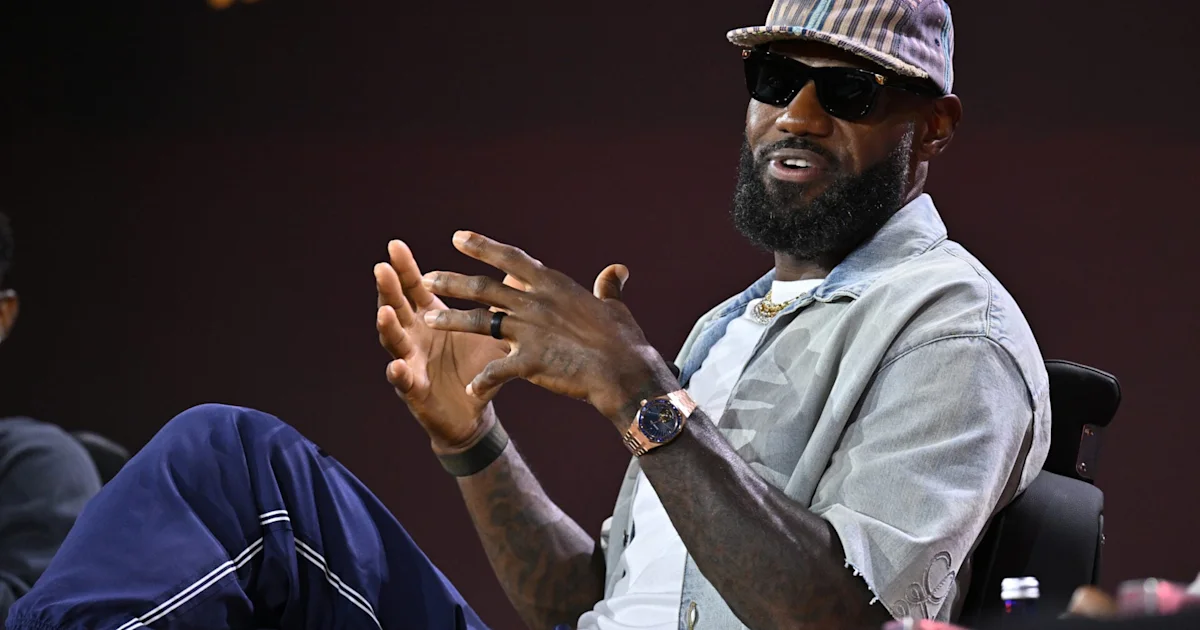
This is why LeBron James did not sign with a casino. He signed a deal with a company that is legally allowed to be called a financial exchange. The NBA has no rules specifically prohibiting this, and the CBA has no clause stating that players cannot deal with these markets.
Polymarket, in trading terms, is a derivative, or a bet on the future.
Kalshi: The Leading Sports Prediction Market
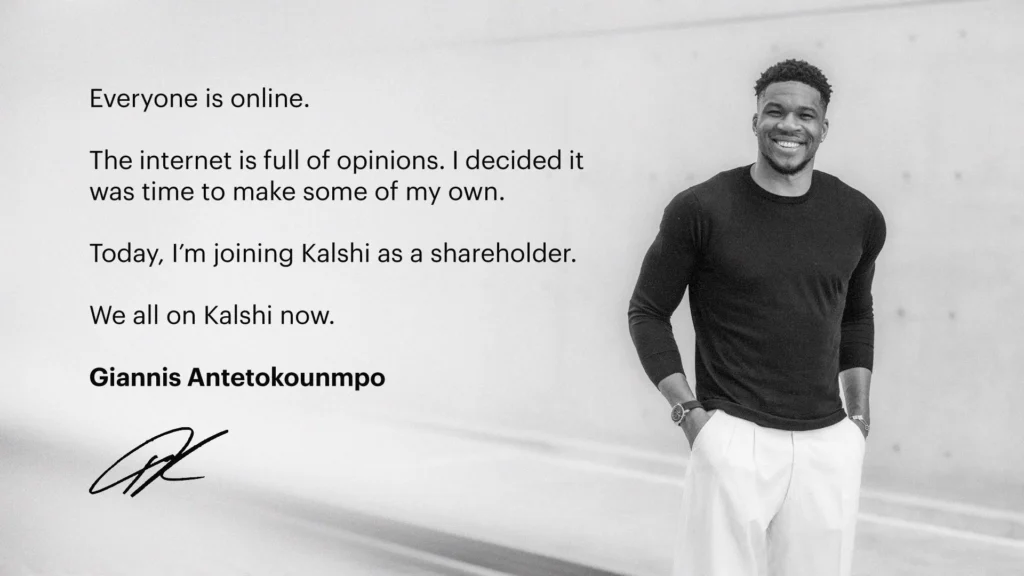
Kalshi is one of the biggest prediction markets in the world, and it is only set to grow further. In 2025, the entire market volume sat at $23.8 billion, up 1,100% from the previous year. In its lifetime, however, Kalshi’s volume has skyrocketed to $112 billion since launching its Alpha version in 2019, with sports accounting for a huge portion of that volume.
This astronomical number is incredible, and in 2026, it reached even higher levels. During the month of June, Kalshi’s volume peaked at $30 billion due to the World Cup and the NBA Finals, outshining its 2025 numbers and destroying previous projections for the year set in January.
Its monthly active user list grew to 5.1 million traders, up from 600,000 in early 2025. Pew Research states that between Kalshi and Polymarket, these two massive corporations are growing at roughly four times per year.
The only issue is that the government is on board with it, with some political figures calling them “truth machines.”
The issue with the NBA is that it doesn’t even properly recognise these markets. Unlike the NFL and MLB, which have signed contracts and implemented measures to address prediction-market concerns, the NBA has not done anything of the sort, pretty much assuming that its existing integrity protections and official sportsbook partnerships cover it.
Long story short: they don’t.
Why Are People Addicted To Betting On Basketball Games?
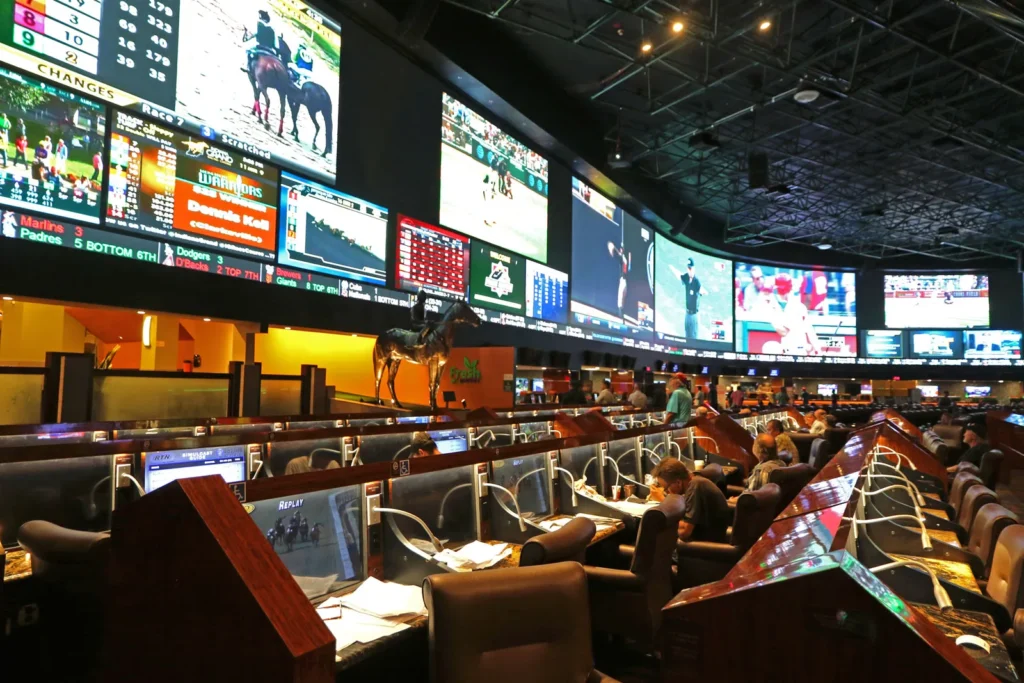
Sports betting in a vacuum is just numbers, associated with real-life money or digital currencies, on a screen and linked to sports. The basketball game doesn’t even matter to these people; the bet is simply exploiting the brain’s craving for rewards and competition.
The bet provides the dopamine. The game is just context.
The issue with the NBA promoting gambling and betting so often is that a core chunk of its audience is below the age of 21. The APA, in 2023, evaluated the risk of gambling disorders and found that the risk can be significantly higher when people are exposed heavily to betting at a younger age.
“Vulnerability is high in people with low incomes who have more to gain with a big win. Young people, especially boys and men, are another susceptible group.” – Shane Kraus, PhD, Director of Behavioral Addictions Lab at the University of Nevada, Las Vegas.
This massive targeted advertising is not only affecting young men’s and women’s minds, but it is also designed in such a way that it can be difficult to stop once you begin. “The psychology of sports betting apps is designed to be played quickly and aggressively to trigger repeated hits of dopamine,” writes Richard Daynard, a PhD professor at Northeastern University.
Young men especially are prone to developing problems with sports betting because of three factors. The first is competence. They believe that they “know” basketball and can beat the spread. With this belief, they use their masculine identity, competitiveness, risk-taking, and social bonding as a way to justify the addiction.
In the end, most people lose, but the promise that the companies make — that you “can” make money — is too great to simply quit now.
For players, their stat line is no longer just impressive for the stat-nerds out there, like me. The game has now become a financial instrument. The stats are a product for people to bet on, and millions of people are trading them every single day.
Over 17% of NCAA Division I men’s basketball athletes report harassment from sports bettors, proving that, for some, the money means more than the game itself.
Sports used to be a way for people to connect, to feel at home. But with the rise of sports betting, this connection has been diluted and tied to a monetary value.
The Psychology Behind Wembanyama’s Brave “Never”
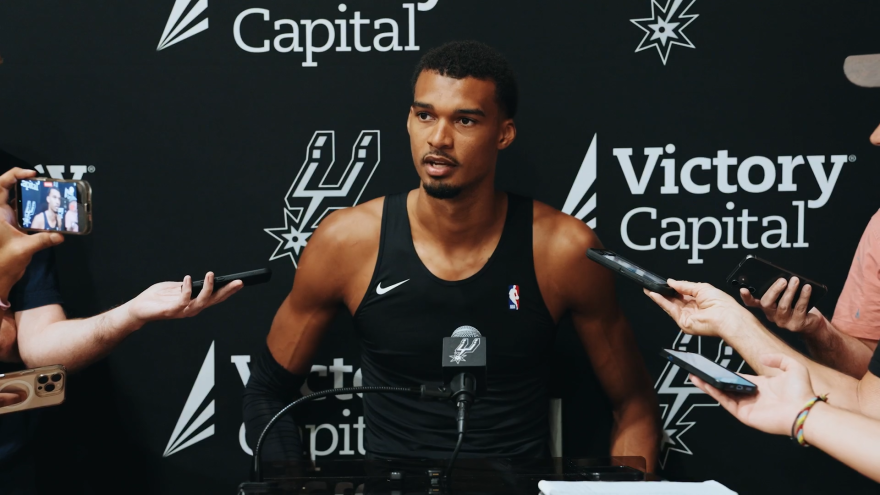
Wembanyama, word for word, didn’t just turn it down or delay it for the future.
He said, “I will never do that.”
The word “never” is a permanent, irrevocable declaration, a stance against what he believes is one of the most unethical practices in sports. He has said he will never deal with these types of companies.
This statement goes far beyond any financial benefit for Victor Wembanyama. This is a stance on morals.
Wembanyama has turned down millions of dollars in deals and endorsements that don’t align with his morals. He is already worth hundreds of millions of dollars through his career and endorsements, but the maturity and philosophical development of his mind are too great to overlook.
Wembanyama’s entire philosophy for his public image appears to be whether the product or service makes the world better or worse. If it makes it worse, then he simply won’t deal with the brand.
Simple.
His agent, Jeremy Medjana, revealed that Wemby received a lucrative deal with a soda company during the NBA Finals, but turned it down because they didn’t want to mix his image with soda.
“Sports betting is destructive. It has ruined the lives of some people I know. That’s why I refused to appear in sports betting advertisements. Many of us come from the suburbs, and it destroys the lives of countless people there.” – Kylian Mbappé.
During an anonymous NBA poll in 2025 that included 150 players, 46% of players said that the league’s gambling partnerships are bad for the NBA. Some quotes stated that the league is selling its soul, while others even stated that people have sent threatening messages and even death threats for not “meeting” the bettors’ parlays.
Players believe that this removes the soul of the game.
“I’m a prop, you know what I mean?” said Tyrese Haliburton in 2025 when discussing his relationship with the game and the fans in the era of betting. This has dehumanised the league for financial benefits, instead of leaving it as a connection between the players and the fans.
Nikola Vučević emphatically claims that it is disrespectful to the game, to the greats that he follows, and to the future generation that follows.
I am not against betting on quarters, game outcomes, or even final scores. According to Mark Cuban, “the real problem is projection bets, especially on certain players.”
On October 1, a 22-year-old Frenchman who has spent an entire offseason with Shaolin monks looked at a reporter and said:
“I will never do that.”
On the contrary, six days later, a 41-year-old veteran of the game who is widely regarded as one of the best athletes to ever play any sport and who has made more money than 99.9% of humans collected a $15 million paycheck from one of the most unethical companies in the world.
Who do you hold in higher respect?
Dimitri is a sports journalist and writer with over 5 years of experience in the industry. Since 2022, he has run the BallersCulture brand, and as of 2026, he is planning to take it to heights never seen before. Follow his journey on YouTube and X.