

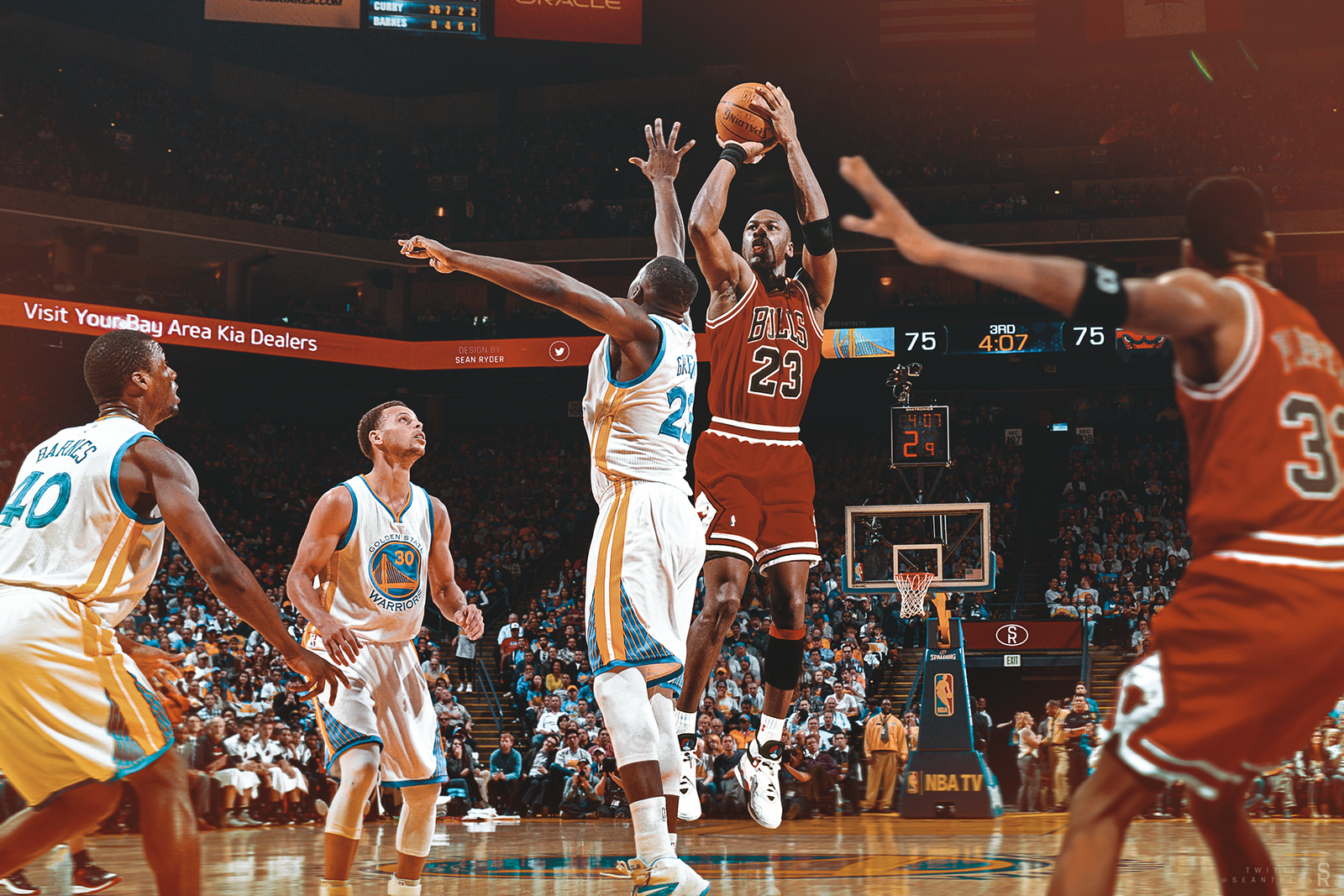
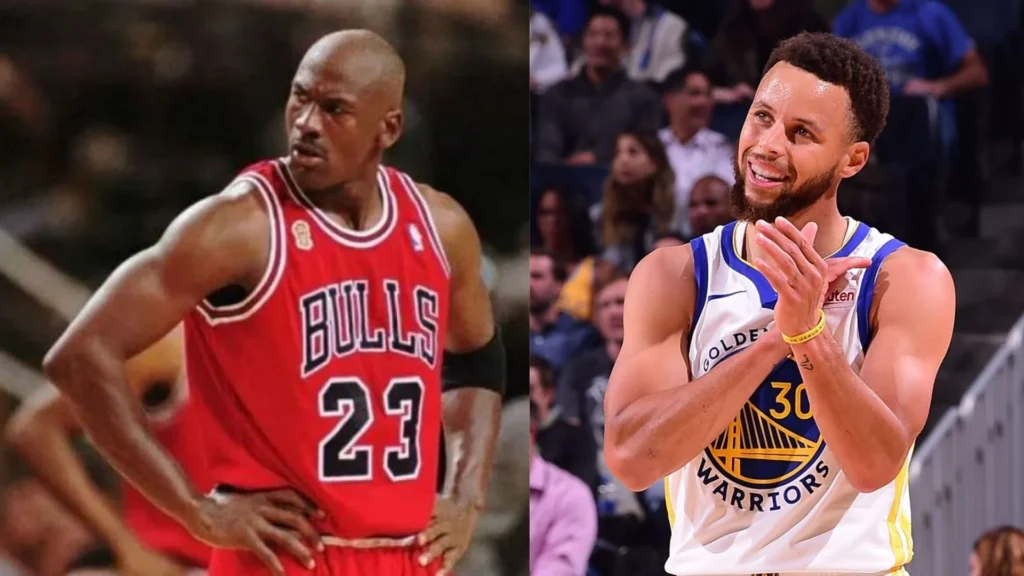
From Michael Jordan’s Chicago Bulls to Stephen Curry’s Golden State Warriors, basketball history is filled with teams that reached the top of the mountain, only to watch everything fall apart. But why is sustaining a dynasty so difficult?
Watch the full video on our YouTube channel.
Between 1991 and 1998, the Chicago Bulls won six NBA championships in eight seasons. They dominated an entire generation of basketball, established themselves as one of the greatest sporting dynasties ever assembled and created a standard that few organisations have ever come close to matching.
Yet within months of winning their sixth championship in 1998, their championship core was effectively dismantled.
Two decades later, the Golden State Warriors followed a remarkably similar trajectory. Five consecutive NBA Finals appearances between 2015 and 2019, three championships, and a revolutionary style of basketball that fundamentally changed the sport. But injuries, departures and internal disagreements eventually brought their original championship core to an end.
And they weren’t alone.
The early-2000s Los Angeles Lakers, LeBron James’ Miami Heat and several other championship teams experienced their own versions of the same problem.
Organisations spend years assembling championship rosters, only to discover that keeping them together can be almost as difficult as building them in the first place.
This raises an important question:
Is winning a championship the hardest part of building a dynasty, or is it keeping everyone happy, healthy and financially satisfied enough to win another?
To investigate this, I developed the Dynasty Breakdown Index (DBI), an analytical tool designed to examine historical NBA dynasties and identify the factors that contributed to their eventual decline.
Let’s investigate why basketball’s greatest teams rarely stay great forever.
Introducing the Dynasty Breakdown Index
Before examining individual teams, we need a framework for understanding why dynasties collapse.
The Dynasty Breakdown Index analyses four primary categories:
1. Injuries
Major injuries, recurring availability problems and the physical consequences of maintaining an extended championship window.
2. Ego
Internal disagreements, leadership conflicts, individual recognition, playing-time disputes and problems involving player-management relationships.
3. Money
Contract negotiations, luxury-tax payments, salary-cap restrictions and the financial difficulty of retaining an increasingly expensive championship roster.
4. Age
The natural decline in athletic performance, accumulated physical wear and the difficulty of maintaining elite production as players get older.
The tool generates individual category scores, an overall dynasty breakdown score, an assessment of the team’s peak and decline, and comparisons with other historical championship teams.
It is not designed to predict the exact moment a team will collapse. Instead, it provides a consistent framework for examining the pressures that eventually undermine championship organisations.
You can explore the tool yourself at BallersCulture.com/Dynasty.
With that established, let’s examine the evidence.
Winning Creates Psychological and Internal Problems
Four dynasties, four different endings
The first thing that becomes apparent when examining historical dynasties is that they rarely collapse for exactly the same reasons.
Consider four of the most significant examples.
Chicago Bulls (1991–1998)
Six championships in eight seasons, followed by organisational conflict, contract disputes and an increasingly unstable relationship between management and the championship core.
Los Angeles Lakers (2000–2002)
Three consecutive championships, followed by the deterioration of the relationship between Shaquille O’Neal and Kobe Bryant, two superstars who increasingly disagreed over leadership and responsibility.
Miami Heat (2011–2014)
Four consecutive Finals appearances and two championships, followed by LeBron James’ departure for Cleveland in July 2014 and the eventual decline of the team’s championship identity.
Golden State Warriors (2015–2019)
Five consecutive Finals appearances and three championships, followed by devastating injuries, financial pressure and growing tension between important members of the organisation.
But something particularly interesting connects these four teams.
In many cases, the problems that eventually destroyed them were already developing while they were winning.
The problems were already there
Phil Jackson reportedly knew that the 1997–98 season would be his final campaign coaching Chicago.
Scottie Pippen was also dealing with one of the most controversial contracts in NBA history. He had signed a seven-year, approximately $18 million agreement in 1991, leaving him earning just $2.775 million during the Bulls’ final championship season.
Meanwhile, general manager Jerry Krause had developed an increasingly strained relationship with the team’s championship personnel.
His famous assertion that organisations, rather than individual players and coaches, were responsible for championships became symbolic of the growing divide between management and the people on the court.
The Lakers experienced a different problem.
Shaquille O’Neal and Kobe Bryant had won three consecutive championships, but their relationship had deteriorated significantly. Their disagreements over leadership, playing style and personal recognition eventually forced the organisation to choose a direction.
Shaq was traded to Miami in July 2004.
Miami’s situation was different again.
After reaching four consecutive Finals, LeBron James announced his return to Cleveland in July 2014. Without their central superstar, the Heat were forced to rebuild their identity.
And then there were the Warriors.
In November 2018, Kevin Durant and Draymond Green had a heated disagreement during a game against the Los Angeles Clippers. The incident continued into the locker room, and Green was subsequently suspended for one game.
The confrontation became a defining public example of the internal tension developing within Golden State.
Durant eventually departed in 2019, while injuries to both Durant and Klay Thompson accelerated the end of their original championship core.
These organisations achieved extraordinary success, but their internal structures became increasingly difficult to maintain.
This is precisely what the Dynasty Breakdown Index is designed to investigate.
Success can actually make teams worse
There are three psychological concepts that help explain why championship environments can become increasingly complicated.
1. Hedonic adaptation
Hedonic adaptation describes how people gradually become accustomed to positive experiences.
Something that initially produces enormous excitement eventually becomes part of everyday life.
Think about winning your first NBA championship.
For most players, it represents the ultimate achievement. Years of training, sacrifice and competition finally produce the biggest prize in basketball.
But what happens when you win again?
And then again?
Eventually, winning can become less of a celebration and more of an expectation.
Players may begin comparing their individual contributions, contracts, responsibilities and recognition against those of their teammates.
This doesn’t mean that every successful player becomes dissatisfied. Rather, it helps explain how expectations can change as winning becomes normal.
The Chicago Bulls provide an interesting historical example. Six championships should have established one of the greatest sporting environments ever created, yet the relationships within the organisation were deteriorating by the final season.
2. The Icarus Paradox
In his 1990 book, The Icarus Paradox, Danny Miller explored how organisations can fail because they become excessively committed to the very strengths that originally made them successful.
Basketball provides a fascinating example.
A team develops a revolutionary system, establishes incredible chemistry and dominates the league.
Eventually, however, opponents adapt.
They study the system, develop counters and identify weaknesses.
If the dynasty refuses to evolve, its greatest strength can become its biggest limitation.
Golden State illustrates this particularly well.
The Warriors’ movement-heavy offence, three-point shooting and combination of Stephen Curry, Klay Thompson and Draymond Green fundamentally changed basketball.
But maintaining that level of dominance required constant adaptation, especially as the roster became older, more expensive and increasingly difficult to maintain.
3. The Disease of Me
Pat Riley popularised the concept of the “Disease of Me” in his book The Winner Within.
The principle is straightforward.
As a team becomes successful, individual players can become increasingly concerned with personal recognition.
Who receives the credit? Who gets the most minutes? Who receives the biggest contract? Who becomes the face of the franchise?
Gradually, individual ambition can begin competing with the collective identity that originally made the team successful.
It is an interesting explanation for why championship teams sometimes struggle to maintain their chemistry.
When talent becomes a problem
Now, what if having too much talent can actually make a team worse?
In 2014, researchers published a study in Psychological Science titled The Too-Much-Talent Effect: Team Interdependence Determines When More Talent Is Too Much or Not Enough.
Across five studies, researchers examined the relationship between individual talent and overall team performance.
Their findings challenged the assumption that adding more talent always improves a team’s results.
In highly interdependent sports, including basketball and football, additional talent can eventually become detrimental when coordination and teamwork begin to suffer.
The study identified team coordination as an important mechanism behind this effect.
In other words, having five incredible players doesn’t automatically mean you have an incredible team.
One of the most interesting examples is the relationship between Kevin Durant and Draymond Green.
During their November 2018 disagreement, Green reportedly questioned Durant’s future with the organisation and whether he intended to leave during free agency.
Golden State had spent years developing a system in which everybody understood their responsibilities.
Curry was the offensive engine, Thompson provided elite shooting, Green organised the defence, and Durant added another superstar-level scoring option.
But eventually, questions about leadership, individual responsibility and the future of the organisation became increasingly complicated.
When you have multiple superstars, multiple personalities and multiple expectations, maintaining a collective identity becomes considerably harder.
However, some organisations have managed to avoid these problems.
Why San Antonio was different
The San Antonio Spurs provide one of the best examples of long-term organisational stability.
Tim Duncan, Tony Parker and Manu Ginobili formed the foundation of a championship core that helped San Antonio win five championships between 1999 and 2014.
What made the Spurs particularly impressive wasn’t simply keeping those players together.
It was their ability to maintain a collective identity while adapting to changing circumstances.
Duncan consistently prioritised team success, while Gregg Popovich established an environment where individual recognition was secondary to collective performance.
The organisation also evolved tactically.
Its earlier championship teams relied heavily on Duncan’s interior dominance, defensive discipline and traditional half-court basketball.
By 2014, the Spurs had developed a sophisticated offensive system built around ball movement, passing, spacing and shared responsibility.
They didn’t simply repeat the same formula for 15 years.
They adapted.
And that’s an important distinction.
The best teams aren’t necessarily the ones with the most talent. They’re the ones that can convince everyone to use their talent towards the same objective.

Winning Becomes Financially and Physically Unsustainable
Even if everybody gets along, there is another problem.
Basketball is a business, and eventually somebody has to get paid.
The financial price of keeping a champion together
One of the biggest challenges of building a dynasty is that success makes your players more valuable.
A young player develops into an All-Star, a role player becomes an important starter, and suddenly everybody expects to be compensated according to their contribution.
And reasonably so.
But an organisation has a financial limit.
The Golden State Warriors provide perhaps the clearest example of how expensive maintaining a championship roster can become.
During their championship years, Stephen Curry, Klay Thompson, Draymond Green and Kevin Durant represented an enormous financial commitment.
Thompson signed a five-year, $190 million contract in 2019.
Green signed a four-year, approximately $100 million extension in 2019 and another four-year, $100 million contract in 2023.
Golden State was willing to spend enormous amounts of money to preserve its championship infrastructure.
The luxury-tax bills demonstrate just how expensive that commitment became.
| Season | Warriors luxury-tax bill |
|---|---|
| 2017–18 | Approximately $32.3 million |
| 2018–19 | Approximately $51.5 million |
| 2021–22 | Approximately $170.3 million |
These figures represent luxury-tax payments, not player salaries.
Essentially, Golden State was paying an extraordinary premium to keep its championship infrastructure together.
This is where the NBA salary cap becomes particularly important.
For the 2026–27 season, the league has established the following financial thresholds:
| NBA financial threshold | 2026–27 |
|---|---|
| Salary cap | $164.961 million |
| Luxury-tax line | $200.428 million |
| First apron | $209.015 million |
| Second apron | $221.686 million |
The luxury tax makes expensive rosters increasingly costly, while the first and second aprons introduce additional restrictions on roster construction.
For example, teams above the second apron face significant trade restrictions and cannot access the taxpayer mid-level exception.
The result is a difficult balancing act.
A team wants to retain its superstars, reward important supporting players and continue improving its roster.
But the more expensive its championship core becomes, the fewer options it may have to make meaningful improvements.
The financial cost of winning can eventually become one of the biggest obstacles to winning again.
The physical expiration date
There is one problem that no general manager, owner or superstar can completely control.
Ageing.
Basketball is an incredibly demanding sport, and maintaining a championship-level standard requires players to perform at an extraordinary level for months at a time.
Regular-season games, travel, training and extended playoff runs all contribute to the physical demands placed on a roster.
The longer a team remains successful, the more seasons its core players accumulate.
Look at Chicago.
During the 1997–98 season:
- Michael Jordan was 35.
- Scottie Pippen was 32.
- Dennis Rodman was 36.
They were still good enough to win another championship, but their physical primes weren’t going to last forever.
The same principle applies to Golden State.
During the 2019 NBA Finals, Kevin Durant suffered a ruptured Achilles tendon in Game 5, while Klay Thompson tore his ACL in Game 6.
Two of the team’s most important players suffered devastating injuries within the same championship series.
Durant eventually left for Brooklyn, while Thompson missed the entire following season.
You can negotiate a contract. You can manage an ego. But you cannot negotiate with Father Time, and you certainly cannot schedule when an Achilles tendon is going to tear.
Why modern NBA dynasties are harder to maintain
Are modern dynasties actually harder to build and maintain than those of previous generations?
There is a strong argument that they are.
Historically, wealthy organisations could spend enormous amounts of money to maintain championship rosters.
However, the modern collective bargaining agreement makes that strategy increasingly complicated.
Teams above the second apron face restrictions involving salary aggregation in trades, certain exceptions and other roster-building mechanisms.
Essentially, the more expensive your roster becomes, the fewer options you have to improve it.
When you’re already paying multiple superstars, replacing an important supporting player becomes considerably more complicated.
But there is an organisation that demonstrates how to overcome some of these challenges.
San Antonio.
The Spurs won five championships between 1999 and 2014, maintaining their central trio of Duncan, Parker and Ginobili throughout much of that period.
Their greatest achievement wasn’t simply retaining three talented players.
It was their willingness to evolve.
Their earlier championship teams relied heavily on Duncan’s interior dominance, defensive discipline and a relatively traditional half-court offence.
By 2014, they had developed one of the most sophisticated offensive systems in NBA history.
The ball moved constantly, players shared responsibility and their passing created opportunities that made the entire team incredibly difficult to defend.
They didn’t simply rely on the same system for 15 years.
They adapted.
And that might be one of the most important lessons in NBA history.

Can the New York Knicks Break the Cycle?
Now we arrive at the present.
In June 2026, the New York Knicks defeated the San Antonio Spurs in five games to win their first NBA championship since 1973.
After 53 years of waiting, New York had finally reached the top of the mountain.
Jalen Brunson led the way, scoring 45 points in the deciding Game 5 and earning Finals MVP honours.
Karl-Anthony Towns, OG Anunoby, Mikal Bridges and Josh Hart were also important members of the championship group.
But now comes the difficult part.
They have to do it again.
And if history tells us anything, the hardest part of winning a championship might actually be staying there.
The Knicks now face many of the same challenges that eventually undermined some of the greatest teams in basketball history.
Can they keep their players healthy?
Can everybody remain satisfied with their responsibilities?
Can the organisation afford to retain its championship core?
And can this group continue improving before its championship window eventually closes?
Putting the Knicks through the Dynasty Breakdown Index
Let’s put New York through the DBI one final time.
By comparing its early sustainability profile against historical dynasties such as the Bulls, Warriors and Spurs, we can identify the potential pressures facing the organisation.
Of course, this isn’t a prediction of exactly what will happen to New York.
The Knicks are still in the early stages of their championship journey.
But we can establish a baseline and identify the areas that could eventually become problems.
That is ultimately what this entire investigation has been about.
The Hardest Part of Winning Is Staying There
Winning a championship requires talent, chemistry, opportunity and a little bit of luck.
Winning repeatedly requires something considerably harder: keeping all four of those things together while everything around you changes.
The Bulls couldn’t sustain their championship core.
The Lakers couldn’t maintain their superstar partnership.
The Heat couldn’t preserve their Big Three.
Even the Warriors, one of the greatest teams in modern basketball history, eventually experienced the consequences of injuries, financial pressure and internal tension.
San Antonio provides a different example.
The Spurs sustained their success through organisational stability, collective responsibility and a willingness to adapt.
And now the question belongs to New York.
The Knicks have finally reached the top of the mountain.
But will they become the next San Antonio Spurs, or will their championship window close before they can build a dynasty?
What do you think is the biggest threat to an NBA dynasty: injuries, ego, money or age?
Let us know in the comments.
You can also visit BallersCulture.com/Dynasty and use the Dynasty Breakdown Index to analyse your favourite historical teams.
At BallersCulture, we’re building a platform dedicated to original NBA research, analytics and documentaries.
For Ballers, By Ballers.